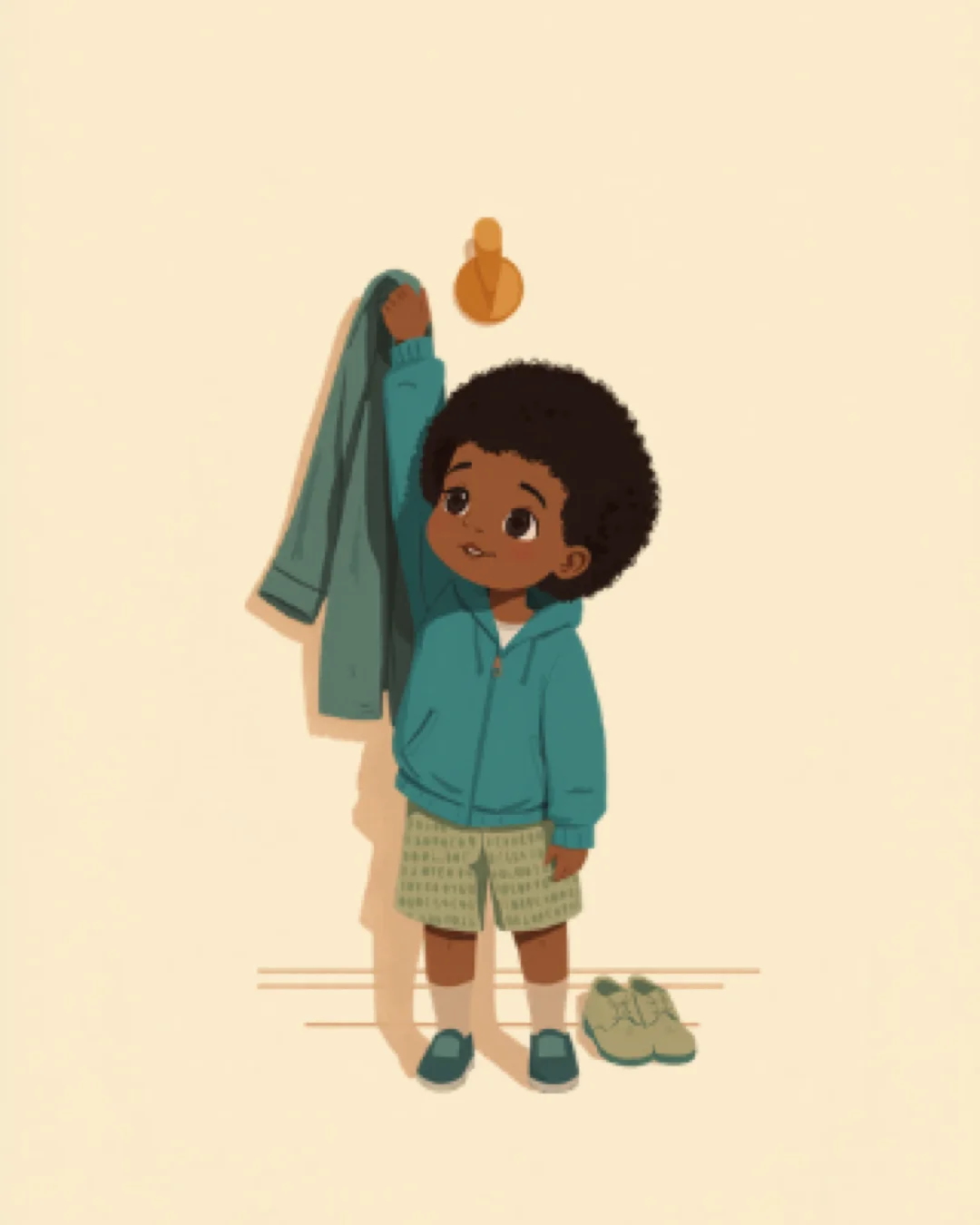
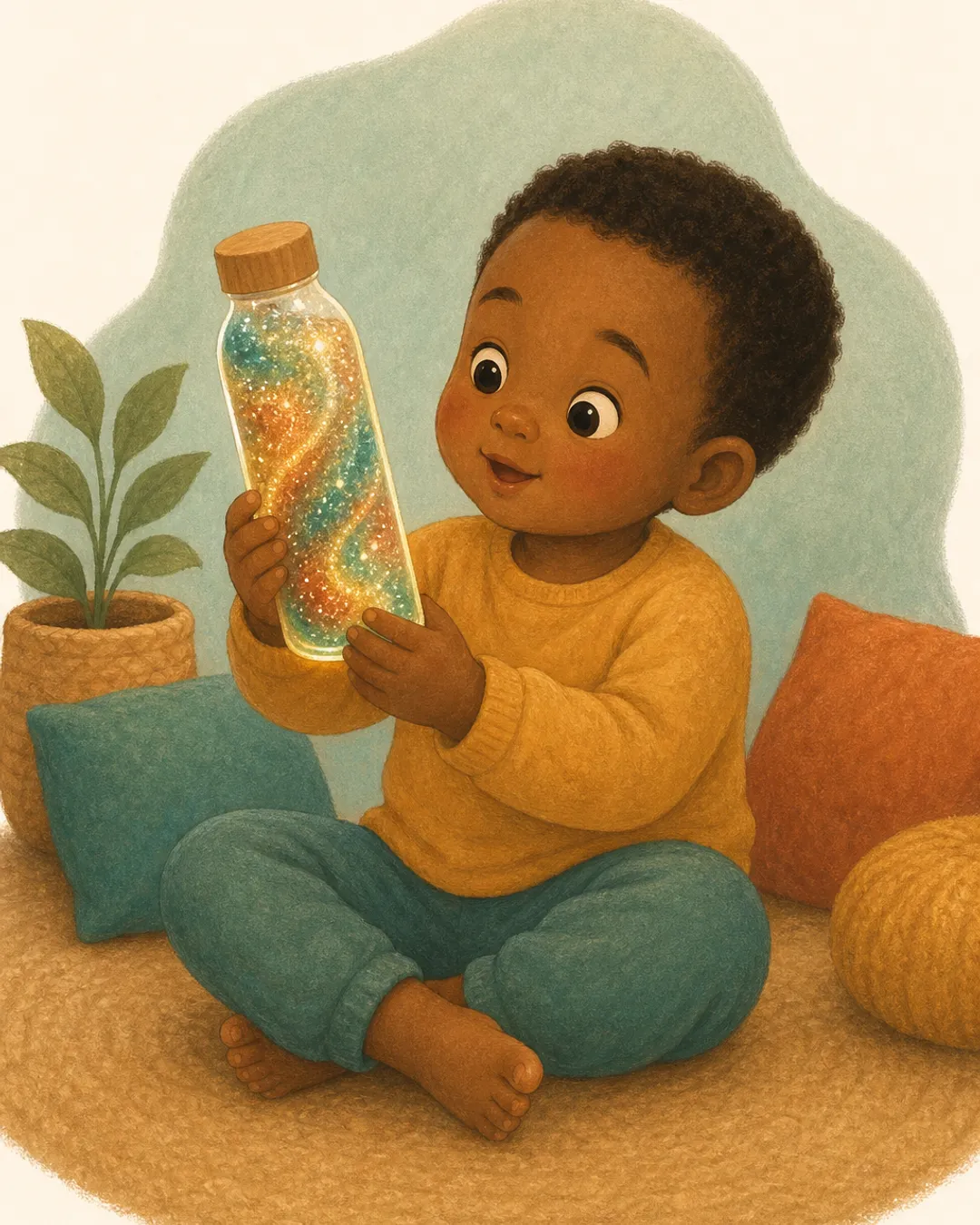
Simple games that encourage your toddler to combine two words together — the leap from single words to sentences.
Activity details
19m–2y10 minslowindoorNo prep
Instructions
Tiny Steps
Get ready
Start during a natural activity — snack time, play, or getting dressed.
Model two-word phrases about what is happening: 'Big banana. Yummy banana. More banana?'
1/4
Start during a natural activity — snack time, play, or getting dressed.
Model two-word phrases about what is happening: 'Big banana. Yummy banana. More banana?'
Create choice moments: hold up two items and ask 'Red cup or blue cup?' — the answer requires two words.
Use 'more + noun' opportunities: when they want something, model 'more milk' before giving it. Wait expectantly.
Play a naming game: point to objects and model adjective plus noun: 'Soft teddy. Little shoe. Wet flannel.'
Leave deliberate gaps: 'Ready, steady...' (wait for 'go!'). 'One, two...' (wait for 'three!').
Expand what they say: if they say 'car', you say 'Yes! Fast car! The car is going fast!'
Celebrate every combination: 'You said big dog! Two words together! Brilliant!'
Parent tip
Start before you overthink it. No-prep activities work best when you begin while the moment is still recoverable.
What success looks like
A few quiet minutes together without pressure. If your child relaxes even slightly, that’s self-regulation building.
The jump from single words ('ball') to two-word combinations ('big ball', 'throw ball', 'more ball') is one of the most significant milestones in language development. This collection of mini-games creates natural opportunities for your child to combine words by modelling the pattern and leaving gaps for them to fill. No materials needed — just conversation scaffolding during everyday moments.
Why it helps
Speech and Language UK identifies two-word combinations as a key milestone between 18-24 months, marking the transition from labelling to proto-grammar. When a child says 'more milk', they are demonstrating early syntax — a modifier plus a noun — which is the scaffold for full sentences. The ORIM framework's 'Model' pillar is central here: children combine words they have heard combined. By flooding their environment with two-word phrases, you provide the raw material for this leap.
Variations
Use a toy phone to practise two-word conversations — 'Hello Daddy! Bye bye Nana!' — the prop encourages longer utterances.
Play with a doll or teddy: 'Teddy is... hungry! Teddy wants... more food!' — puppets prompt children to speak for the character.
During bath time, narrate with two-word action phrases: 'Splash water! Pour water! Cold water! Warm water!'
Safety tips
Never pressure a child to speak — if they are not combining words yet, keep modelling without expectation. The timeline varies widely.
Watch for frustration — if your child gets upset when you wait for them to speak, give them the word immediately. Language should never feel like a test.
If your child is not using any words by 18 months or not combining words by 30 months, speak to your health visitor — early support makes a significant difference.
Try one of these next
A few connected ideas chosen by theme, energy, set-up, and age fit.