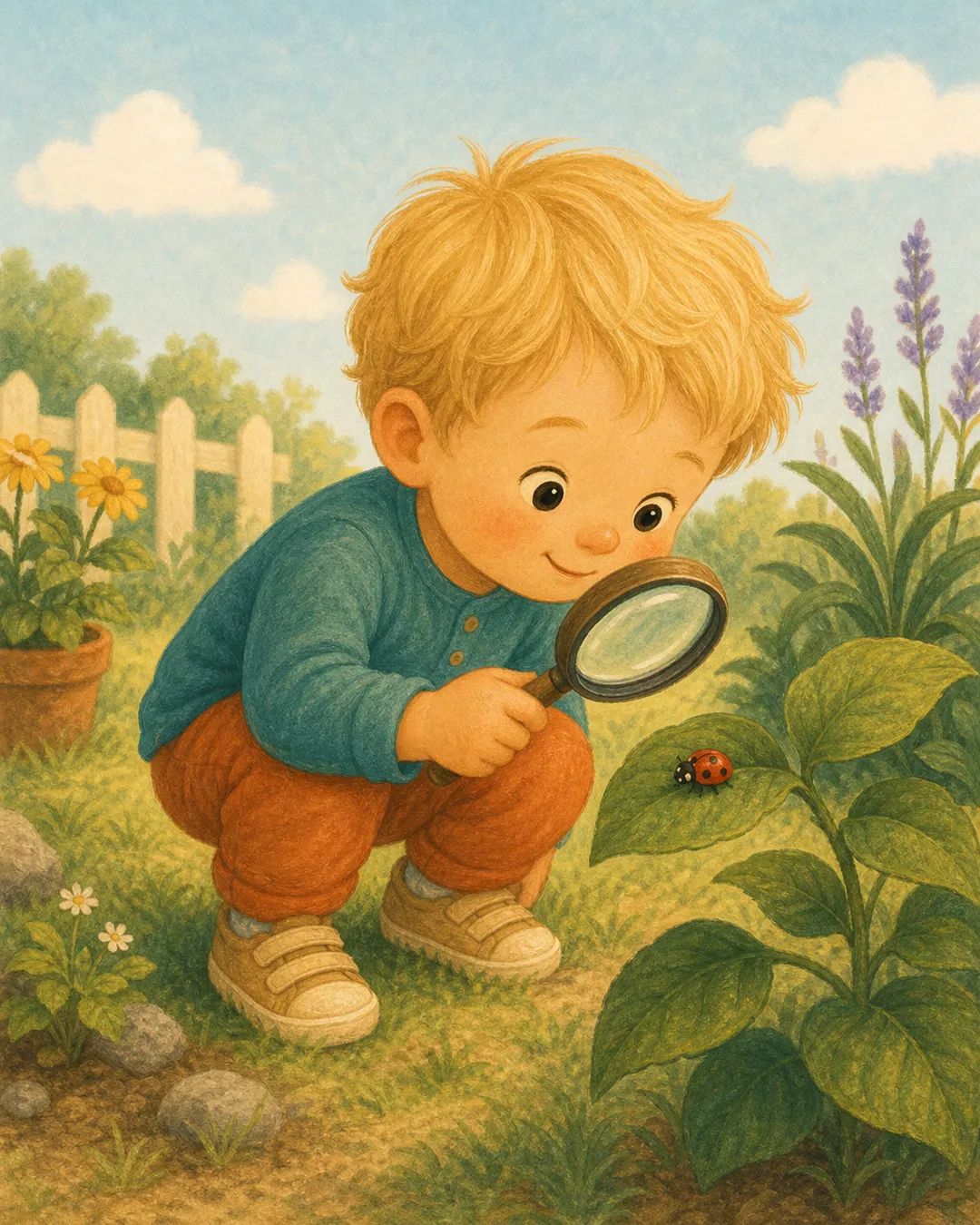
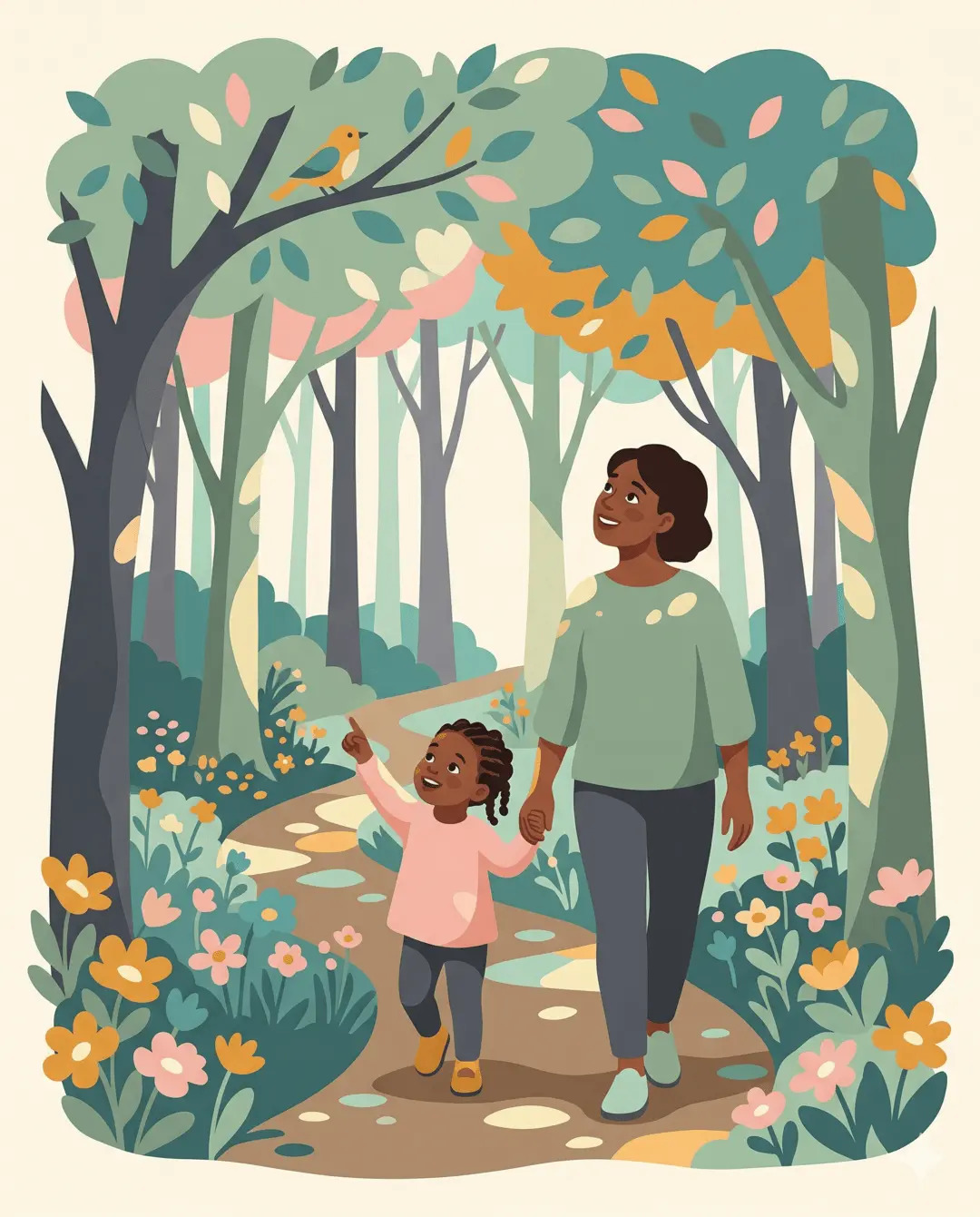
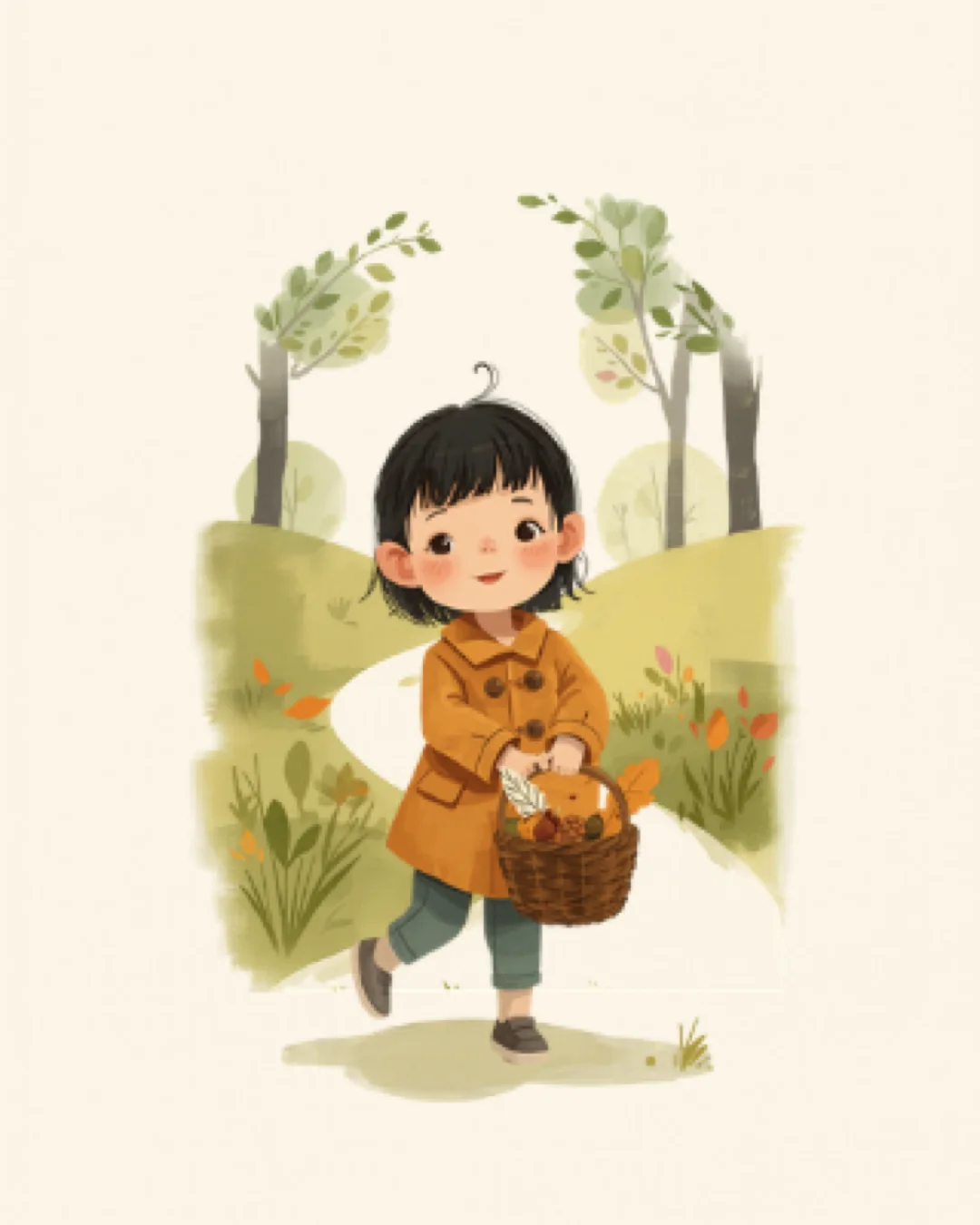
Drop small 'treasures' along your walking route for your toddler to spot and collect, keeping them close and focused on the path.
Activity details
19m–4y15 minshighoutdoorBucketRocksStickers
Instructions
Tiny Steps
Get ready
Before the walk, prepare a small bag with five to eight 'treasures' — interesting pebbles, stickers, or small leaves — and a collection bag or bucket for your child.
As you set out, secretly drop the first treasure a few metres ahead: 'Oh look! What's that on the ground? A special pebble!'
1/4
Before the walk, prepare a small bag with five to eight 'treasures' — interesting pebbles, stickers, or small leaves — and a collection bag or bucket for your child.
As you set out, secretly drop the first treasure a few metres ahead: 'Oh look! What's that on the ground? A special pebble!'
Give your child the collection bag and say 'I think there might be MORE treasures on our walk — we have to look carefully.'
Drop treasures at intervals along the route — your child will naturally slow down and stay close to scan the ground.
Build anticipation: 'I think there might be one near that tree — let's walk there together and see.'
Celebrate each find: 'You spotted it! That's four treasures now — how many will we find altogether?'
If your child starts to run ahead, say 'Careful — you might walk past a treasure! The best finders walk slowly.'
At the end of the walk, count the treasures together: 'You found all of them because you stayed close and looked carefully!'
Parent tip
Set out bucket and rocks before inviting your toddler in so the first minute feels smooth.
What success looks like
Curiosity in action — pointing, collecting, asking ‘what’s that?’ A child engaged with nature is learning without knowing it.
A toddler who bolts during walks is usually seeking stimulation — the walk itself isn't interesting enough to compete with the impulse to run. This activity solves that by scattering small, interesting items along the route (pebbles, leaves, stickers on lamp posts) that your child has to stay close and pay attention to find. The treasure hunt format engages the seeking system in the brain — the same dopamine-driven circuit that makes exploration rewarding — while naturally keeping your child walking at your pace.
Why it helps
The brain's seeking system — driven by dopamine — motivates exploration, curiosity, and forward movement. When this system is engaged through a treasure hunt, toddlers are less likely to bolt because the hunt itself provides the stimulation they crave. This approach aligns with NHS advice on channelling toddler energy positively, and the slow, attentive walking required also develops sustained attention — a precursor to the concentration skills needed for pre-school and school readiness.
Variations
Use chalk to draw small arrows or stars on the pavement before the walk — your child follows the trail to find each treasure.
For older toddlers, give them a simple picture checklist of items to find (a stick, a flower, a red thing) to combine treasure hunting with early literacy.
Let your child hide treasures for you on the walk home — role reversal gives them a reason to walk slowly and deliberately.
Safety tips
Ensure all 'treasures' are large enough not to pose a choking hazard, especially for children under three.
Keep the walk route away from roads and busy areas where a distracted child could wander into danger.
If using stickers, place them at child height and on surfaces you have permission to mark — avoid other people's property.
Try one of these next
A few connected ideas chosen by theme, energy, set-up, and age fit.