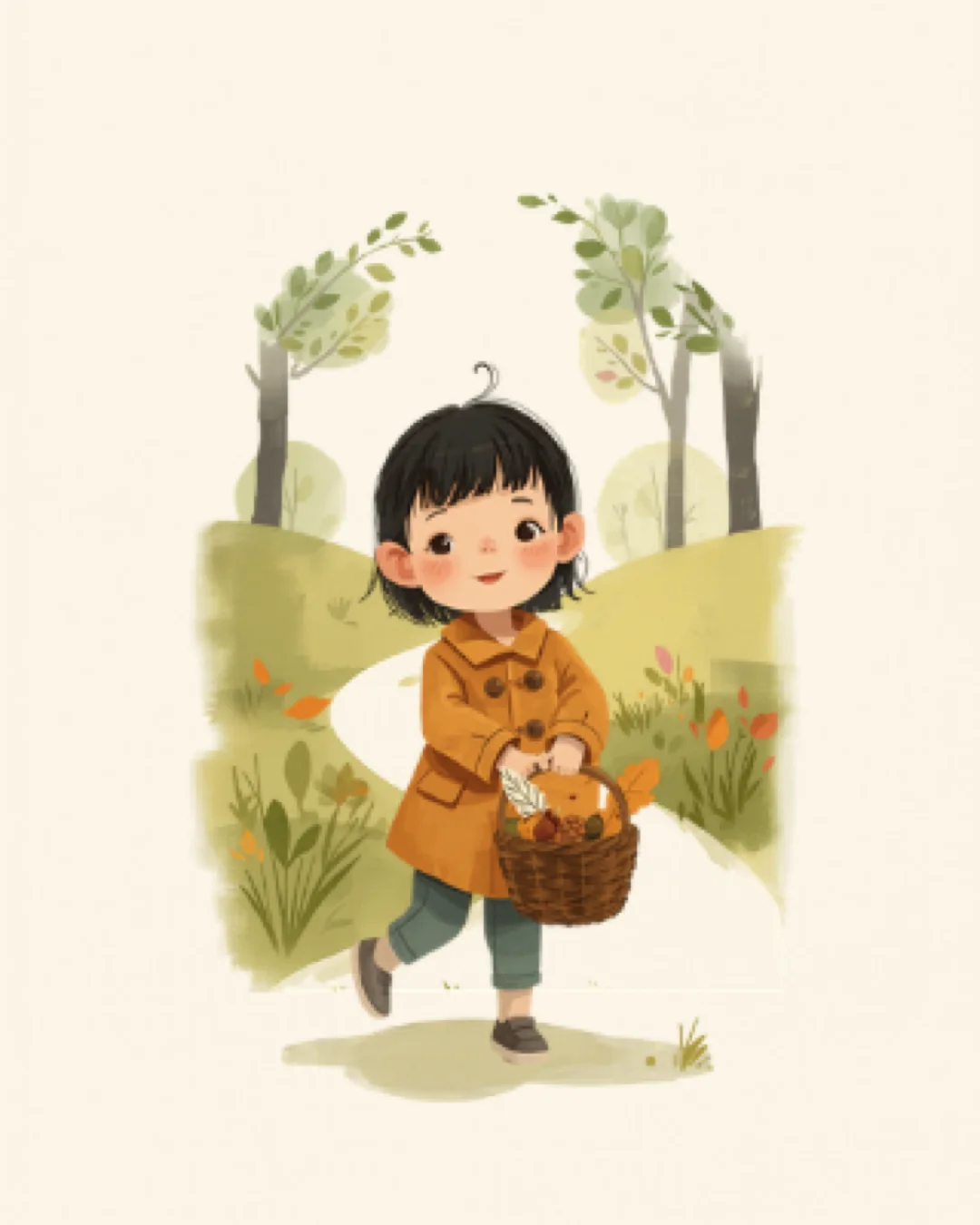
Bring a paint colour chart on an autumn walk and match leaves to the closest colour swatch.
Activity details
2y–4y15 minsmediumoutdoorLeavesPaper
Instructions
Tiny Steps
Get ready
Get a paint colour chart from a DIY shop — the kind with strips of colour shades. Focus on reds, oranges, yellows, and browns.
Head outside to a park or tree-lined street in autumn.
1/4
Get a paint colour chart from a DIY shop — the kind with strips of colour shades. Focus on reds, oranges, yellows, and browns.
Head outside to a park or tree-lined street in autumn.
Pick up a leaf and hold the colour chart next to it: 'Which colour matches best?'
Your child points to or places the leaf on the closest swatch.
Try another leaf — is it the same shade or different?
Collect leaves and sort them by colour on the ground: 'All the oranges here, all the reds there.'
Look for the most unusual colour — a leaf that does not match any swatch.
Take the colour chart and best leaves home to stick in a nature journal or on the window.
Parent tip
Set out leaves and paper before inviting your toddler in so the first minute feels smooth.
What success looks like
Curiosity in action — pointing, collecting, asking ‘what’s that?’ A child engaged with nature is learning without knowing it.
Grab a paint colour chart from a DIY shop (or print colour swatches) and take it on an autumn walk. Your child holds up each leaf they find and matches it to the closest colour on the chart. They discover that 'brown' is actually twenty different shades, and 'red' can be anything from scarlet to burgundy.
Why it helps
Colour discrimination — telling apart similar shades — is a visual processing skill that supports early reading (distinguishing between similar letter shapes). The Woodland Trust's nature play research shows that seasonal walks with a specific focus (like colour matching) develop more sustained attention than unfocused walks, because the task gives the outing structure and purpose. Zero to Three explains that early problem-solving experiences like this teach toddlers to think flexibly and keep trying when something does not work the first time.
Variations
Make your own colour chart by painting swatches — the painting is an activity in itself.
Instead of leaves, match other autumn finds: conkers (browns), berries (reds, purples), bark (greys).
Challenge older toddlers to find the EXACT match — not just close, but the same shade. This sharpens discrimination.
Safety tips
Avoid picking berries — admire from a distance. Some autumn berries are toxic.
Watch for wet, slippery leaves on paths — hold hands on slopes.
Wash hands after handling leaves, especially before eating.
Try one of these next
A few connected ideas chosen by theme, energy, set-up, and age fit.