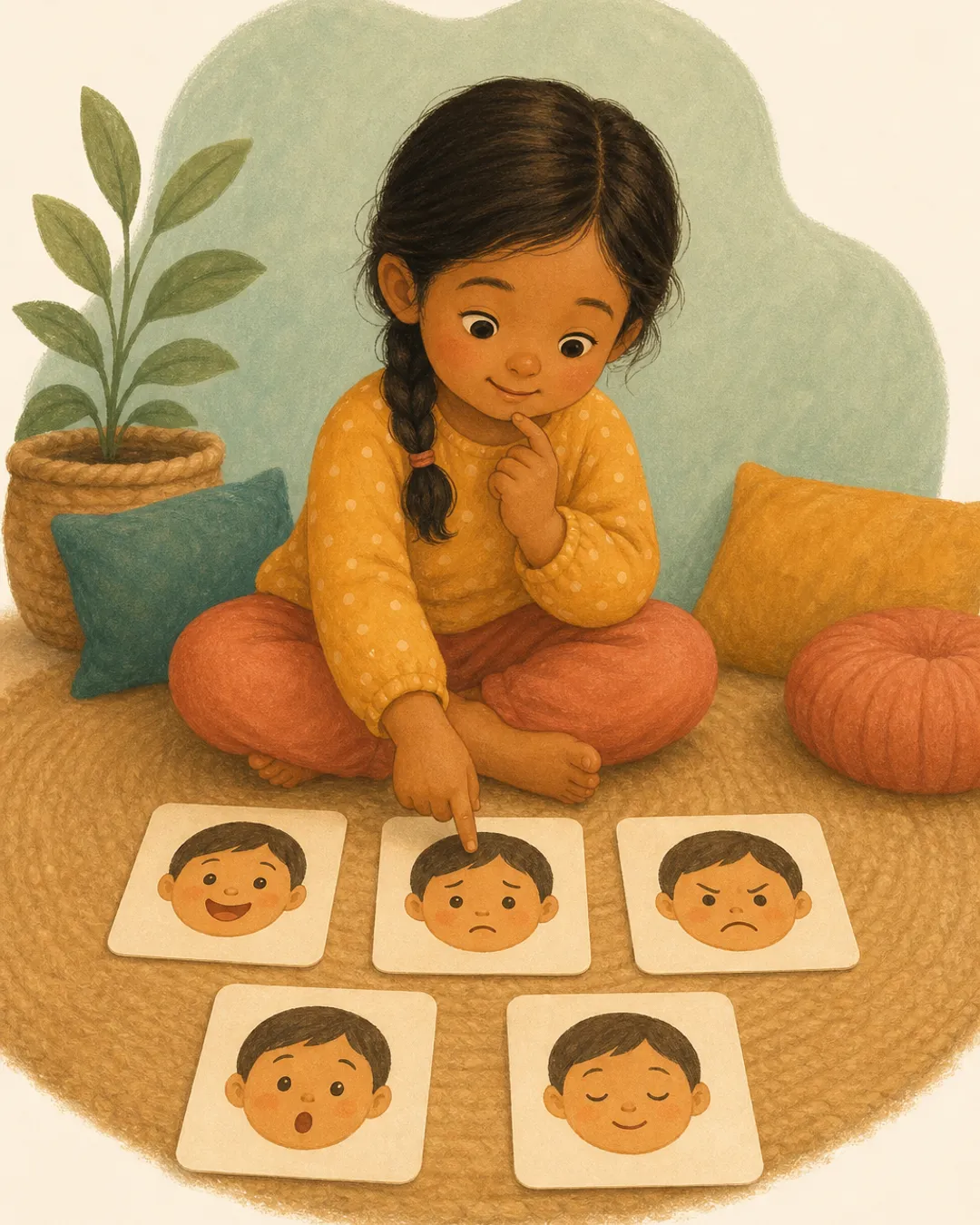
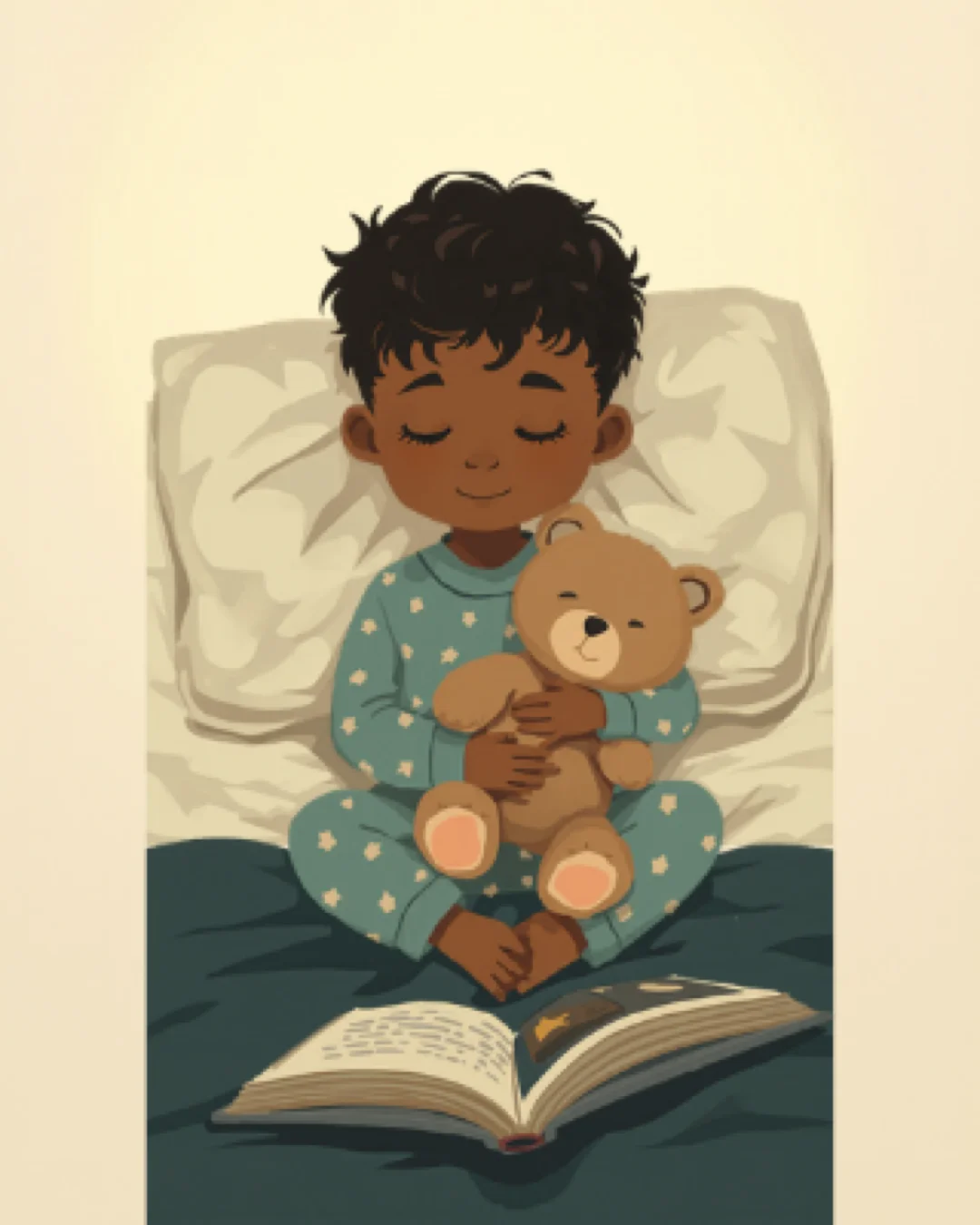
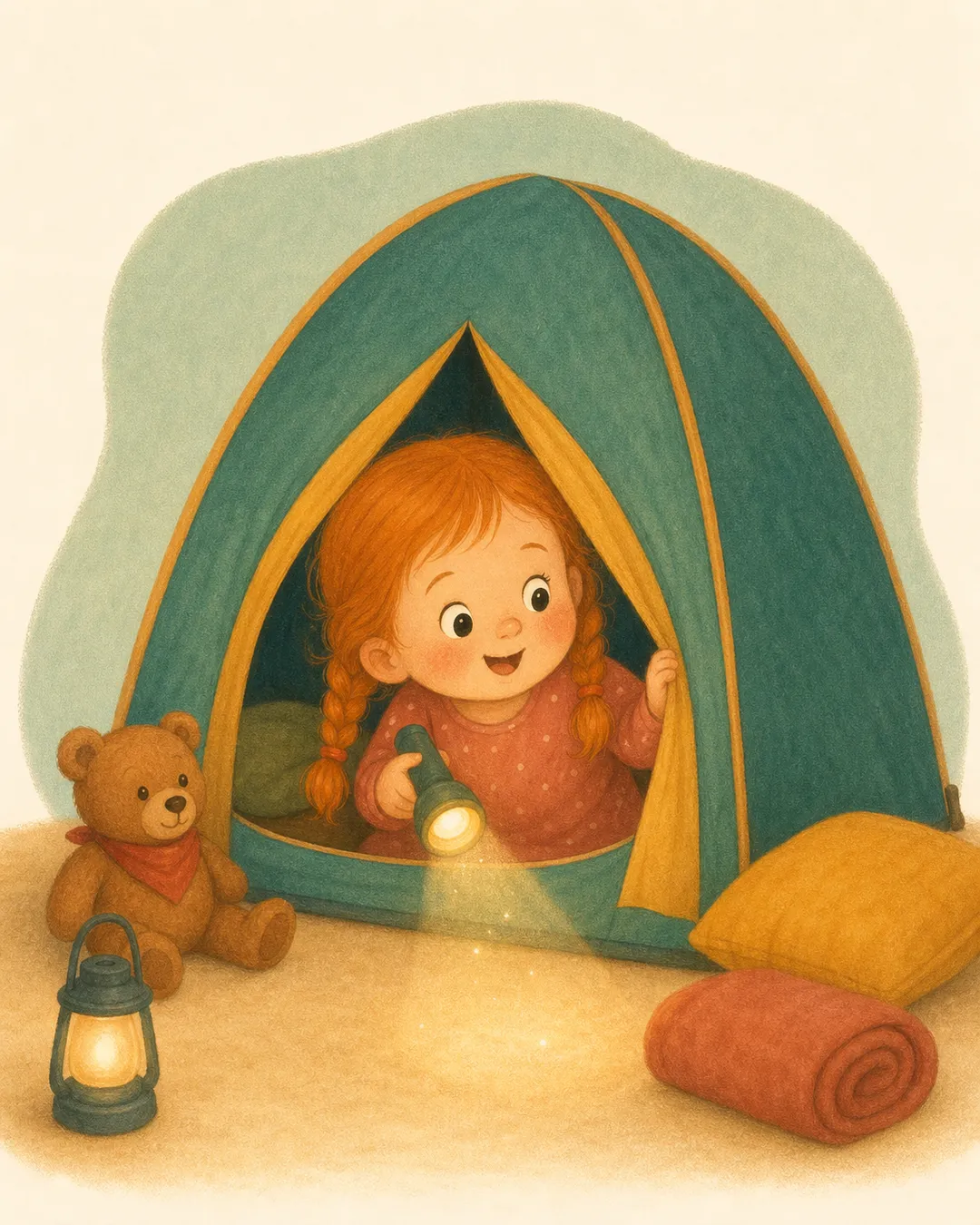
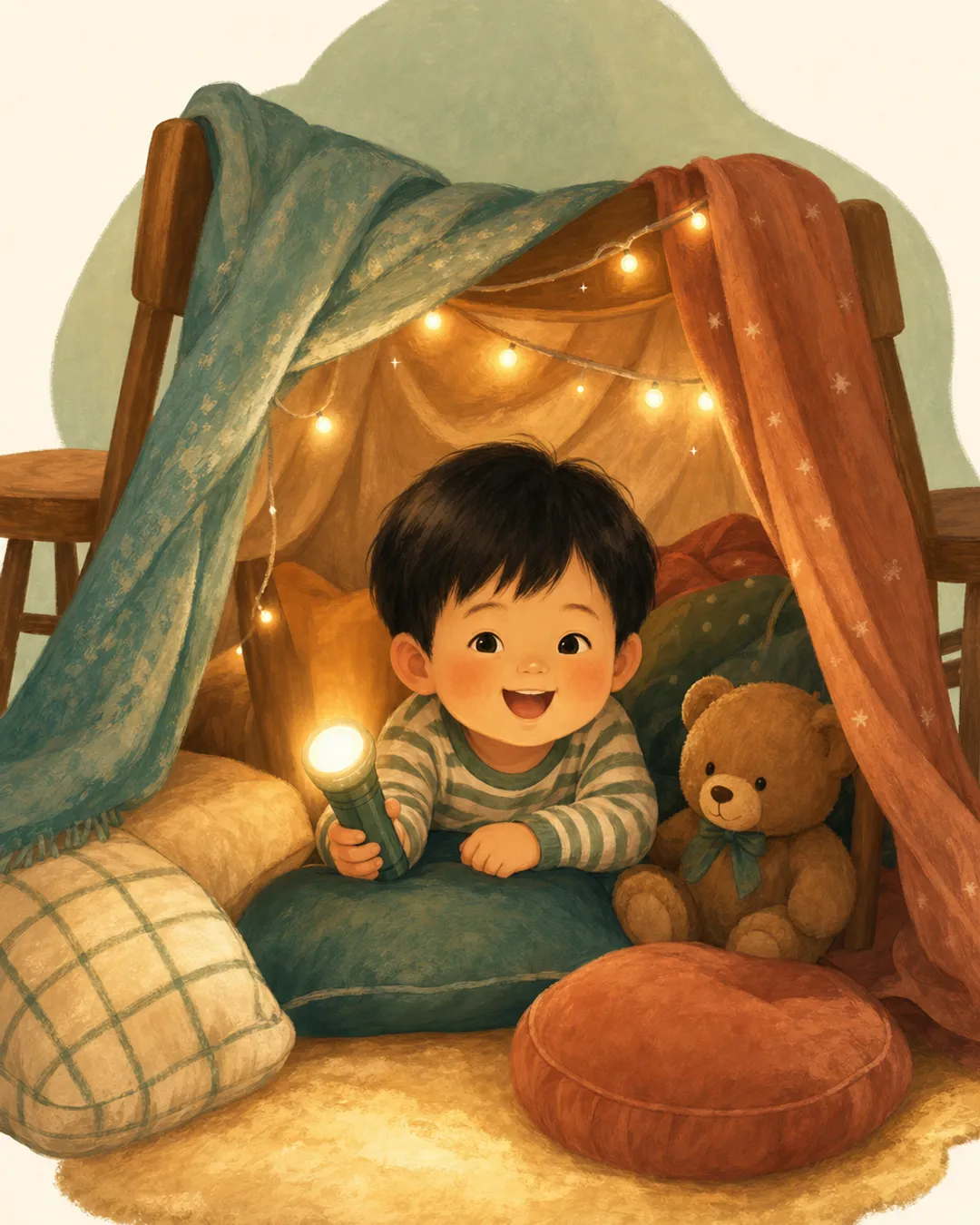
When a bad dream has shaken your toddler, they tell it to a trusted soft toy and the two of you rewrite the ending, turning a frightening dream into a story your child gets to control.
Activity details
2y–4y10 minslowindoorNo prepStuffed Animals
Instructions
Tiny Steps
Get ready
Choose a 'brave listener' soft toy together, one your child trusts to keep them company.
Sit somewhere calm and hold the toy between you: 'Teddy is a really good listener. You can tell teddy the scary dream.'
1/4
Choose a 'brave listener' soft toy together, one your child trusts to keep them company.
Sit somewhere calm and hold the toy between you: 'Teddy is a really good listener. You can tell teddy the scary dream.'
Let your toddler describe the dream in their own words, however muddled, and just listen and nod.
Name the feeling gently: 'That sounds frightening. No wonder you woke up.'
Now change the story together: 'What should teddy do to the monster? Shall we make it tiny and silly?'
Act out the new, funny ending so the dream gets a different, safe finish.
Tuck the brave listener in beside your child as the night-time guard, and settle them back down.
Parent tip
Start before you overthink it. No-prep activities work best when you begin while the moment is still recoverable.
What success looks like
A few quiet minutes together without pressure. If your child relaxes even slightly, that’s self-regulation building.
After a nightmare, your child whispers the scary dream to a soft toy whose 'job' is to listen and keep them safe. Together you then change the ending, so the monster trips over and giggles or the dark room fills with fairy lights, and the dream stops being something that happened to your toddler and becomes a story they can steer. Putting the fear into words and handing it to teddy gives a small child a sense of mastery over something that felt completely out of their control.
Why it helps
The NHS describes nightmares as 'bad dreams you wake up from and can remember', which is exactly why retelling matters: a remembered dream can be revisited and changed. Putting the fear into words and handing it to a trusted toy lets your toddler externalise it, and rewriting the ending gives them authorship over something that felt utterly out of their control. The NHS also stresses a calm, consistent response to night fear, and using the same brave listener every time gives that consistency a friendly face.
Variations
Draw the scary part on paper, then scribble it out or fold it tiny and 'post' it away, giving the dream a physical ending your toddler can see.
Give the brave listener a special job title, such as 'night guard' or 'dream catcher', so it has a clear role beside the bed.
Use the same toy and the same calm words each time, so the routine becomes a reliable comfort after any bad dream.
Safety tips
Follow your child's lead; if talking about the dream upsets them more, switch straight to a cuddle and the happy ending.
Keep the brave listener free of small parts or loose ribbons if it stays in the bed overnight.
Keep the room dim and calm throughout, as this is a settling activity rather than an exciting one.
Try one of these next
A few connected ideas chosen by theme, energy, set-up, and age fit.