Parent tip
Start before you overthink it. No-prep activities work best when you begin while the moment is still recoverable.
A playful game contrasting a drippy whining voice with a calm 'asking voice', so your toddler can actually hear the difference and reach for the clearer one instead of being told off.
Tiny Steps
Start before you overthink it. No-prep activities work best when you begin while the moment is still recoverable.

Back-and-forth between you — words, gestures, shared pretend. Connection is the real outcome here.
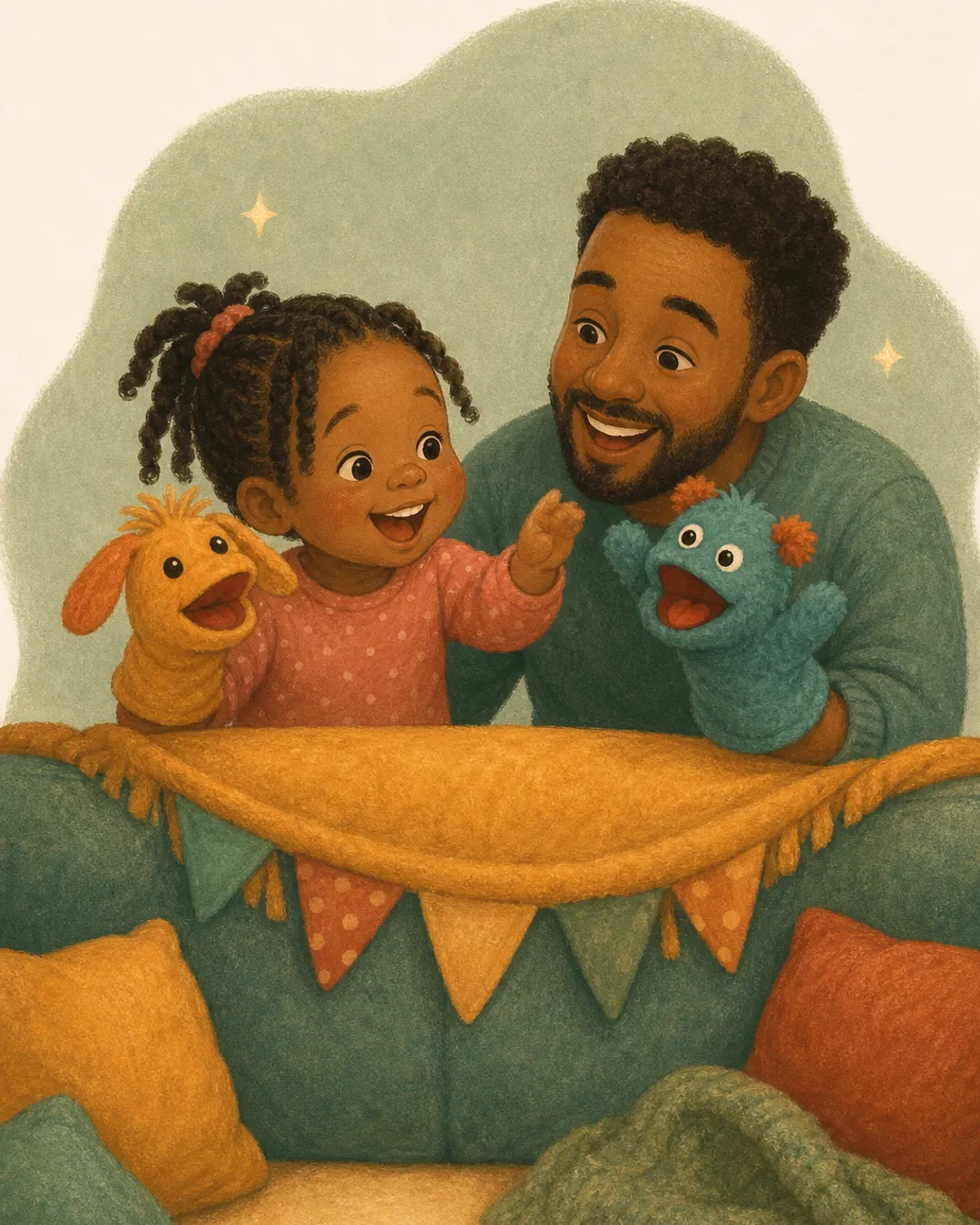
Toddlers often whine because it works, not because they are being difficult. This game makes the difference between a whiny voice and a calm 'asking voice' obvious and fun: a puppet, or you, asks for something twice, once in a drippy whine and once in a clear, friendly voice, and your child decides which is easier to listen to. Hearing the contrast, rather than being told off for whining, helps them notice their own voice and reach for the asking one.
The NHS advises helping a toddler 'let their feelings out in another way' and modelling calm rather than reacting, because a child copies the tone they hear. Whining usually means a need is real but the delivery has slipped into a habit. Playing the two voices side by side, instead of scolding the whine, lets your child actually hear the difference and choose the clearer one. Because you have made it a game rather than a correction, switching to the asking voice feels like winning, not losing.
One email a week with practical toddler activities, behaviour tips, and developmental insights. No spam, unsubscribe any time.