Tell a short made-up story using exaggerated silly voices for each character.
Activity details
2y–4y5 minslowbothNo prep
Instructions
Tiny Steps
Get ready
Settle somewhere comfortable — sofa, floor, or even in the car
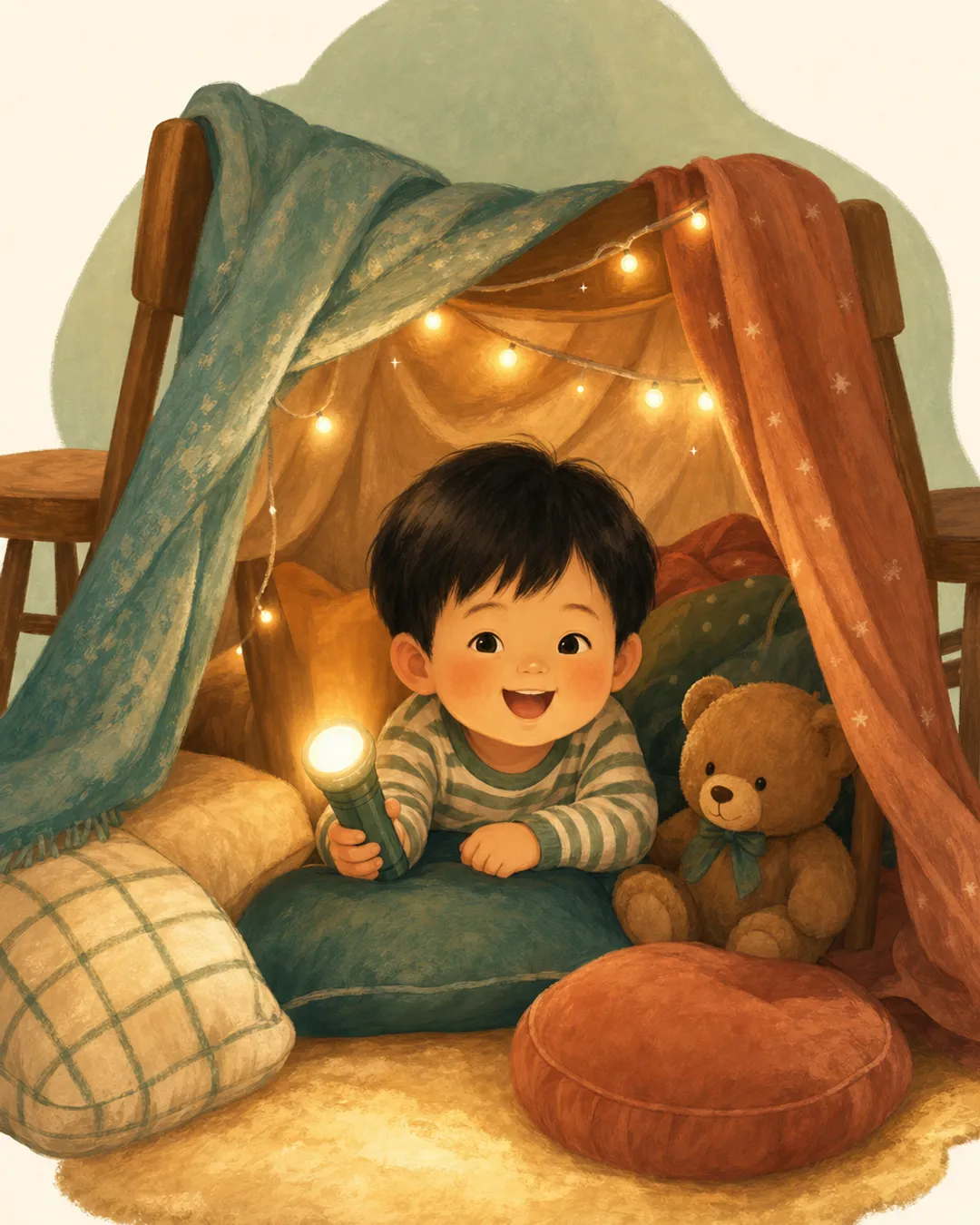
Start with 'Once upon a time there was a very tiny...' and let your toddler fill in the word
1/4
Settle somewhere comfortable — sofa, floor, or even in the car
Start with 'Once upon a time there was a very tiny...' and let your toddler fill in the word
Give the character a distinctive squeaky, deep, or wobbly voice
Introduce a second character with a completely different voice
Keep the plot simple: the character wants something, tries to get it, succeeds
Pause at key moments and ask 'What do you think happened next?'
Use your toddler's suggestions even if they're bonkers — that's the point
End with a cosy resolution and a whispered 'the end'
Parent tip
Start before you overthink it. No-prep activities work best when you begin while the moment is still recoverable.
What success looks like
A few quiet minutes together without pressure. If your child relaxes even slightly, that’s self-regulation building.
Make up a tiny story on the spot — a mouse who lost its cheese, a cloud who wanted to be a puddle — and give each character a different silly voice. Toddlers are captivated by vocal variation, and the exaggerated prosody helps them distinguish between characters, building narrative comprehension. No book needed; the story lives in your voice and your toddler's imagination.
Why it helps
Speech and Language UK recommends following a child's lead during play and narrating what they are doing as one of the most effective ways to build language skills. Exaggerated prosody and vocal variation support phonological awareness and narrative comprehension — toddlers learn to track characters through voice cues alone. Inviting them to contribute plot elements exercises divergent thinking and expressive language, while the co-creation builds a rich joint attention experience.
Variations
Let your toddler assign voices: 'What should the bear sound like?'
Retell the same story the next day and see what they remember — builds narrative recall.
For older toddlers, give them a character to voice while you voice another.
Safety tips
Avoid scary plot elements before bedtime — keep stories light and resolved.
If a toddler introduces violent themes, gently redirect rather than shutting down their input.
Watch for signs of overstimulation if voices are very loud; soften volume gradually.
Try one of these next
A few connected ideas chosen by theme, energy, set-up, and age fit.