While your child is occupied, bury 5-8 small toys in the sandpit — plastic animals, cars, blocks.
Call them over: 'I think someone has hidden treasure in the sandpit!'
1/4
While your child is occupied, bury 5-8 small toys in the sandpit — plastic animals, cars, blocks.
Call them over: 'I think someone has hidden treasure in the sandpit!'
Give them a small spade, a sieve, or let them use their hands.
Encourage digging: 'Keep going, I think there is something there!'
When they find something, celebrate: 'You found the elephant! What else is hiding?'
Count each discovery: 'That is three so far. I think there are more...'
If they get stuck, give clues: 'Try digging near the corner.'
When all toys are found, let them bury them again for you to find — or bury them for next time.
Parent tip
Set out garden trowel and sand before inviting your toddler in so the first minute feels smooth.
What success looks like
Watch for focused exploration — fingers digging in, pouring back and forth, or sorting by feel. Even a few minutes of this builds concentration.
While your child is not looking, bury 5-8 small toys in the sandpit or a tray of sand. They dig, sieve, and search to uncover each one. The anticipation of not knowing what they will find next keeps them engaged, and the physical digging provides deep sensory input through the hands and arms.
Why it helps
Digging provides proprioceptive input — the deep pressure through hands and arms that helps children regulate their sensory system. The anticipation element builds working memory (remembering how many are left) and sustained attention. The WHO recommends daily active play that includes using the hands and arms for manipulation and exploration.
Variations
Use themed objects — all dinosaurs, all letters of their name, all red things — and name the theme after they have found everything.
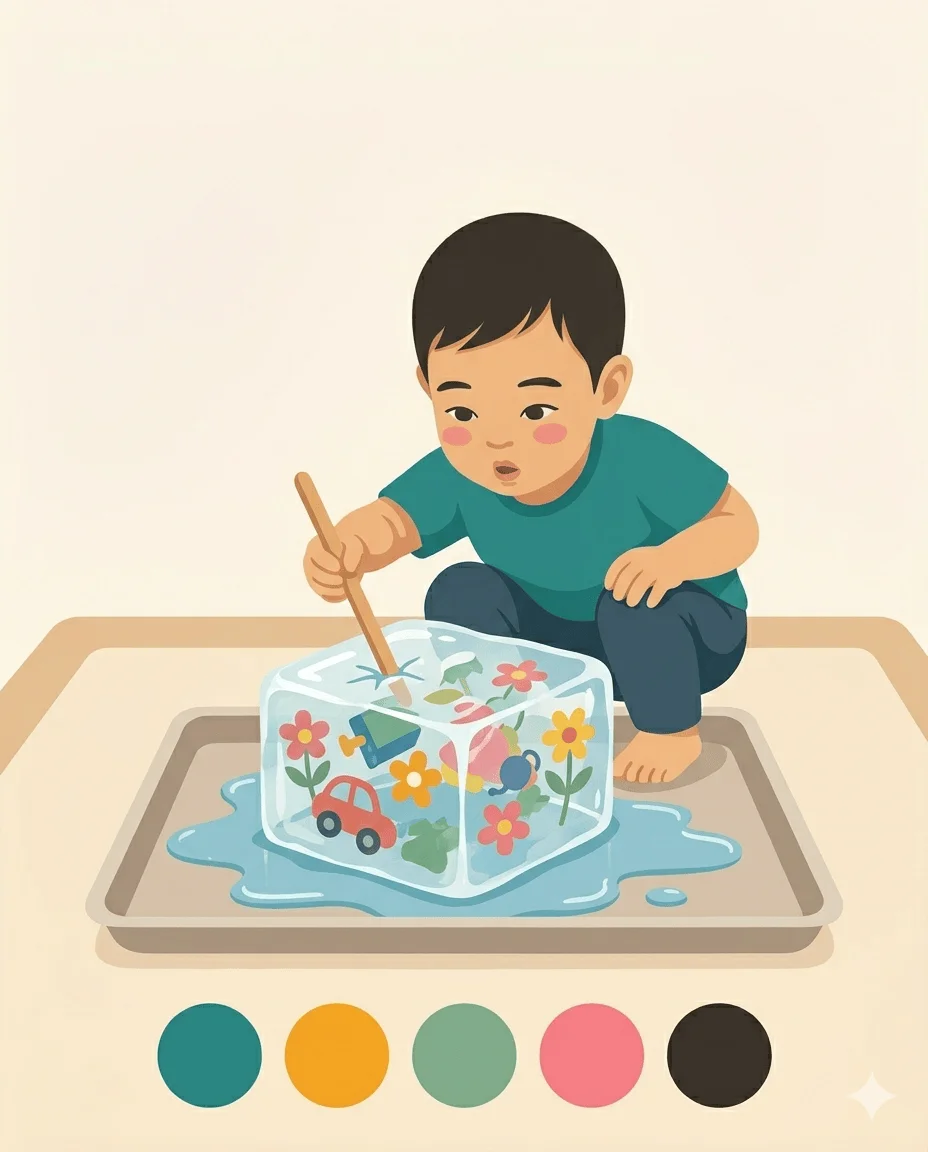
Freeze small toys in ice blocks and bury those instead — they have to dig them out AND melt the ice.
For older toddlers, draw a simple treasure map with X marks and arrows showing where to dig.
Safety tips
Use only toys too large to fit in the mouth — avoid very small objects for children who still mouth things.
Check sand for sharp objects or cat mess before burying toys.
Supervise to ensure sand stays out of eyes and mouth.
Try one of these next
A few connected ideas chosen by theme, energy, set-up, and age fit.