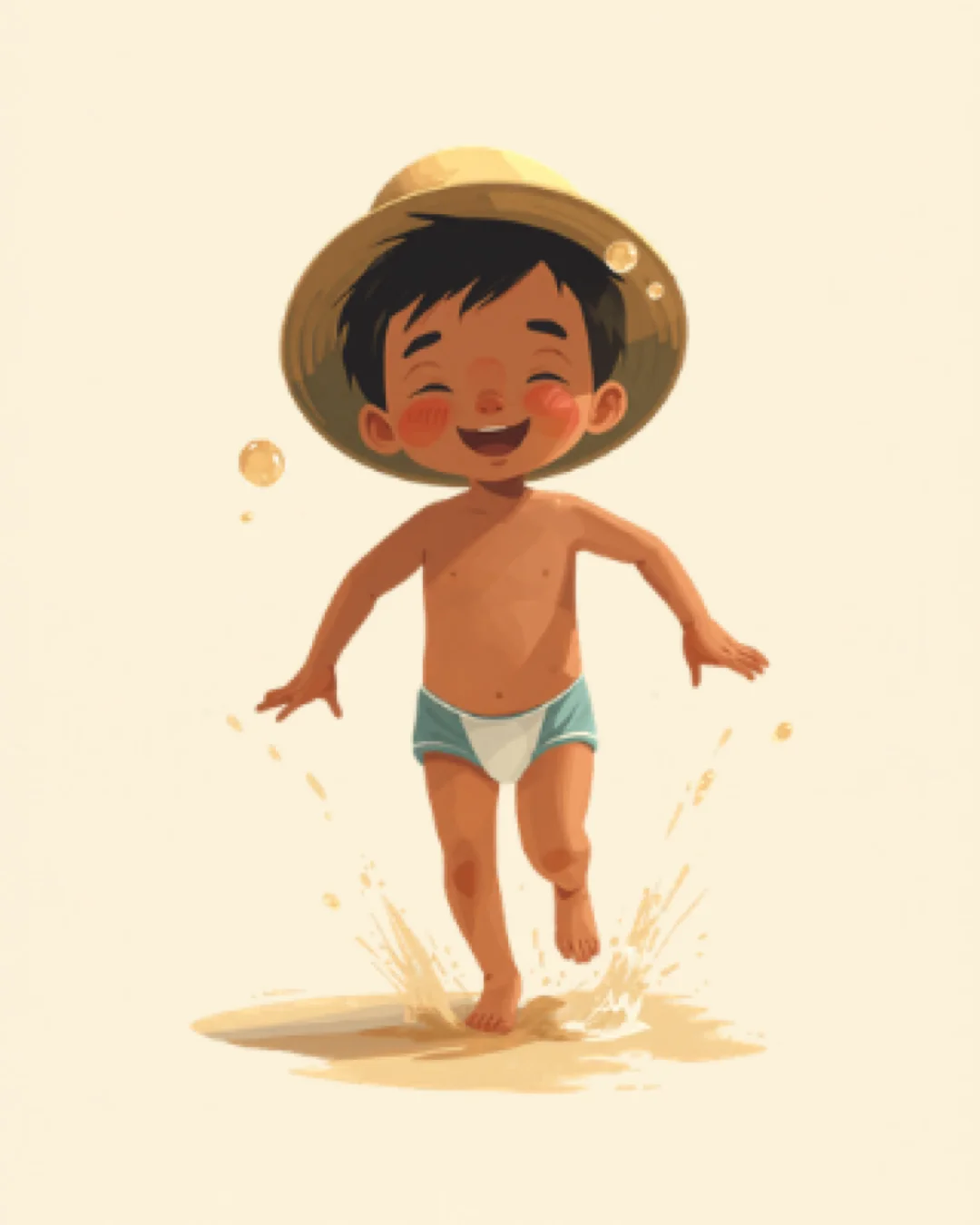
Use a stick to trace letters, numbers, and shapes in damp sand or soft soil outside.
Activity details
2y–4y10 minslowoutdoorNo prep
Instructions
Tiny Steps
Get ready
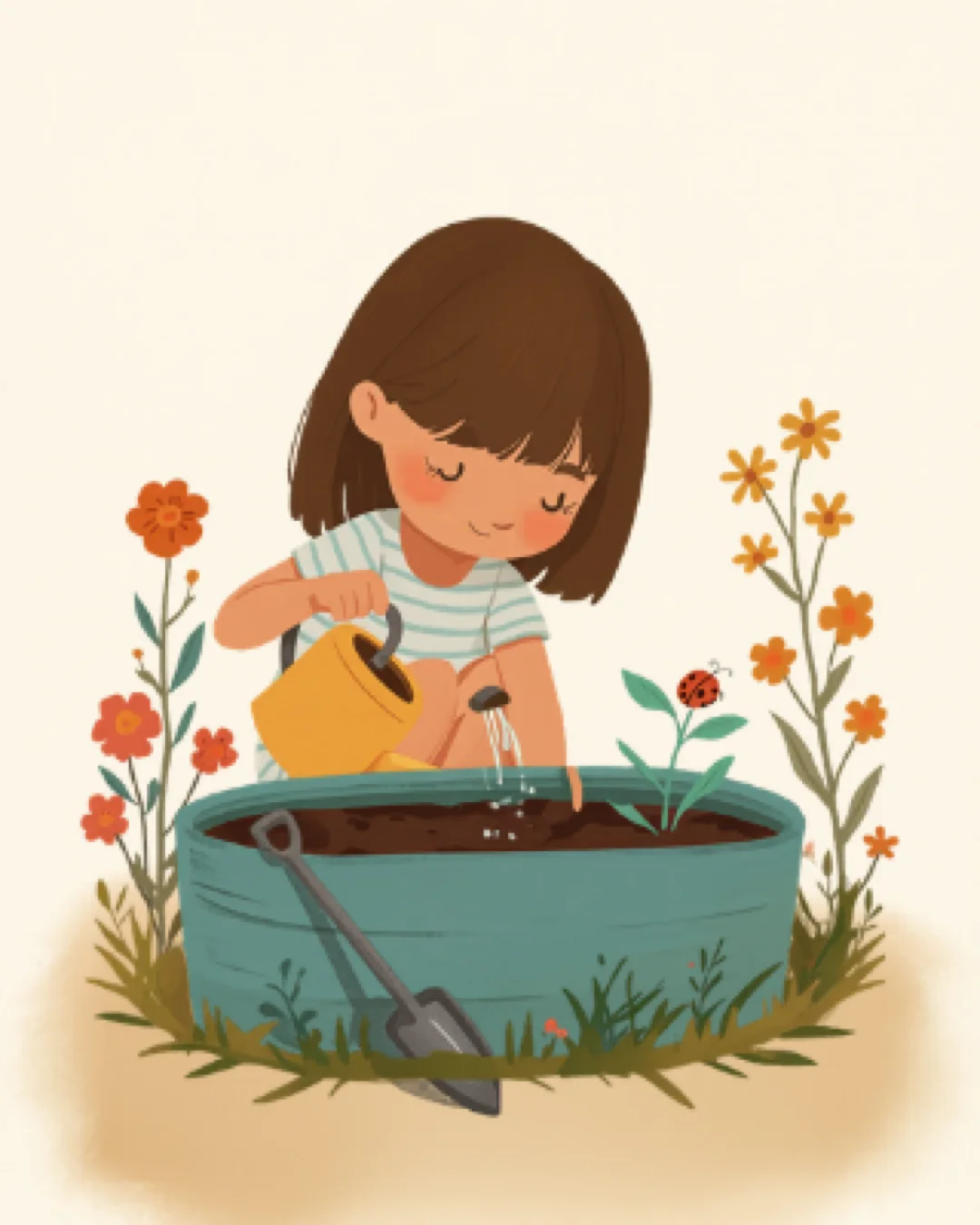
Find a patch of damp sand or soft soil. If using a sandpit, dampen the surface with a watering can.
Find a sturdy stick to use as a writing tool.
1/4
Find a patch of damp sand or soft soil. If using a sandpit, dampen the surface with a watering can.
Find a sturdy stick to use as a writing tool.
Draw a simple shape — a circle, a square — and ask your child to copy it next to yours.
Trace the first letter of their name: 'This is the letter J — can you try?'
Let them have a go. Guide their hand if they want help, but do not correct — any mark is good.
Practise numbers: draw 1, 2, 3 and count as you draw each stroke.
Smooth the sand with your hand to erase and try again: 'A fresh page!'
Let them draw freely — they may want to draw pictures, roads, or patterns instead of letters. Follow their lead.
Parent tip
Start before you overthink it. No-prep activities work best when you begin while the moment is still recoverable.
What success looks like
Curiosity in action — pointing, collecting, asking ‘what’s that?’ A child engaged with nature is learning without knowing it.
At the beach, in a sandpit, or in a patch of soft garden soil, your child uses a stick to trace letters, numbers, and shapes. The ground becomes a giant writing surface with infinite do-overs — just smooth the sand and start again. This outdoor mark-making builds the same skills as pencil-and-paper but with more space, more freedom, and less pressure.
Why it helps
Large-scale mark-making in sand develops the shoulder and arm muscles that support later pencil control — the EYFS Physical Development area identifies this progression from gross motor mark-making to fine motor writing. Sand provides natural resistance and tactile feedback, making letter formation more memorable than pen on paper at this age.
Variations
Write a simple word (their name, 'MUM', 'CAT') and ask them to trace over your letters.
Draw a road for toy cars — adds a play purpose to mark-making.
Use a squeezy bottle of water instead of a stick — the water darkens the sand, creating visible marks that fade as they dry.
Safety tips
Check sand for sharp objects, glass, or animal waste before starting.
Wash hands after playing in sand or soil — especially before eating.
Avoid sand play on very windy days — sand in eyes is painful.
Try one of these next
A few connected ideas chosen by theme, energy, set-up, and age fit.