Parent tip
Start before you overthink it. No-prep activities work best when you begin while the moment is still recoverable.
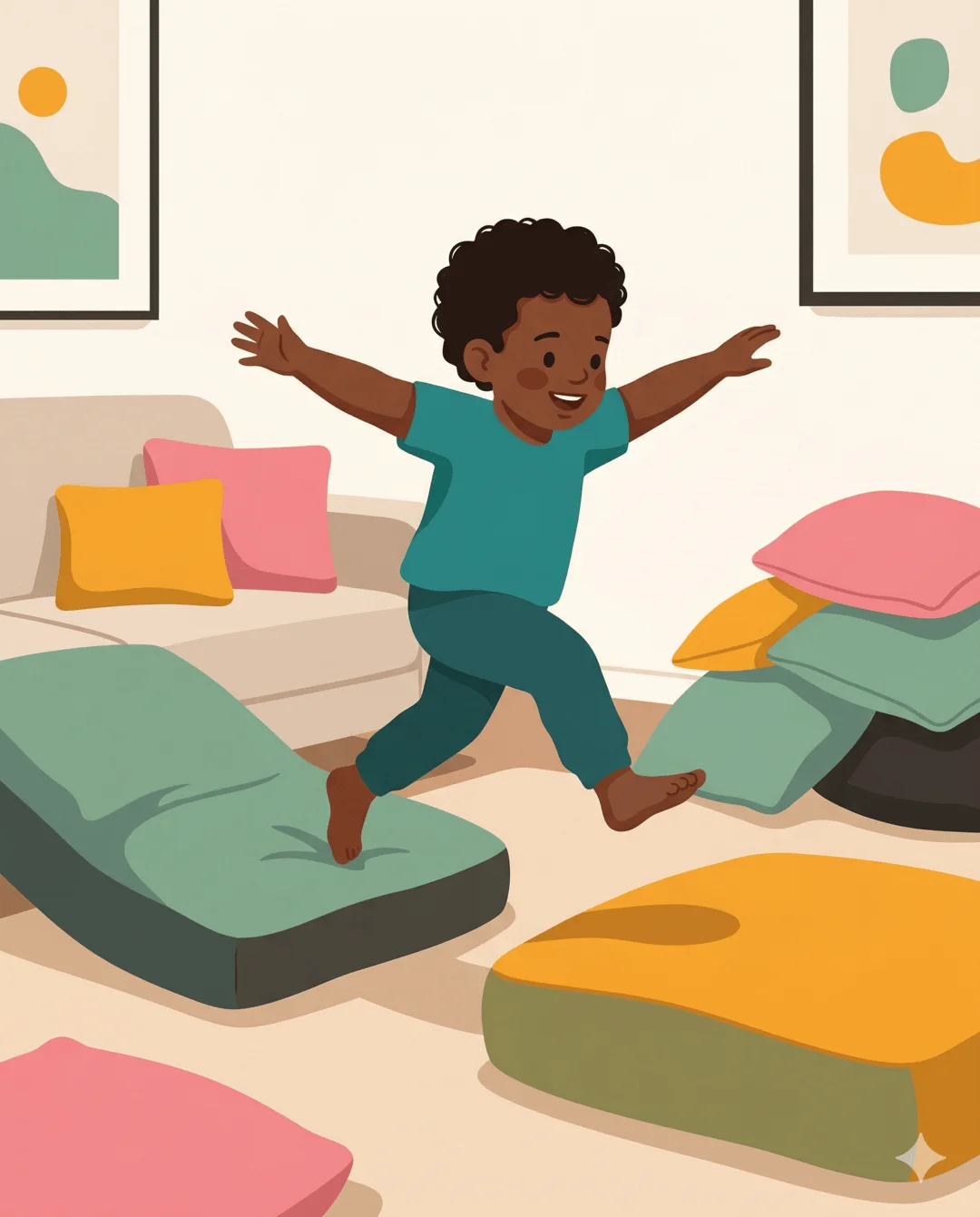
Run on 'green light' and freeze on 'red light' — practising stopping on command through an irresistible movement game.
Tiny Steps
Start before you overthink it. No-prep activities work best when you begin while the moment is still recoverable.

Flushed cheeks, big smiles, and a calmer child afterwards. If they want to do it again, you’ve found a winner.
Stand at one end of the room and call 'Green light — go!' (your toddler runs towards you) and 'Red light — freeze!' (they stop immediately). Start with just these two commands, then add 'Yellow light — walk slowly' for older toddlers. The game trains the exact neural pathway needed for listening: hearing a verbal command, processing it, and overriding current behaviour to respond. It is the foundation of impulse control disguised as the best game ever.
Inhibitory control — the ability to suppress a dominant response (running) in favour of a subdominant one (stopping) — is one of the core executive functions that develops between ages 2 and 5. NHS guidance on active play recommends stop-go games specifically because they provide a safe, playful context for practising this skill. Each successful 'freeze' strengthens the prefrontal cortex's ability to override the motor impulse, training the exact pathway needed for responding to everyday instructions like 'stop' and 'wait' near a road or in a car park.
One email a week with practical toddler activities, behaviour tips, and developmental insights. No spam, unsubscribe any time.