Roll, squish, and shape play dough into letter forms — hands-on letter learning through touch.
Activity details
2y–4y15 minslowindoorCookie CuttersPlay Dough
Instructions
Tiny Steps
Get ready
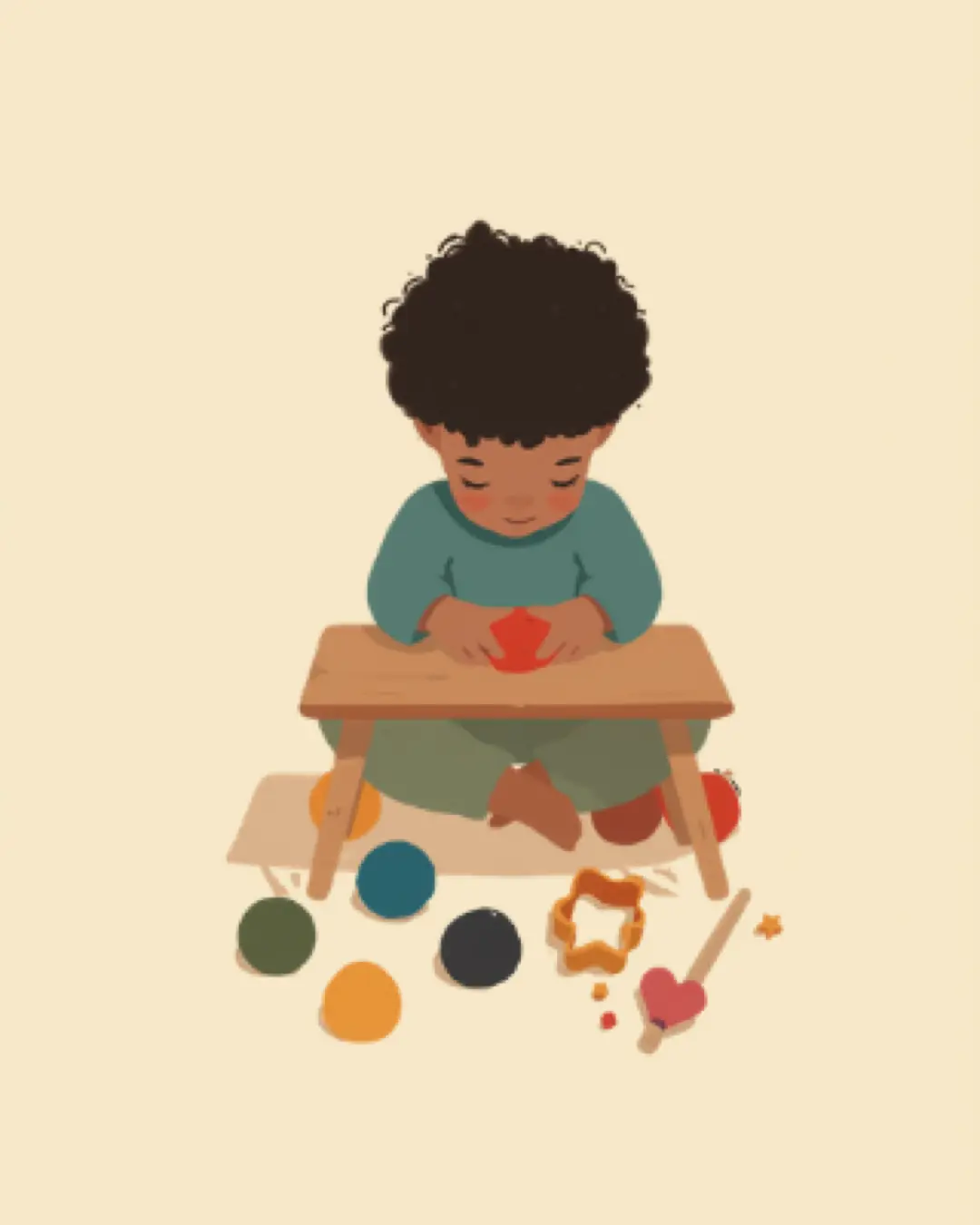
Set out play dough, a rolling surface, and letter-shaped cookie cutters if you have them.
Roll a piece of dough into a long sausage together and say 'Let's make letters out of dough!'
1/4
Set out play dough, a rolling surface, and letter-shaped cookie cutters if you have them.
Roll a piece of dough into a long sausage together and say 'Let's make letters out of dough!'
Start with the letter I — a single straight sausage — 'Look, that's the easiest letter!'
Move to C and O — curves are the next step. Help your child bend the sausage gently.
Try the first letter of their name: 'Can we make an M? We need lots of sausages for this one!'
Once a letter is made, trace over it with a finger and say the letter sound: 'This is mmm — for Mia.'
Line up completed letters on the table and 'read' them — even random sequences feel like a word to a child.
When finished, squish all the letters back into a ball together: 'All the letters are having a rest in their dough bed.'
Parent tip
Set out cookie cutters and play dough before inviting your toddler in so the first minute feels smooth.
What success looks like
Watch for focused exploration — fingers digging in, pouring back and forth, or sorting by feel. Even a few minutes of this builds concentration.
Children roll play dough into sausage shapes and bend them into letters, pressing cookie cutters for the trickier ones. The three-dimensional, tactile nature of the task means letters become objects a child can hold, rotate, and feel — not just flat symbols on a page. This hands-on approach to letter formation is especially powerful for kinaesthetic learners and builds the fine motor control needed for later pencil work.
Why it helps
The National Literacy Trust identifies early mark-making and letter awareness as foundational skills on the pathway to reading and writing. Three-dimensional letter formation provides haptic feedback that two-dimensional writing cannot match. When a child shapes a letter from dough, they engage proprioceptive and tactile processing alongside visual recognition, creating a richer, more durable memory trace for each grapheme. Research shows that children who manipulate letters as physical objects show stronger letter-name and letter-sound knowledge than those who experience letters only through visual exposure.
Variations
Press letters into flattened dough using cookie cutters, then pop them out and trace the shape left behind.
Use two colours of dough and make each letter stripy by twisting colours together before shaping.
For older toddlers, try spelling their name — lay the letters on a piece of card and display it in their room.
Safety tips
Use non-toxic play dough, especially with younger toddlers who may mouth the material.
Supervise cookie cutter use — some cutters have sharp edges that can cut small fingers.
Wash hands after the activity, as prolonged dough contact can dry out sensitive skin.
Try one of these next
A few connected ideas chosen by theme, energy, set-up, and age fit.