TinyStepper

Parallel Talk Playdough

At a glance: Describe what your toddler does with playdough without directing — 'You're squishing it flat! Rolling a snake!' A 10-minute, low-energy indoor activity for ages 18m3y.

Built by a parent of toddlersBest for 18m-3y

Field-tested ideas shaped by direct parenting experience and advice from reputable sources, including NHS Best Start in Life and NSPCC child development research.

18m3y10 minslow energyindoorsome mess

Give your toddler a ball of playdough and sit beside them. Don't instruct. Don't ask questions. Just describe what they're doing: 'You're poking it! Poke poke poke! Now you're squishing... flat! Rolling it... a long snake!' This technique — parallel talk — gives toddlers a running soundtrack of language that exactly matches their experience. It's one of the most effective ways to build vocabulary because every word maps to something they can see, touch, and do.

Best for this moment

for calmer, lower-pressure moments, especially when you need an indoor option.

Parent tip

Set out play dough before inviting your toddler in so the first minute feels smooth.
What success looks like

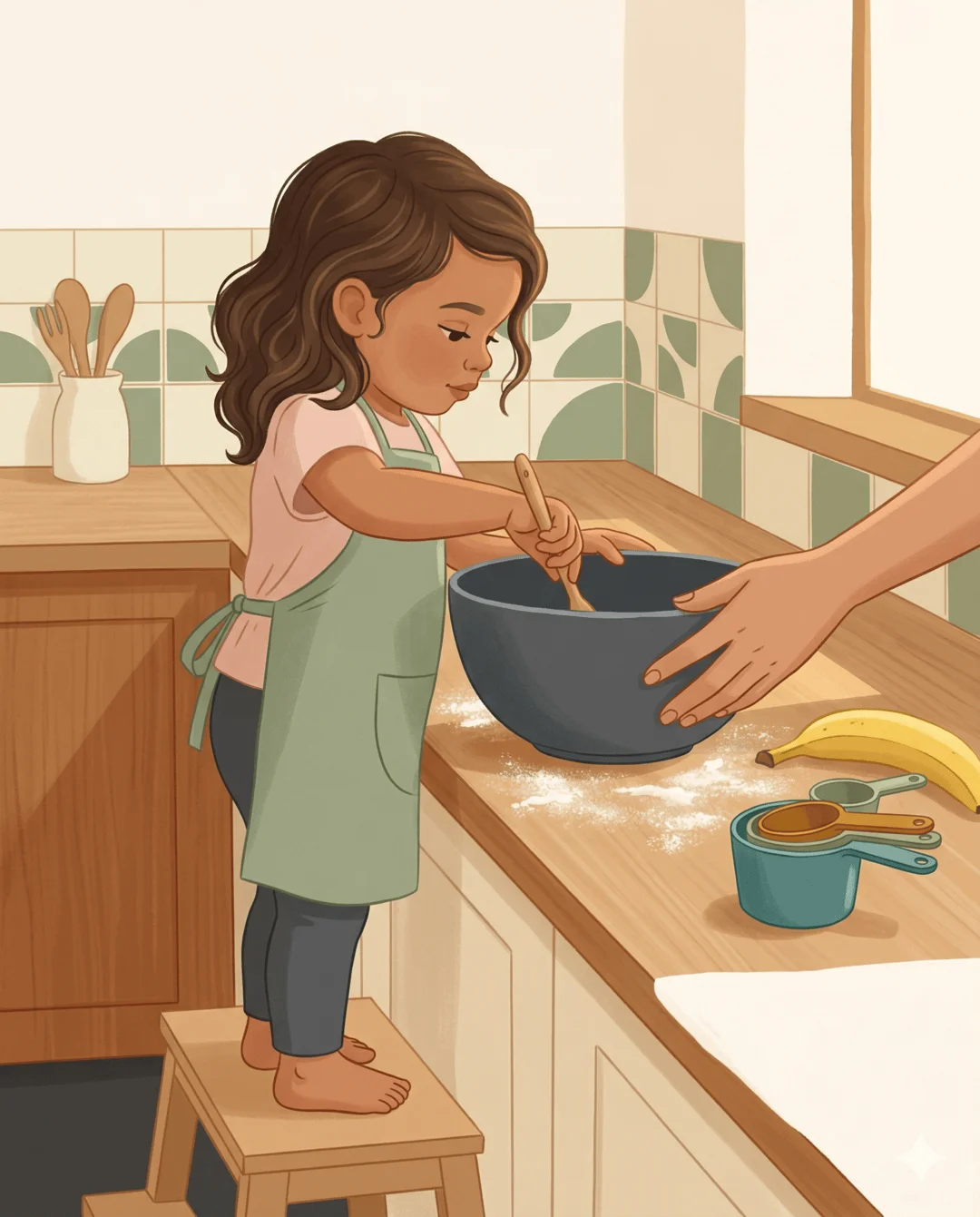
A good outcome is a few minutes of engaged play, some back-and-forth with you, and a small sign of progress in fine motor.

More help for this situation

Instructions

Get ready
  • Give toddler a ball of playdough and sit beside them
  • DON'T tell them what to do. DON'T ask questions.
  1. Give toddler a ball of playdough and sit beside them
  2. DON'T tell them what to do. DON'T ask questions.
  3. Just describe: 'You're poking it! Poke poke!'
  4. Name colours and textures: 'Soft. Squishy. Blue playdough.'
  5. Name actions: 'Rolling! You're rolling it into a long snake!'
  6. Keep your tone warm and enthusiastic — you're a sportscaster, not a teacher
  7. If they look at you, smile and continue: 'Squishing it flat!'

Why it helps

Parallel talk is one of the core techniques recommended by speech and language therapists. By describing what the child does (not what you want them to do), you connect words to their direct experience. It's different from asking questions, which requires a response and can feel like pressure. Commentary is effortless for the child — they just hear words that match what they're already doing. Speech and Language UK recommend following your child's lead and talking about what they're doing as one of the most effective approaches to language support.

Variations

  • Try with water play: 'Pouring! Splash! Filling up the cup!'
  • Try with blocks: 'Stacking! Higher! It's wobbling!'
  • Try outdoors with sand: 'Digging! Big hole! Sandy hands!'

Safety tips

  • Use homemade or non-toxic playdough — toddlers will taste it.
  • Supervise closely to prevent eating large amounts.
  • Clean hands afterwards — some recipes contain salt.

When to pause and seek extra support

Stop if your child becomes distressed, unsafe, or consistently frustrated by the activity. If play, behaviour, or development worries keep showing up across settings, check in with a qualified professional.

Get weekly activity ideas for your toddler

One email a week with practical toddler activities, behaviour tips, and developmental insights. No spam, unsubscribe any time.