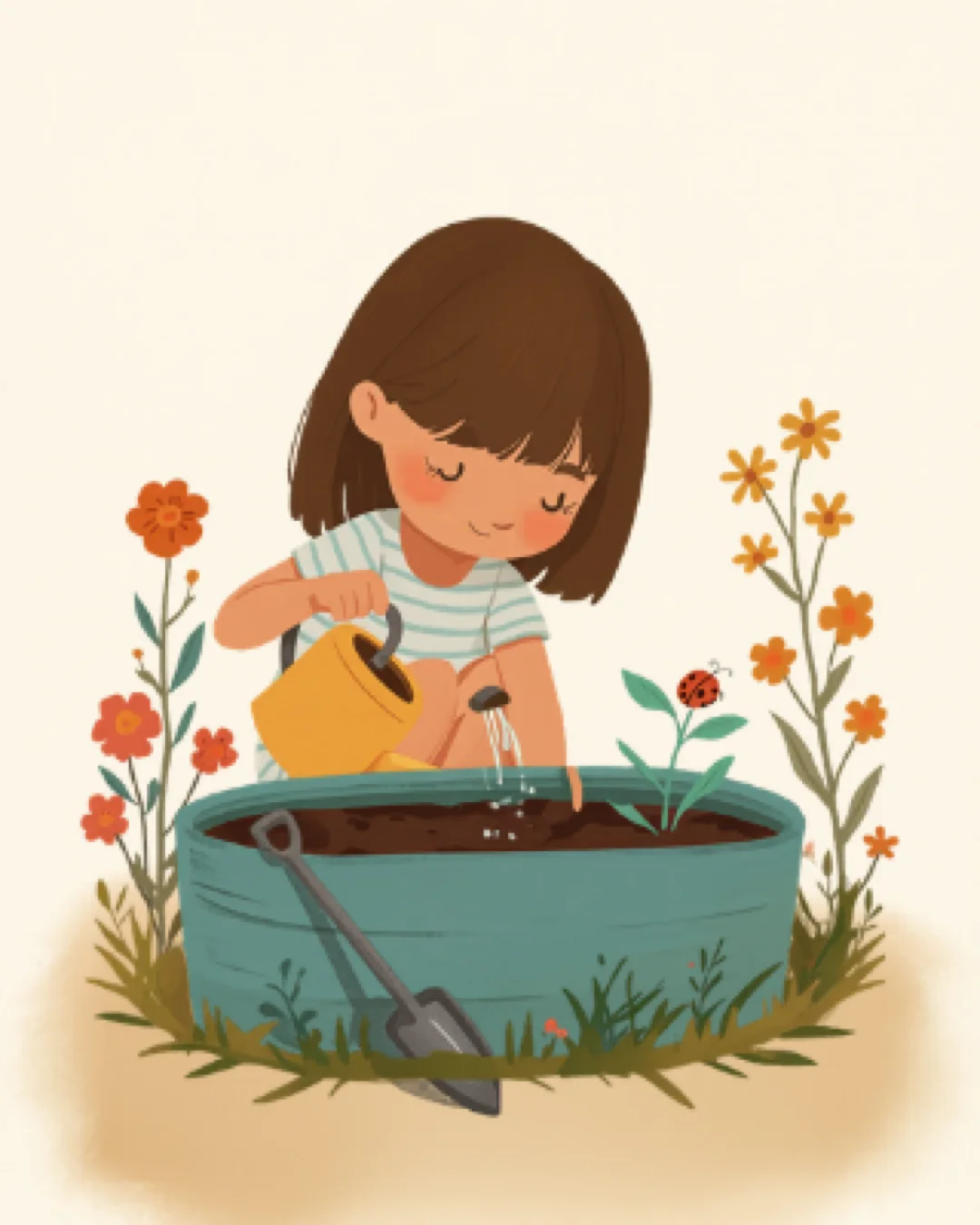
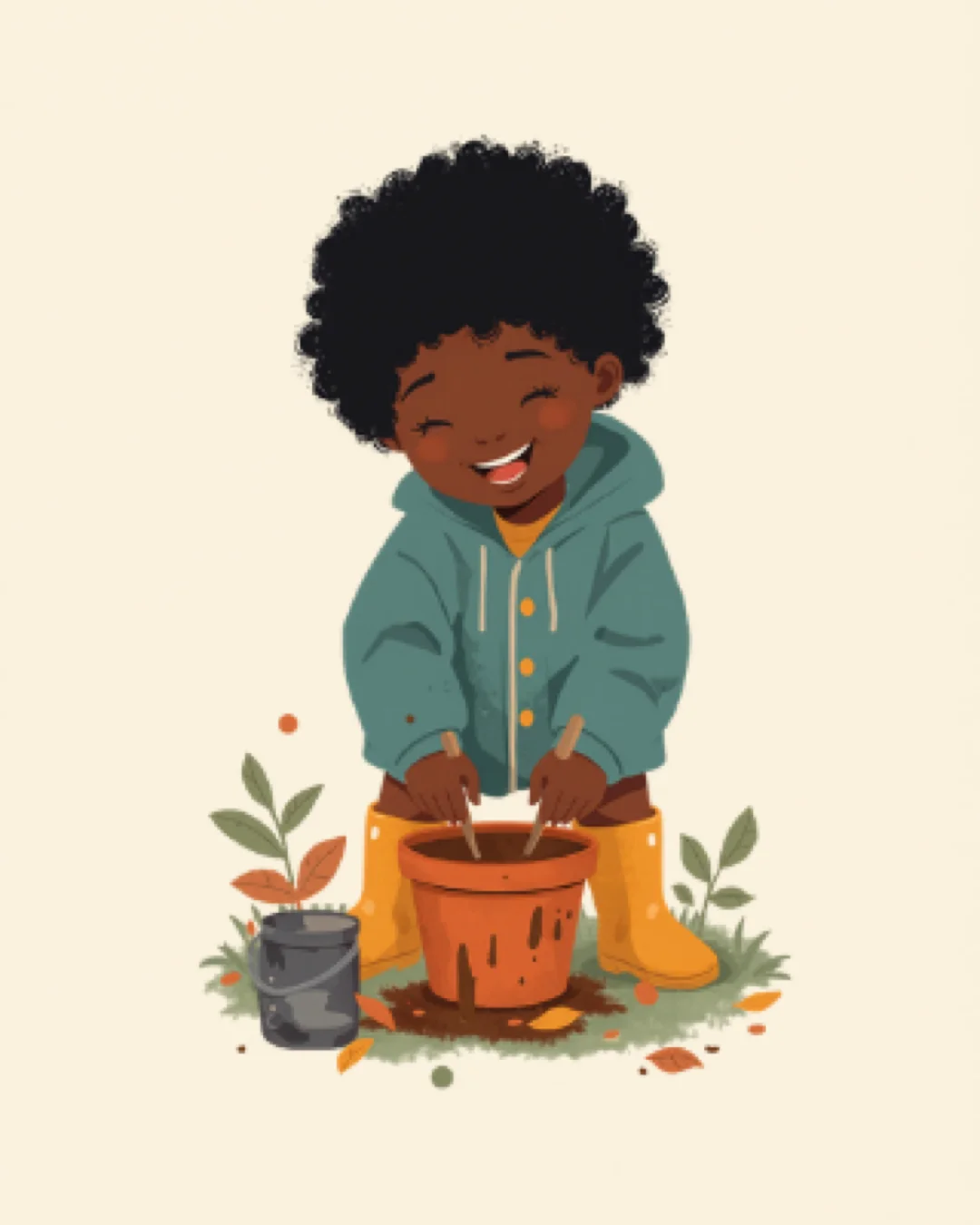
Choose a muddy patch of garden or fill a bucket with soil. Gather a watering can or pitcher of water, plus old pots, cups, and spoons.
Set up the 'bakery' — lay out the containers as mixing bowls and the spoons as utensils on a low bench or the ground.
1/4
Choose a muddy patch of garden or fill a bucket with soil. Gather a watering can or pitcher of water, plus old pots, cups, and spoons.
Set up the 'bakery' — lay out the containers as mixing bowls and the spoons as utensils on a low bench or the ground.
Let your child pour water into the soil a little at a time: 'How much water does your cake need? A little or a lot?'
Stir, squish, and mix together — model patting the mud into shapes: 'I'm making a round pie. What shape is yours?'
Decorate the mud pies with petals, leaves, small stones, and twigs: 'That flower on top is beautiful — is it a cherry on your cake?'
Take 'orders' from stuffed animals or imaginary customers: 'The teddy would like a chocolate mud cake, please!'
Practise serving: 'Here you are, one mud pie! That will be three acorns, please.' Count the pretend payment together.
When play winds down, wash hands together with the hose or at an outdoor tap — the clean-up is part of the fun.
Parent tip
Set out bucket and leaves before inviting your toddler in so the first minute feels smooth.
What success looks like
Curiosity in action — pointing, collecting, asking ‘what’s that?’ A child engaged with nature is learning without knowing it.
Mud play is one of the richest sensory experiences available to young children, and when you frame it as a bakery it gains an imaginative structure that extends play well beyond simple squelching. Children mix, pour, mould, and decorate their creations while narrating orders, choosing flavours, and serving customers. The resistance of mud strengthens hand and finger muscles far more effectively than softer materials like playdough, and the full-body sensory input — cold, gritty, squishy, heavy — is deeply regulating for toddlers who seek or avoid tactile input.
Why it helps
The NHS Best Start in Life programme recommends sensory play as a valuable way for toddlers to explore the world, noting that it supports language development, cognitive growth and fine motor skills. Mud play engages the tactile, proprioceptive, and vestibular senses simultaneously, making it one of the most powerful sensory integration activities for young children. The heavy, resistive texture of mud provides deep pressure input that helps regulate the nervous system — which is why many children are visibly calmer after messy outdoor play. The pretend-play bakery framework also develops narrative language, social reciprocity, and early numeracy through counting and 'transactions.'
Variations
Add scented herbs like lavender or rosemary from the garden to create 'flavoured' mud pies — this adds an olfactory sensory layer.
Freeze mud pies overnight and explore how the texture changes when they're solid — compare frozen and fresh mud.
Provide cookie cutters to stamp mud into shapes, building fine motor precision and shape recognition.
Safety tips
Ensure the soil is free from animal waste, broken glass, or sharp debris before play begins — check the area carefully.
Supervise closely if your child is still in the mouthing phase, as garden soil may contain harmful bacteria.
Have a towel and change of clothes ready for afterwards, and wash hands thoroughly with soap and warm water.
Try one of these next
A few connected ideas chosen by theme, energy, set-up, and age fit.