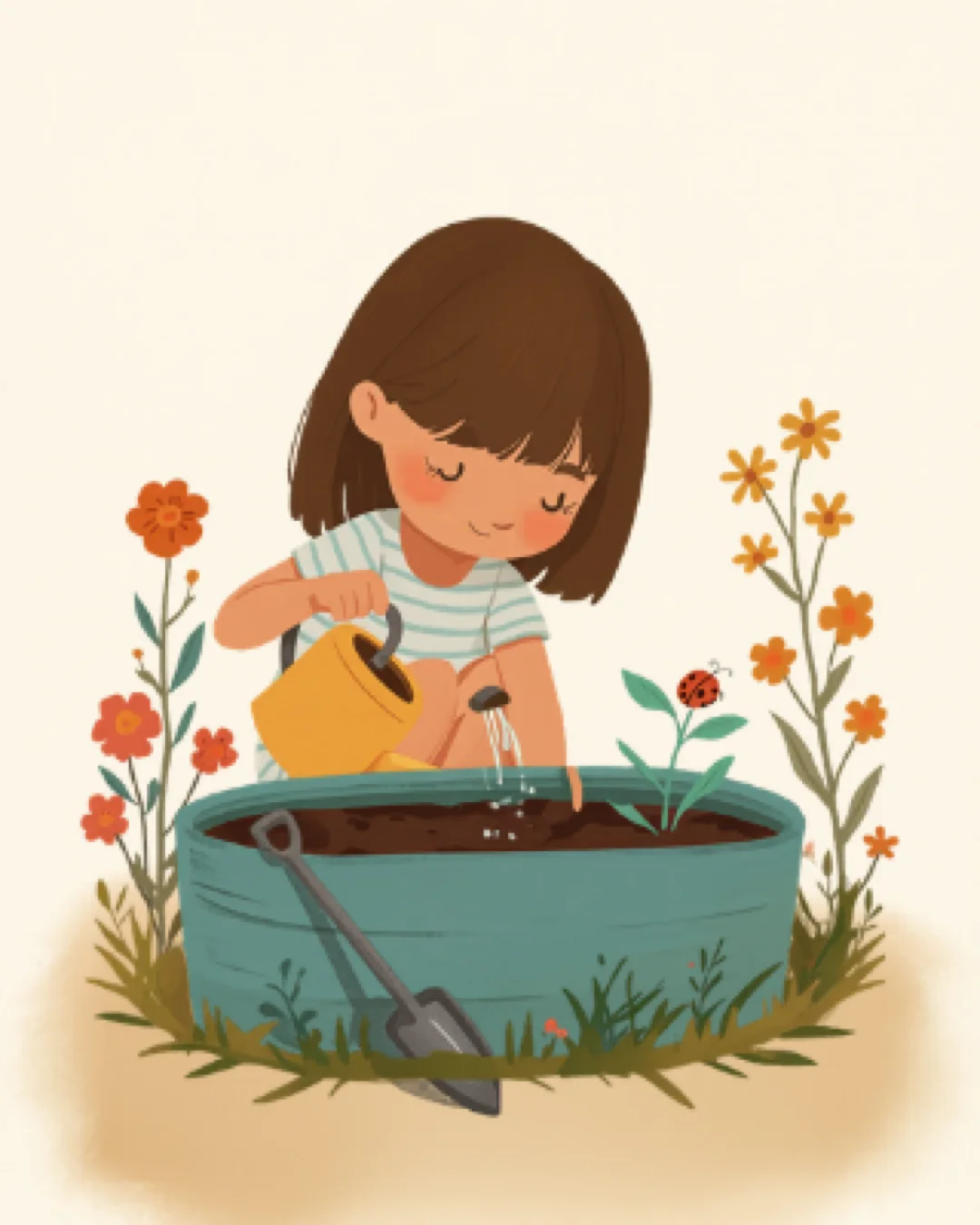
Mix mud 'soups' and 'cakes' decorated with spring flowers, petals, and leaves in an outdoor mud kitchen.
Activity details
18m–4y20 minsmediumoutdoorBucketPots and PansWaterWooden Spoons
Instructions
Tiny Steps
Get ready
Set up a mud kitchen area using a low table, upturned crate, or even the ground — lay out pots, bowls, and spoons.
Add a bucket of water and a patch of accessible soil nearby.
1/4
Set up a mud kitchen area using a low table, upturned crate, or even the ground — lay out pots, bowls, and spoons.
Add a bucket of water and a patch of accessible soil nearby.
Collect spring decorations together first: daisies, dandelions, clover, small leaves, grass.
Show your toddler how to mix soil and water in a pot: 'Let us make a spring soup — what shall we add?'
Encourage them to stir, pour, and mix using different utensils — wooden spoons, old ladles, cups.
Invite them to decorate their creations with the flowers and leaves: 'A daisy on top — beautiful!'
Play along — taste their 'cooking,' place orders, and ask what is on the menu today.
When finished, leave the creations outside to dry or wash everything down together with the hose.
Parent tip
Set out bucket and pots and pans before inviting your toddler in so the first minute feels smooth.
What success looks like
Curiosity in action — pointing, collecting, asking ‘what’s that?’ A child engaged with nature is learning without knowing it.
Your toddler becomes a spring chef, mixing soil and water in pots and pans to create mud soups, pies, and cakes, then decorating them with daisies, dandelions, leaves, and grass clippings. The open-ended nature of mud kitchen play means there is no right or wrong — a handful of petals on a mud cake is a gourmet creation in their eyes.
Why it helps
Mud kitchen play develops creativity, language, and social skills simultaneously. The mixing, pouring, and stirring strengthen bilateral hand coordination, while the imaginative role-play builds narrative language and sequencing skills that support early literacy. The National Literacy Trust recommends play-based approaches like this as the most effective way to build early reading and writing foundations.
Variations
Add food colouring to the water for 'coloured soups' — a few drops of yellow makes 'buttercup broth.'
Include old herb pots or dried pasta in the kitchen for extra realistic cooking play.
Set up a 'café' with a menu card and take turns being the chef and the customer.
Safety tips
Check the soil area for sharp stones, glass, or animal droppings before play begins.
Wash hands and under fingernails thoroughly afterwards — keep a towel and soap nearby.
Ensure pots and pans used outdoors are either dedicated garden toys or thoroughly cleaned before returning to the kitchen.
Try one of these next
A few connected ideas chosen by theme, energy, set-up, and age fit.