TinyStepper

Let's Play Doctors

At a glance: Set up a pretend GP surgery at home — your toddler examines teddy, learning what happens at a real appointment. A 15-minute, low-energy indoor activity for ages 2y4y.

Built by a parent of toddlersBest for 2y-4y

Field-tested ideas shaped by direct parenting experience and advice from reputable sources, including NHS Best Start in Life and NSPCC child development research.

2y4y15 minslow energyindoornone mess

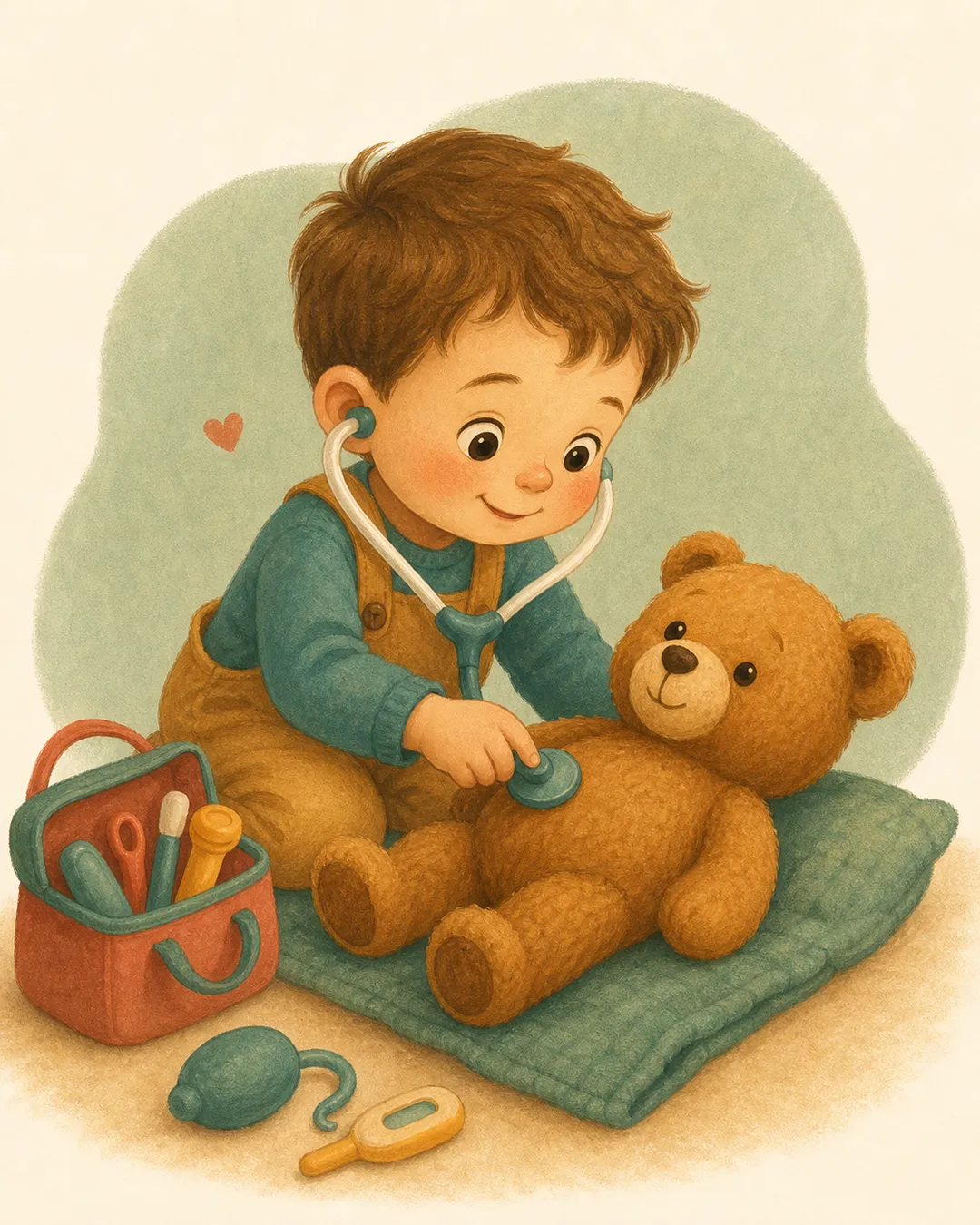
Transform a corner of the room into a pretend doctor's surgery. Your toddler is the doctor, teddy is the patient. Using a toy stethoscope (or a cardboard tube held to teddy's chest), they check teddy's heartbeat, look in teddy's ears, and say 'open wide.' You narrate each step: 'First we sit in the waiting room, then our name gets called, then the doctor checks us over.' Walking through the sequence in play removes the fear of the unknown that makes real appointments so stressful for toddlers.

Best for this moment

for calmer, lower-pressure moments, especially when you need an indoor option.

Parent tip

Set out stuffed animals and toilet roll tubes before inviting your toddler in so the first minute feels smooth.
What success looks like

A good outcome is a few minutes of engaged play, some back-and-forth with you, and a small sign of progress in emotional regulation.

More help for this situation

Instructions

Get ready
  • Set up a 'waiting room' with chairs and a 'reception desk' (a small table)
  • Give your toddler a toy stethoscope or cardboard tube
  1. Set up a 'waiting room' with chairs and a 'reception desk' (a small table)
  2. Give your toddler a toy stethoscope or cardboard tube
  3. Teddy arrives as the patient — your toddler calls their name
  4. Walk through each step: 'The doctor looks in teddy's ears first'
  5. Let your toddler examine teddy: listen to chest, check ears, say 'open wide'
  6. Narrate reassuringly: 'See? The doctor is gentle. Teddy feels fine!'
  7. Finish with teddy getting a sticker for being brave
  8. Swap roles if your toddler wants to be the patient

Why it helps

Fear of medical appointments stems primarily from unpredictability — toddlers don't know what will happen or how it will feel. Pretend play allows them to rehearse the sequence in a safe, controlled environment where they hold the power. When they arrive at the real appointment, the steps feel familiar rather than frightening. Role-playing as the doctor also builds empathy and reduces the power imbalance they feel with unfamiliar adults.

Variations

  • Add a 'pharmacy' where teddy collects pretend medicine (a small box of raisins) afterwards.
  • Play before an actual GP appointment and name the real doctor: 'Just like Dr Smith will do!'
  • Include a weighing and measuring step using a kitchen scale and tape measure.

Safety tips

  • Ensure cardboard tubes have no staples or sharp edges.
  • Avoid using real medical instruments — keep everything toy-sized and safe.
  • If your toddler seems anxious rather than playful, follow their lead and simplify the game.

When to pause and seek extra support

Stop if your child becomes distressed, unsafe, or consistently frustrated by the activity. If play, behaviour, or development worries keep showing up across settings, check in with a qualified professional.

Get weekly activity ideas for your toddler

One email a week with practical toddler activities, behaviour tips, and developmental insights. No spam, unsubscribe any time.