TinyStepper
Parent and child clapping hands together mid-nursery-rhyme on a rug

Goodbye Dolly Drop-Off

Role-play a full nursery drop-off with a doll — saying goodbye, leaving the doll at the 'nursery', going about the day, then coming back to collect.

Activity details

2y4y12 minslowindoorStuffed Animals

Instructions

Get ready
  • Pick a doll and set up a 'nursery' in one corner — chair, soft toys, maybe a stuffed animal as the key worker.
  • Hand your child the doll. 'You're the mummy today. Dolly is going to nursery.'
  1. Pick a doll and set up a 'nursery' in one corner — chair, soft toys, maybe a stuffed animal as the key worker.
  2. Hand your child the doll. 'You're the mummy today. Dolly is going to nursery.'
  3. Walk together to the nursery corner with the doll.
  4. Help dolly hang up her coat and put her bag on the floor.
  5. Have your child give dolly a kiss and say goodbye in their own words.
  6. Hand dolly to the teddy key worker. Walk away together.
  7. Pretend to do other things — go to the shops, do some work, eat lunch.
  8. Walk back to the nursery corner: 'Time to collect dolly!' Your child gives dolly a big hug.

Parent tip

Set out stuffed animals before inviting your toddler in so the first minute feels smooth.
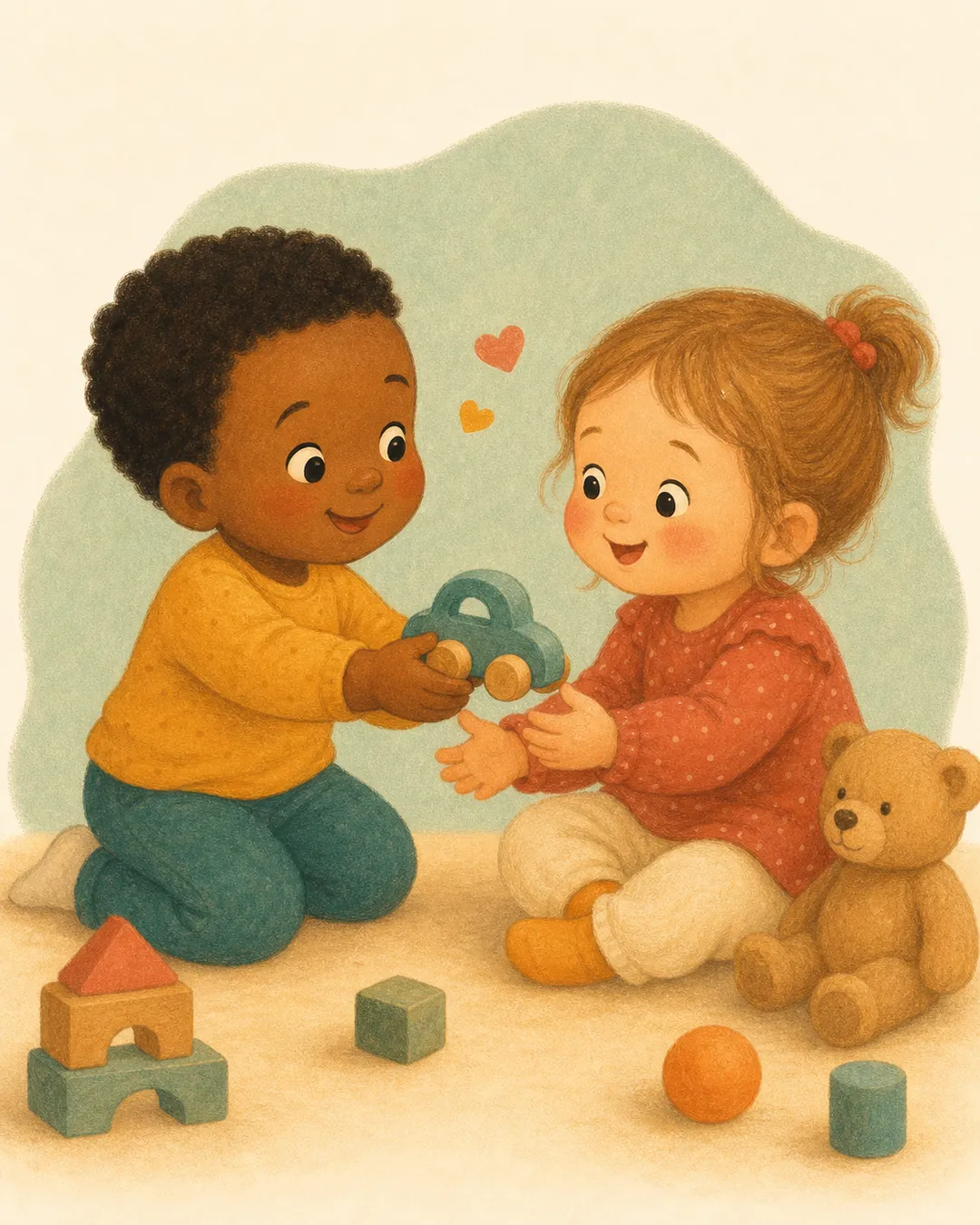
Parent and child sitting face-to-face laughing together in a warm shared moment

What success looks like

Back-and-forth between you — words, gestures, shared pretend. Connection is the real outcome here.

Set up a corner of the room as the 'nursery' — a chair, a few toys, maybe a teddy as the key worker. Your child plays the parent, the doll plays the toddler. Together you walk through the whole sequence: arrive, hang up the doll's coat, give it to teddy the key worker, say goodbye, leave, come back at the end. Walking through it in play, in a context where your child holds all the power, drains the fear out of the real version because they already know how the story ends — the parent comes back.

Why it helps

AAP HealthyChildren guidance on preparing a child for childcare recommends that parents 'practise being apart' before the real start. Dramatic play does this work in a uniquely powerful way — research from NSPCC's Look Say Sing Play programme highlights pretend play as one of the strongest tools young children have for processing big feelings, because they get to control the story in a way they can't control real life. By rehearsing the goodbye and the return, the child learns the shape of the day before they have to live it.

Variations

  • Swap roles — you be the parent, your child plays the dolly. They get to feel both sides.
  • Add a wobble: 'Dolly is feeling a bit sad about goodbye. What can mummy do?' Let your child solve it.
  • Build a more elaborate nursery over time with cushions and a snack tray, until the corner becomes a regular play setup.

Safety tips

  • Avoid making the play too realistic if your child is currently anxious about an upcoming start — start gentle.
  • Don't force the sad-feeling variation if your child resists; they may not be ready.
  • Use a doll your child already loves rather than a brand-new one, so the emotional connection is real.

Get weekly activity ideas for your toddler

One email a week with practical toddler activities, behaviour tips, and developmental insights. No spam, unsubscribe any time.