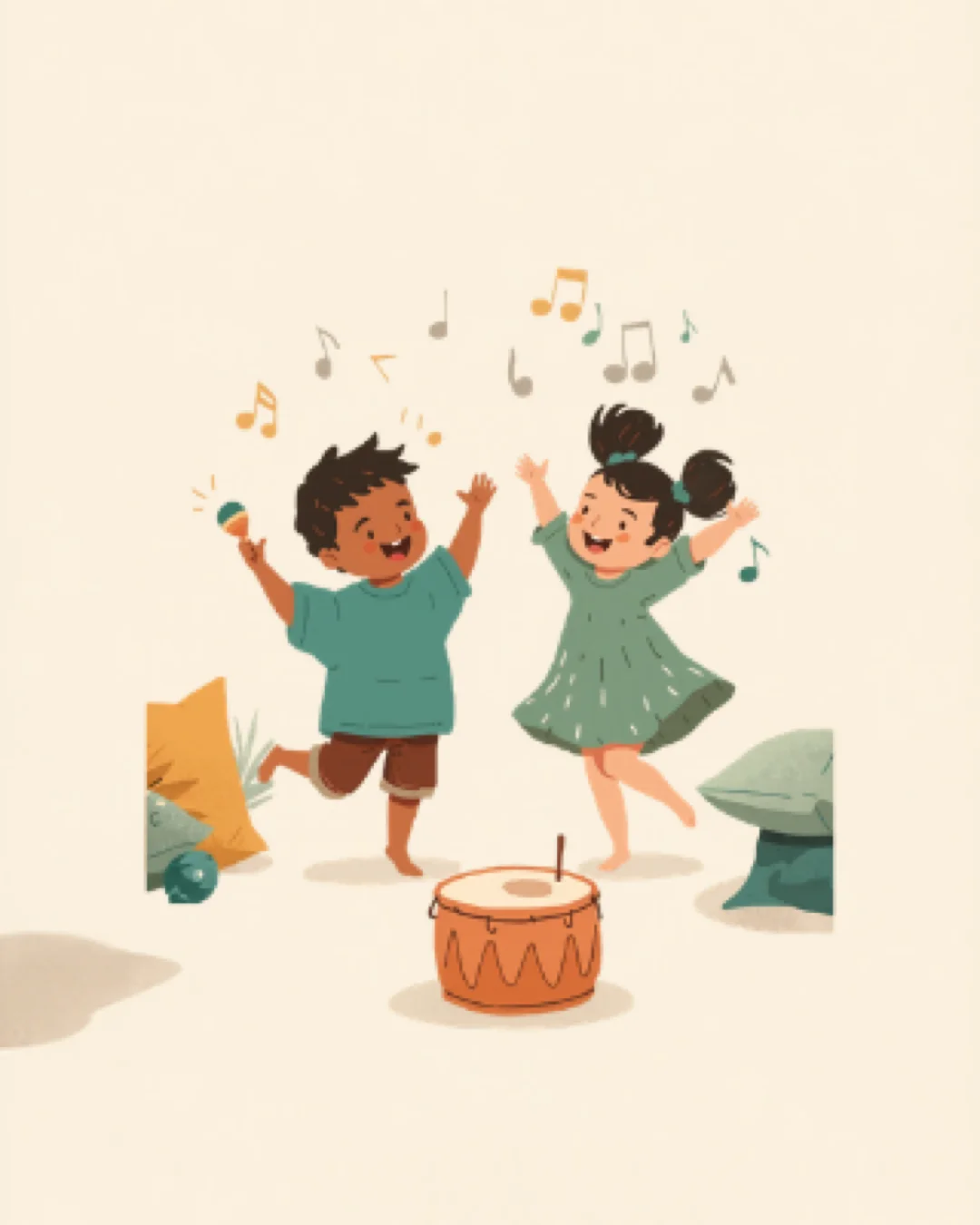
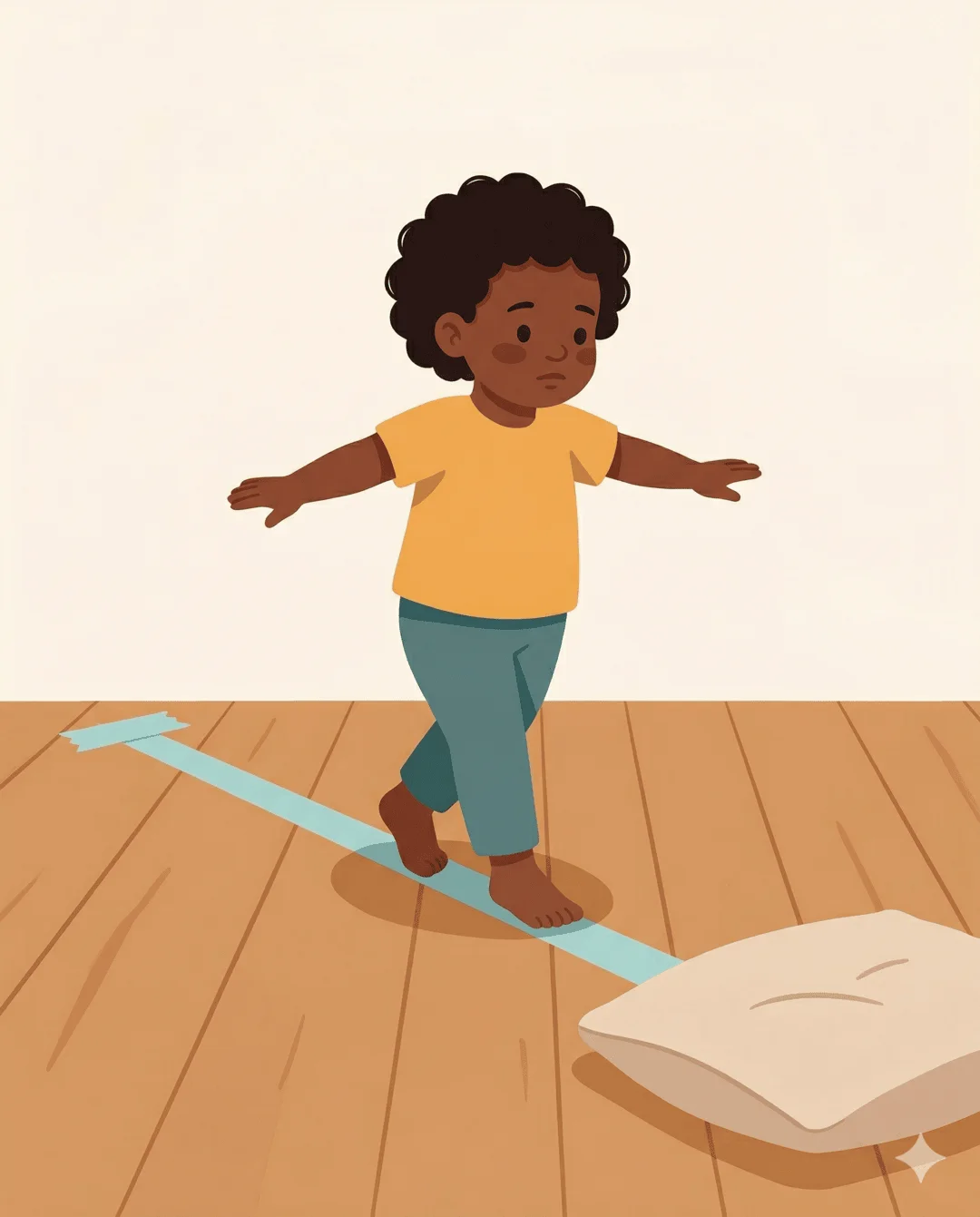
Stomp, clap, or jump every time you hear a word that starts with a chosen sound — a whole-body phonics game.
Activity details
2y–3y10 minshighbothNo prep
Instructions
Tiny Steps
Get ready
Choose a target sound your child hears often — 'b' and 's' are good starters because they are easy to stretch.
Say 'We're going to listen for the buh sound. Every time you hear buh, stomp your feet!'
1/4
Choose a target sound your child hears often — 'b' and 's' are good starters because they are easy to stretch.
Say 'We're going to listen for the buh sound. Every time you hear buh, stomp your feet!'
Start with a slow stream of words, mixing target and non-target: 'ball… cat… banana… shoe… bear.'
Stomp along with your child at first so they see the pattern and feel confident joining in.
Gradually speed up the stream and add sillier words to keep them giggling — 'bumbleflop… sausage… boppity!'
Swap the action: 'Now we clap for buh words!' This resets attention and keeps the game fresh.
After a few rounds, invite your child to say the words while you stomp — this reversal deepens their awareness of the sound.
Wind down by whispering three buh words together very quietly and giving a final gentle stomp: 'Our feet are brilliant sound-finders.'
Parent tip
Start before you overthink it. No-prep activities work best when you begin while the moment is still recoverable.
What success looks like
Flushed cheeks, big smiles, and a calmer child afterwards. If they want to do it again, you’ve found a winner.
This activity turns phonemic awareness into a physical game. You say a stream of words and your child stomps or claps when they hear one that starts with the target sound. Linking a big body movement to a specific sound helps the brain anchor that sound in memory, building the auditory discrimination that underpins early reading.
Why it helps
The National Literacy Trust identifies phonological awareness — the ability to hear and manipulate sounds in words — as the critical foundation for learning to read. Phonemic awareness — the ability to hear and isolate individual sounds in words — is the single strongest predictor of later reading success. By pairing sound recognition with gross motor movement, this activity engages multisensory learning pathways, helping the brain form stronger phonological representations. The game format keeps the cognitive load low while repetition builds automatic sound recognition.
Variations
Use animal sounds as targets instead of letter sounds — stomp for every word that starts like 'ssssnake.'
Play outdoors and jump in puddles for target sounds instead of stomping — the splash adds sensory reward.
For a calmer version, use a bean bag toss: throw the bag into a basket only when you hear the target sound.
Safety tips
Ensure the stomping area is clear of toys and sharp edges, especially if your child gets excited and starts jumping.
On hard floors, bare feet or socks with grip dots reduce slipping during enthusiastic stomps.
Keep sessions short — five to ten minutes is plenty before auditory attention naturally fades at this age.
Try one of these next
A few connected ideas chosen by theme, energy, set-up, and age fit.