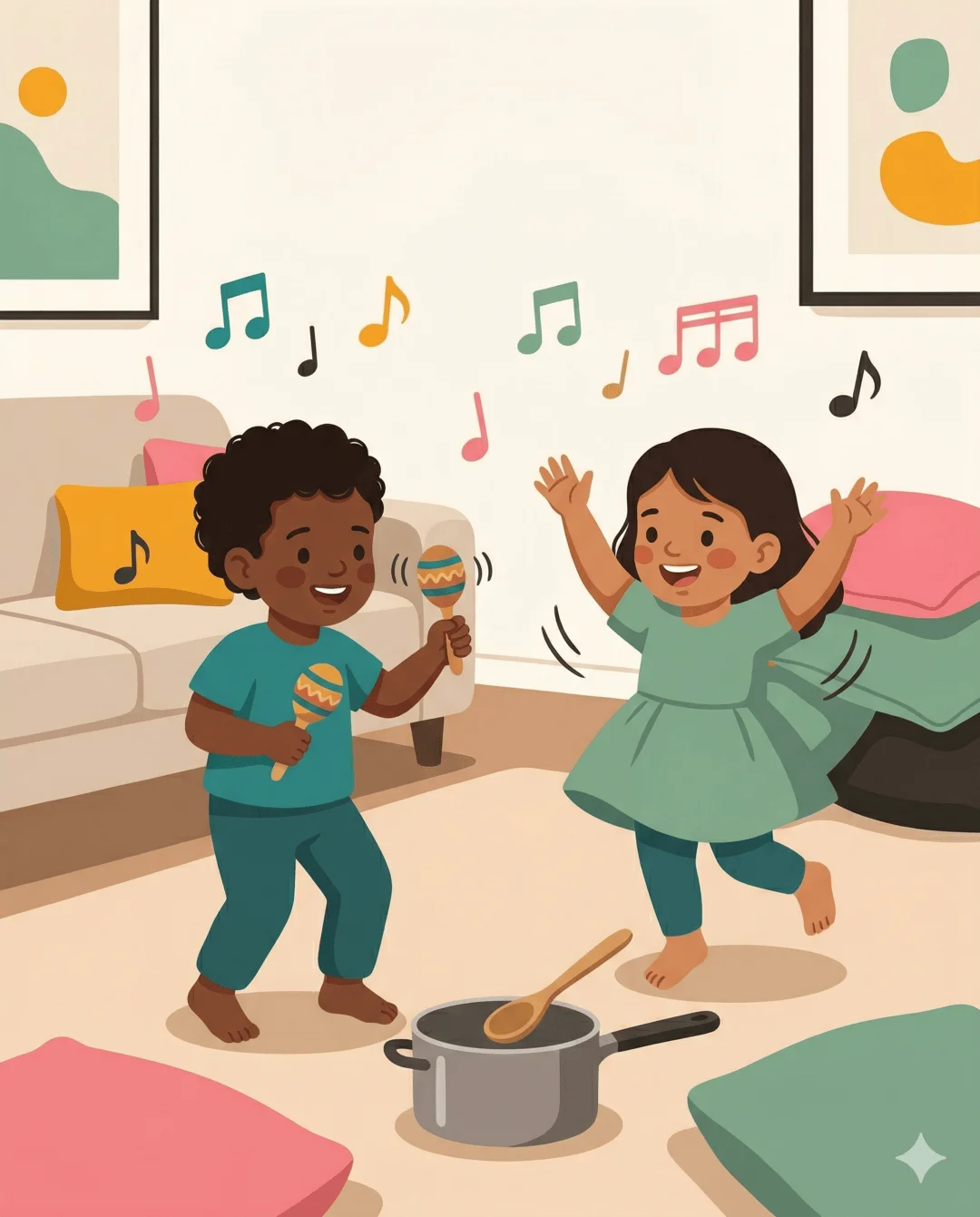
Dance wildly when the music plays, freeze like a statue when it stops — a high-energy listening game toddlers never tire of.
Activity details
19m–4y15 minshighbothNo prepFabric Strips
Instructions
Tiny Steps
Get ready
Clear a safe space in the living room and put on your child's favourite upbeat music — anything with a strong rhythm works well.
Say: 'When the music plays, we dance as fast and silly as we can! When it stops — FREEZE! Don't move a muscle!'
1/4
Clear a safe space in the living room and put on your child's favourite upbeat music — anything with a strong rhythm works well.
Say: 'When the music plays, we dance as fast and silly as we can! When it stops — FREEZE! Don't move a muscle!'
Start the music and dance alongside your child — jump, spin, wave your arms, stamp your feet. Be as exaggerated as possible.
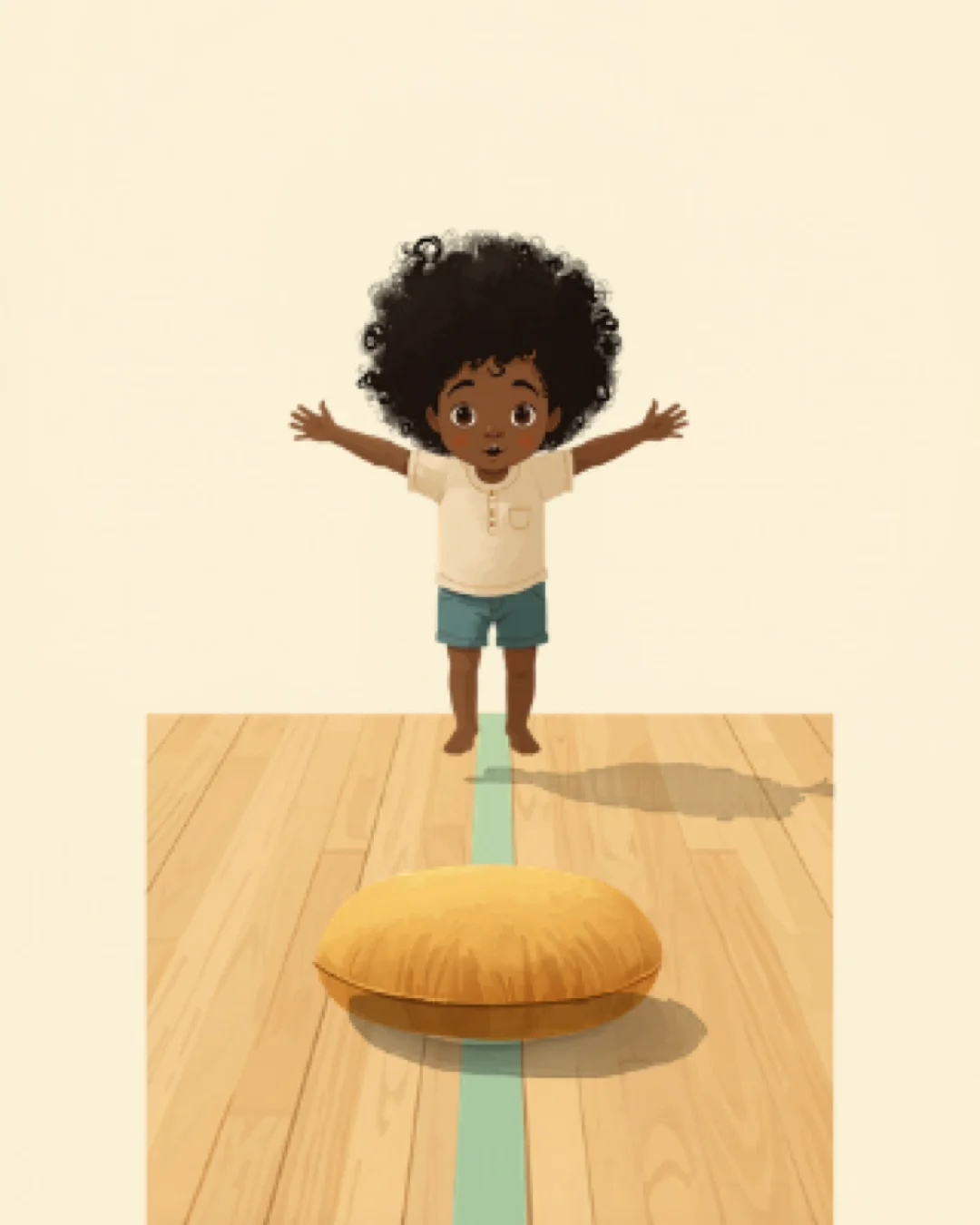
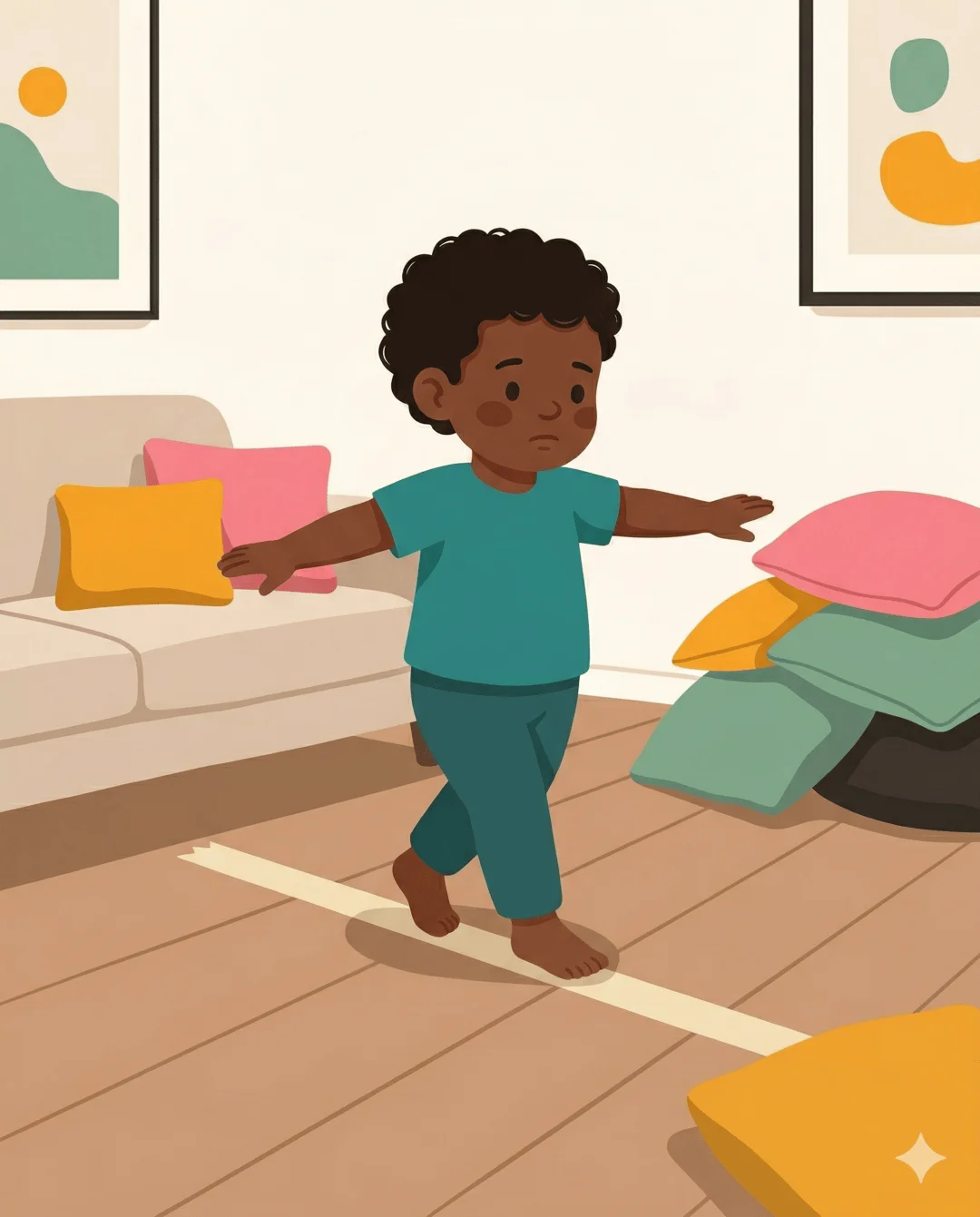
Pause the music suddenly and freeze in a ridiculous pose. Hold it for three to five seconds, then restart.
Add movement challenges between rounds: 'This time, dance like a bouncy frog!' or 'Stomp like a dinosaur!'
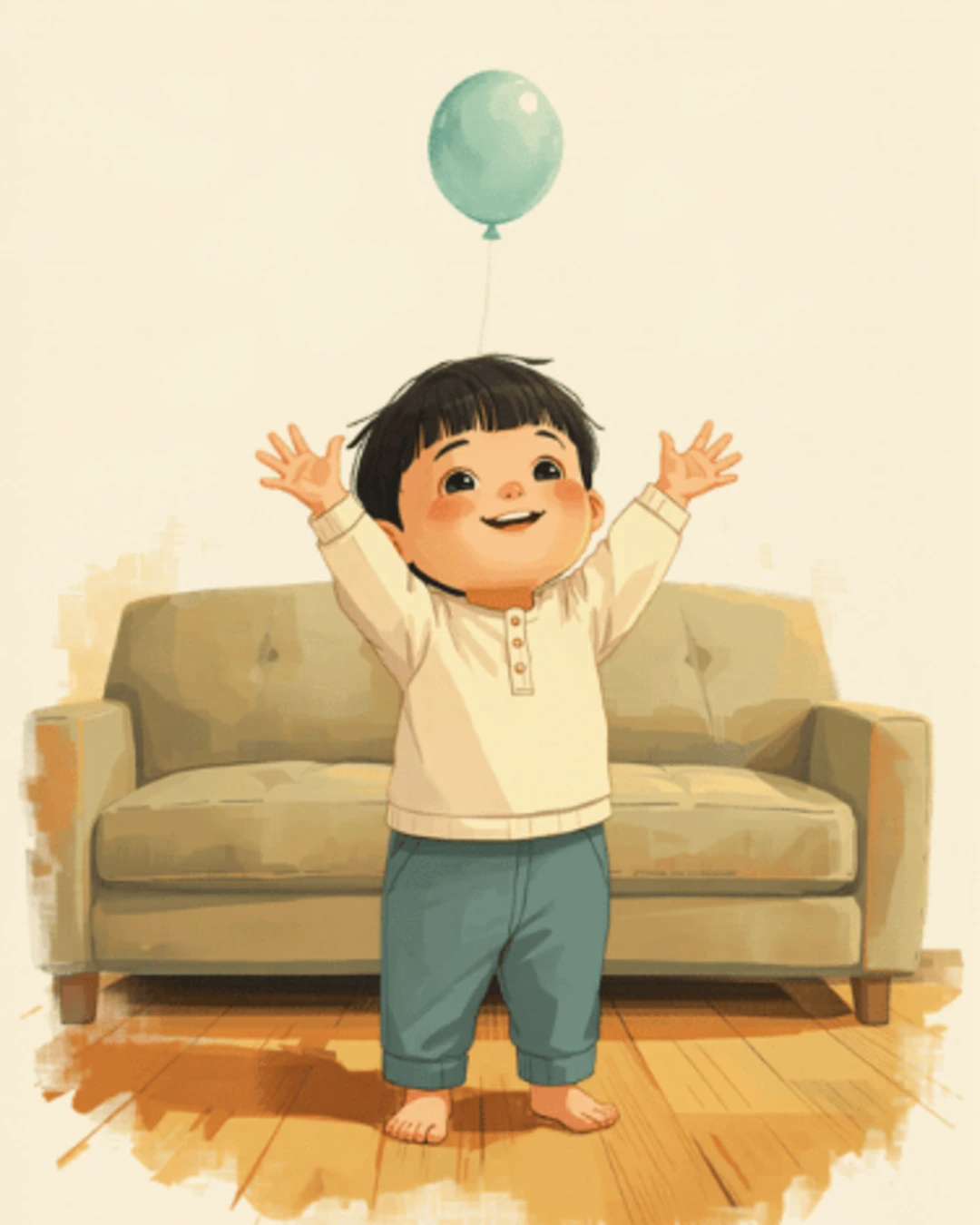
Introduce levels: 'Dance up high on your tiptoes!' then 'Dance down low near the ground!'
For older toddlers, call out a silly frozen pose before pausing: 'Freeze like a tree! Freeze like a star! Freeze like a penguin!'
Wind down by gradually choosing slower music for the final two rounds, ending with a gentle sway and a big stretch.
Parent tip
Start before you overthink it. No-prep activities work best when you begin while the moment is still recoverable.
What success looks like
Flushed cheeks, big smiles, and a calmer child afterwards. If they want to do it again, you’ve found a winner.
Freeze dance is one of the most effective activities for developing inhibitory control — the brain's ability to stop a behaviour mid-flow — which is a cornerstone of self-regulation. When the music cuts out, your child must override every impulse to keep moving and hold their body still, which exercises the same neural circuits they need to stop hitting, wait their turn, or resist grabbing. This remix version adds animal movements, levels (high and low), and silly poses to keep the game fresh and extend the physical challenge across different muscle groups.
Why it helps
NHS physical activity guidelines for under-5s recommend at least 180 minutes of activity a day, with active play like dancing identified as one of the best ways for toddlers to get moving. Freeze dance directly targets inhibitory control, which developmental psychologists consider a core executive function that underpins behaviour regulation. Each freeze moment requires the prefrontal cortex to override the motor cortex mid-action, and repeated practice strengthens this neural pathway. The dancing intervals provide intense cardiovascular exercise and proprioceptive input, while the varied movement challenges build body awareness as children learn to control different body parts independently.
Variations
Use a torch or lamp as a 'spotlight' — children dance only when the light is on them, adding an extra layer of attention.
Play with fabric strips as streamers to wave while dancing, adding visual flair and encouraging bigger arm movements.
Try a reverse version: stand still when the music plays and dance during the silence — much harder and very funny.
Safety tips
Ensure the floor is not slippery — remove loose rugs or have your child dance in bare feet or grippy socks.
Keep the volume at a level where your child can still hear your voice clearly, especially the 'freeze' command.
Watch for signs of dizziness from spinning and encourage your child to sit down if they seem unsteady.
Try one of these next
A few connected ideas chosen by theme, energy, set-up, and age fit.