Parent tip
Start before you overthink it. No-prep activities work best when you begin while the moment is still recoverable.

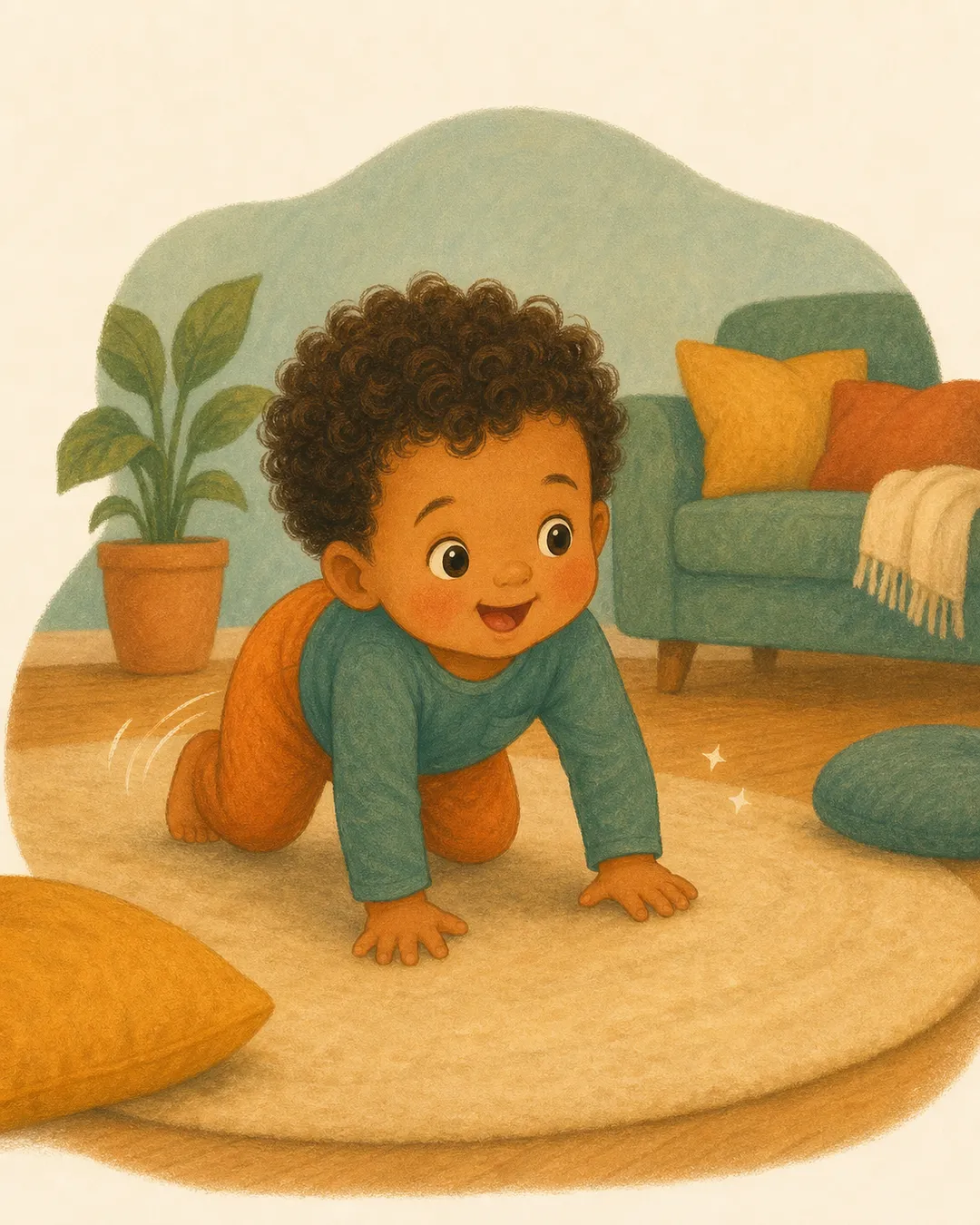
A gentle chase and catch game — parent and toddler take turns pursuing each other, indoors or outdoors.
Tiny Steps
Start before you overthink it. No-prep activities work best when you begin while the moment is still recoverable.

Flushed cheeks, big smiles, and a calmer child afterwards. If they want to do it again, you’ve found a winner.
The simplest game in the world, and one of the most effective for early walkers: you chase your toddler slowly, then they chase you. The thrill of being chased — and the empowerment of chasing a grown-up — is exactly the kind of high-energy social play that burns through restless energy and strengthens the parent-child bond. For new walkers, the motivation to move quickly is often the spark that builds walking confidence and speed.
NHS physical activity guidelines for under-5s recommend at least 180 minutes of activity a day, with chasing games identified as one of the best ways for toddlers to get moving. Chasing games build gross motor speed and agility while practising quick direction changes that develop balance. The anticipation of being caught activates the same approach-and-retreat neural circuits as peek-a-boo, which is fundamental to social development and emotional regulation.
One email a week with practical toddler activities, behaviour tips, and developmental insights. No spam, unsubscribe any time.