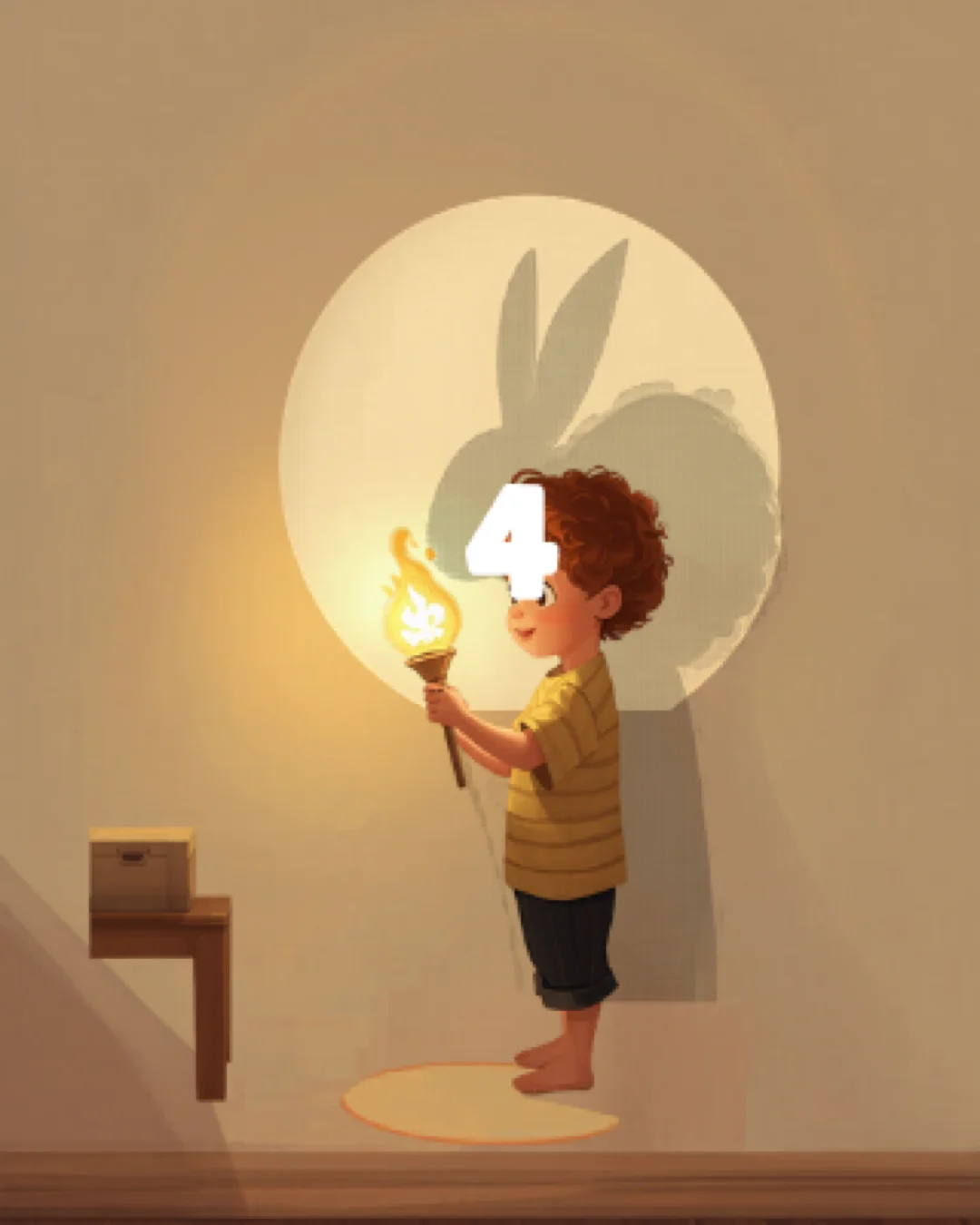
Hide glow sticks around a dim room for your child to find — turning the dark into an exciting adventure they want to explore.
Activity details
19m–4y15 minsmediumindoorBasket or BinPlastic Cups
Instructions
Tiny Steps
Get ready
While your child is in another room, activate three to five glow sticks and hide them in easy spots — under a cushion edge, behind a curtain, in a basket.
Dim the lights (don't make the room pitch black — semi-dark is perfect to start with).
1/4
While your child is in another room, activate three to five glow sticks and hide them in easy spots — under a cushion edge, behind a curtain, in a basket.
Dim the lights (don't make the room pitch black — semi-dark is perfect to start with).
Bring your child in and say 'Something magical is hiding in here — can you find the glow?'
Stay close and hold their hand if they want — let them set the pace completely.
Celebrate each find with genuine excitement: 'You found a green one! You're so brave!'
After all treasures are found, let your child re-hide them for you to find — this reversal gives them total control.
Dim the lights a little more if they seem comfortable, or keep it the same — follow their lead.
Finish by collecting all the glow sticks into a jar to make a 'night light' they can keep beside their bed.
Parent tip
Set out basket or bin and plastic cups before inviting your toddler in so the first minute feels smooth.
What success looks like
Intense focus, even briefly. Watch for the small ‘aha’ moment when they figure out how something works.
This is a beautifully simple way to help a child who fears the dark learn that dimness can hold wonderful surprises, not just scary ones. By hiding glowing objects in a semi-dark room, you create a treasure hunt where darkness is necessary for the fun — your child can't find the glowing treasures with the lights on. This gradual, play-based exposure reframes the dark as a place where special things happen.
Why it helps
The EYFS framework identifies matching and sorting as key early mathematical skills that build foundations for number sense and logical reasoning. Gradual exposure is the gold standard for addressing childhood fears, and play-based exposure is the most effective form for toddlers. This activity works on the principle of systematic desensitisation — pairing darkness (the feared stimulus) with excitement and discovery (positive emotions). Each successful treasure hunt builds a new positive memory associated with the dark, gradually overwriting the fear response stored in the amygdala.
Variations
Use glow-in-the-dark stars or stickers instead of glow sticks — stick them to objects and furniture around the room.
For younger toddlers, put glow sticks inside translucent plastic cups so they're easier to spot and harder to miss.
Extend the game by wrapping glow sticks in tissue paper 'parcels' that your child has to unwrap — adding fine motor work to the bravery.
Safety tips
Use only non-toxic, child-safe glow sticks — check the packaging for age suitability and inspect for cracks before use.
Never leave a child alone with glow sticks, as the liquid inside is irritating to eyes and skin if the casing breaks.
Keep the room semi-dark rather than pitch black, and always respect your child's request to turn the lights back on.
Try one of these next
A few connected ideas chosen by theme, energy, set-up, and age fit.