Line up plastic bottles as pins and roll a ball to knock them down — outdoor bowling for toddlers.
Activity details
19m–4y12 minsmediumoutdoorBallsPlastic Bottles
Instructions
Tiny Steps
Get ready
Collect 5-6 empty plastic bottles and arrange them in a triangle formation on flat grass.
Mark a rolling line about two metres back with a stick or leaf.
1/4
Collect 5-6 empty plastic bottles and arrange them in a triangle formation on flat grass.
Mark a rolling line about two metres back with a stick or leaf.
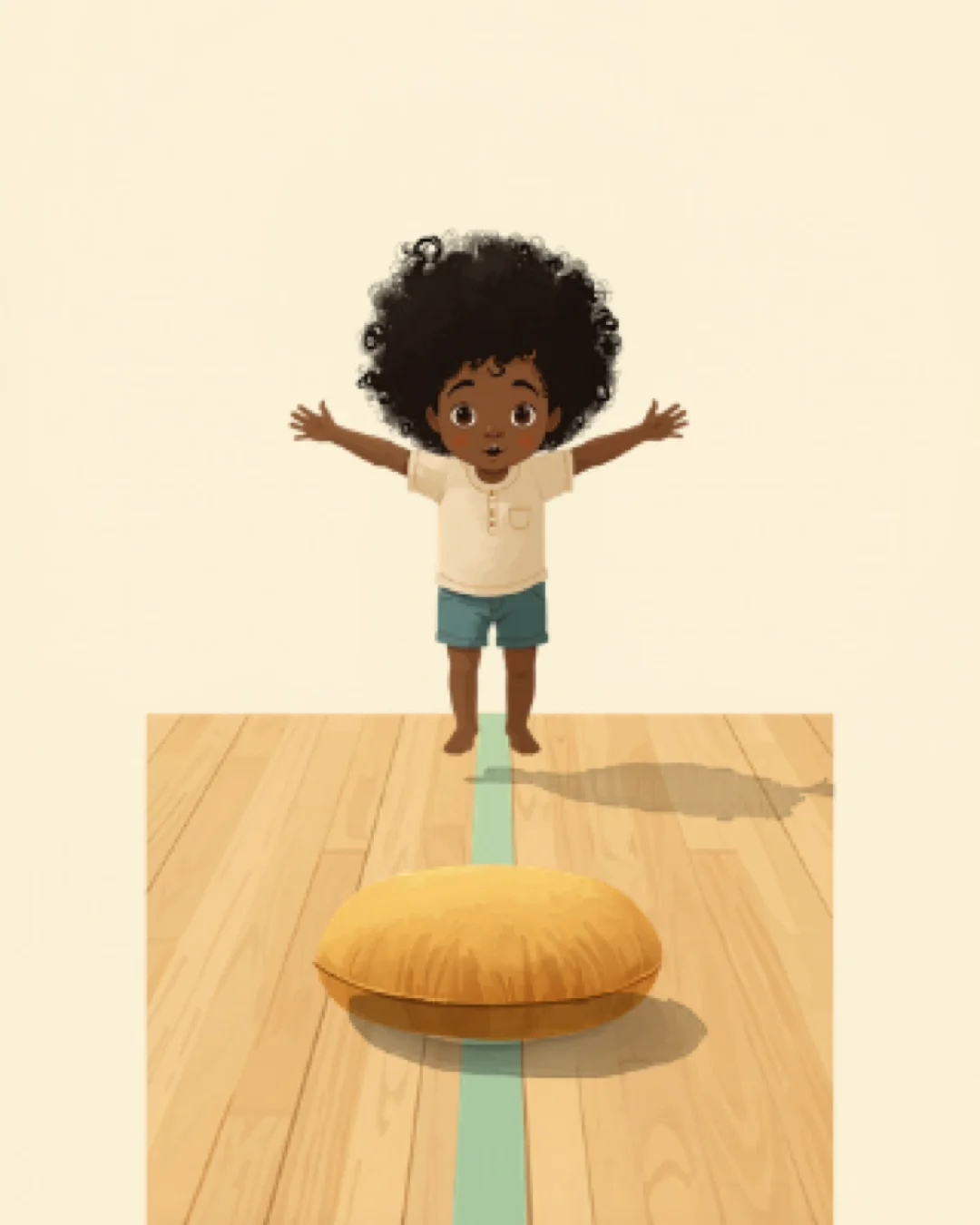
Show your child how to crouch down and roll the ball along the ground towards the bottles.
Celebrate the crash: 'You knocked down three! Can you get them all?'
Let your child help reset the bottles — counting as they stand each one up.
Adjust the distance: closer for younger toddlers, further back for older ones.
Try different balls — a heavy ball rolls straight, a light one wobbles.
Take turns rolling and resetting to practise patience and turn-taking.
Parent tip
Set out balls and plastic bottles before inviting your toddler in so the first minute feels smooth.
What success looks like
Flushed cheeks, big smiles, and a calmer child afterwards. If they want to do it again, you’ve found a winner.
Set up a row of empty plastic bottles on the grass, step back, and roll a ball to knock them down. The satisfying crash of tumbling bottles rewards every attempt, and resetting the pins between turns builds patience and counting skills. Unlike indoor bowling toys, outdoor bottles on uneven grass add a real-world unpredictability that makes each roll a genuine challenge.
Why it helps
Rolling a ball at a target develops hand-eye coordination, spatial judgement, and the ability to calibrate force — all components of the fundamental movement skills that the UK Chief Medical Officers highlight as the building blocks of physical literacy. The NHS states that active play improves behaviour, self-confidence, and social skills, and the turn-taking structure of bowling provides natural opportunities for all three.
Variations
Fill bottles with a little water or sand to make them harder to knock over.
Number the bottles with a marker and call out which one to aim for.
Set up two lanes for a side-by-side game with a sibling or parent.
Safety tips
Use lightweight empty plastic bottles only — glass or full bottles can injure small toes.
Ensure the bowling lane points away from windows, cars, and other children.
Supervise ball retrieval so children do not run into each other's rolling paths.
Try one of these next
A few connected ideas chosen by theme, energy, set-up, and age fit.