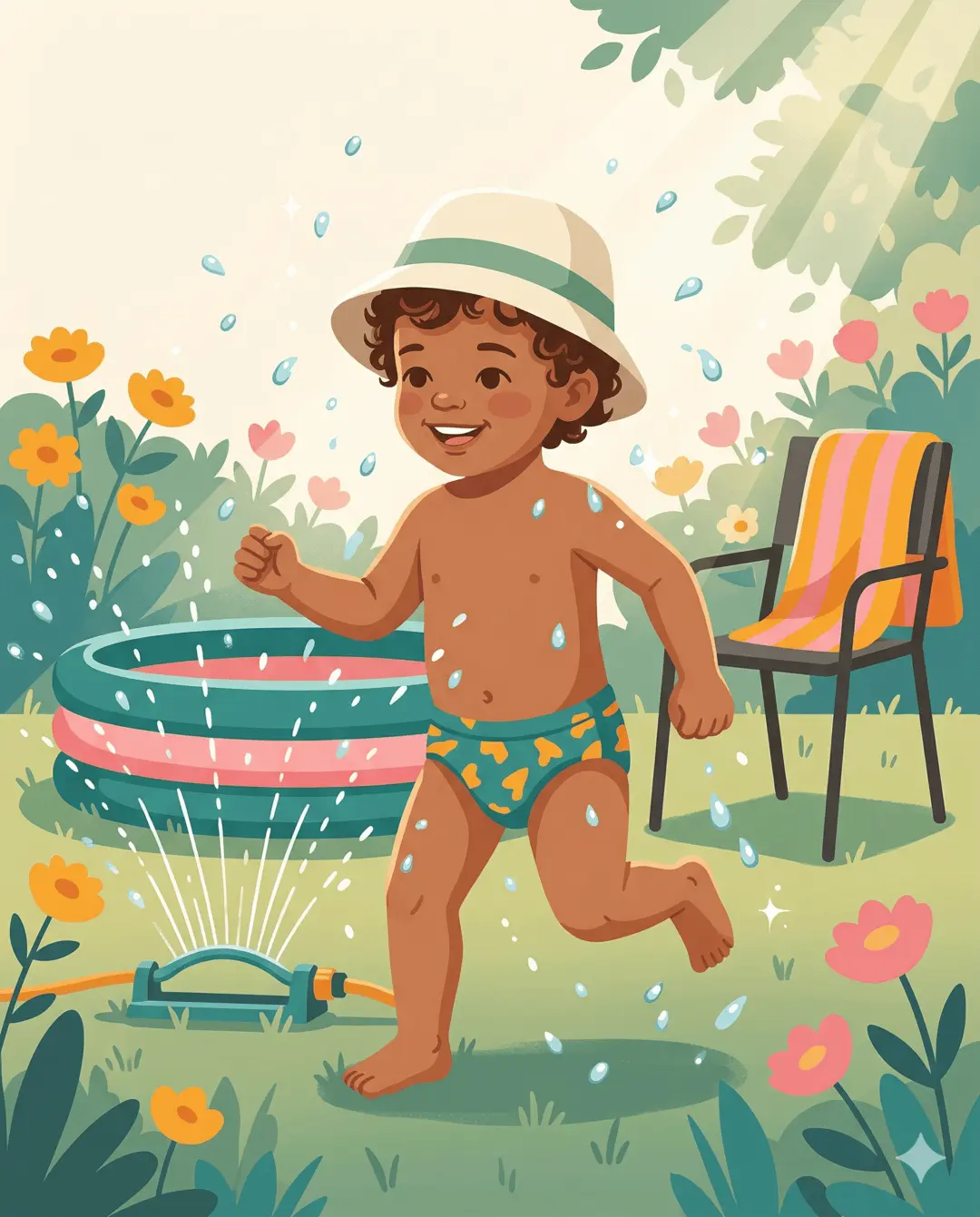
A wooden spoon in each hand and a tour of the garden's drums — bin lids, watering cans, fence panels, a bucket upside down.
Activity details
19m–4y15 minsmediumoutdoorPots and PansRain BootsWooden Spoons
Instructions
Tiny Steps
Get ready
Gather: wellies for both of you, one or two wooden spoons, and a willingness to make a lot of noise.
Step outside and announce: 'time to find out what everything sounds like.'
1/4
Gather: wellies for both of you, one or two wooden spoons, and a willingness to make a lot of noise.
Step outside and announce: 'time to find out what everything sounds like.'
Start with an obvious drum — the upside-down bucket or a stainless steel bin lid.
Demonstrate: one tap, listen. Three taps, listen. Loud tap, soft tap.
Hand the spoons over and let your toddler test the same drum themselves.
Move on around the garden — fence panels, watering cans, a garden chair back, pots and pans if you've brought them out.
Compare two sounds: 'which one is louder?' — wait for them to answer with a point or a word.
End with three big taps on your favourite drum, then put the spoons down together. Clean-up ritual matters.
Parent tip
Set out pots and pans and rain boots before inviting your toddler in so the first minute feels smooth.
What success looks like
Flushed cheeks, big smiles, and a calmer child afterwards. If they want to do it again, you’ve found a winner.
Wellies on. A wooden spoon in each of your toddler's hands. You walk together around the garden or the yard and turn everything into a drum: the upside-down bucket, the metal bin lid, the wooden fence, the watering can, the back of a garden chair. Each surface has its own sound, and your child's job is to test them all. This is messy, noisy, satisfying, and gives you an exact window into how much rhythm and volume control your toddler has at this age — which, often, is more than they show you indoors.
Why it helps
WHO guidelines frame toddler physical activity as 'largely expressed in the form of active play' — the point is variety and spread across the day, not structured exercise. Drum-walking counts: you're rotating around the garden, squatting to reach low drums, reaching up for high ones, alternating hands. It gives your toddler a rare outdoor exercise in loud/soft control — the same voice-modulation skill they need to not shout across the restaurant — in a context where loud is welcomed, not corrected.
Variations
Add rhythm patterns for older toddlers — tap twice then pause, ask them to copy. Call-and-response turns this into a proper musical game.
Bring the wooden spoons and a plastic container to the park — any railings or benches become the drums.
Do a silent round at the end — tap each drum without making a sound. The contrast teaches volume control as a real choice, not a rule.
Safety tips
Check the spoons are chunky and rounded — splintering wood or sharp utensil tips are a genuine risk when swung with full toddler commitment.
Don't tap anything glass, ceramic, or with live flowers growing on it — plants need the peace.
If neighbours are close, check the time — early Sunday morning is not the symphony audience you want. Mid-afternoon is safer for everyone.
Try one of these next
A few connected ideas chosen by theme, energy, set-up, and age fit.