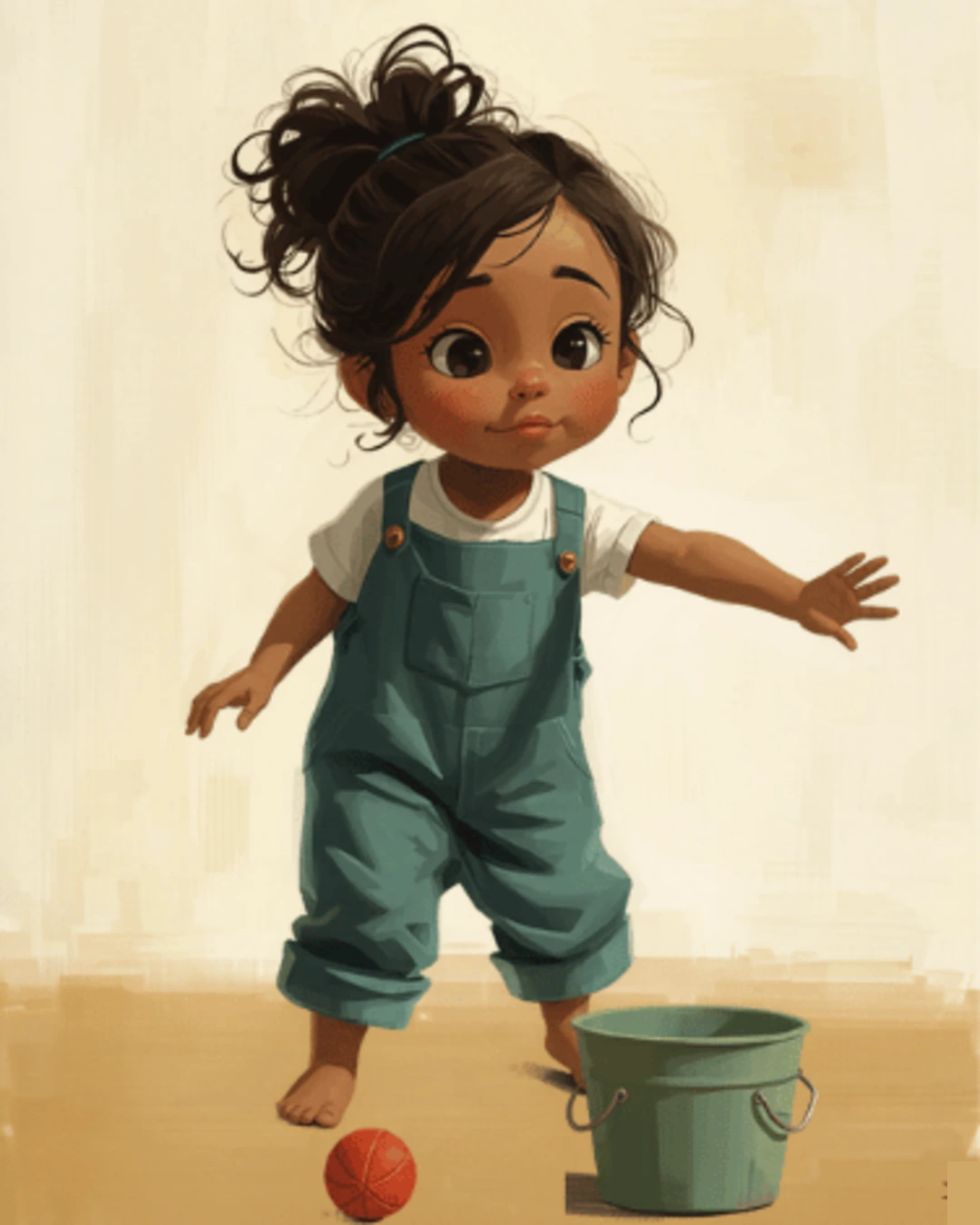
Set up two cones as a goal and let your toddler kick a ball through — a first football session that builds leg power and coordination.
Activity details
19m–4y15 minsmediumoutdoorBallsCones or MarkersPavement Chalk
Instructions
Tiny Steps
Get ready
Place two cones or markers about one metre apart on the grass to form a goal. Set the ball about two metres in front.
Say: 'Can you kick the ball between the cones? That's a GOAL!' Demonstrate with a gentle kick.
1/4
Place two cones or markers about one metre apart on the grass to form a goal. Set the ball about two metres in front.
Say: 'Can you kick the ball between the cones? That's a GOAL!' Demonstrate with a gentle kick.
Let your child kick from a standing start. Celebrate wildly every time the ball goes between the cones: 'GOOOOAL!'
Gradually increase the distance as their kicks get stronger — move the ball back half a metre at a time.
Stand behind the goal and be the 'goalkeeper' — let most shots through but make a dramatic dive occasionally.
Swap roles: your child stands in goal and tries to stop your very gentle, very slow kicks.
Try kicking with each foot: 'Can you use your other foot? That's your left foot — brilliant!'
Cool down by passing the ball back and forth with the insides of your feet — a gentle coordination finish.
Parent tip
Set out balls and cones or markers before inviting your toddler in so the first minute feels smooth.
What success looks like
Flushed cheeks, big smiles, and a calmer child afterwards. If they want to do it again, you’ve found a winner.
Kicking a ball toward a target is one of the most complex gross motor skills for toddlers because it requires standing on one leg, swinging the other, and coordinating the timing of contact with the ball. This activity simplifies the challenge by using a large, soft ball and wide cone goalposts, ensuring success on most attempts. The repeated kicking develops unilateral leg strength, hip stability, and dynamic balance on the standing leg. As confidence grows, you can narrow the goal, increase the distance, or introduce a 'goalkeeper' for extra fun and challenge.
Why it helps
NHS Best Start in Life recommends practising throwing, catching and kicking a ball as simple activities that teach coordination, balance and agility. Kicking develops unilateral lower limb coordination — the ability to balance on one leg while generating force with the other — which is a fundamental movement skill that children need for running, climbing stairs, and playground activities. The targeting aspect adds motor planning, as the child must adjust their approach angle and kick force based on the goal position. Physical literacy research shows that children who practise kicking before the age of four develop significantly better overall movement competence.
Variations
Set up multiple goals around the garden at different angles so your child must aim in different directions.
Replace the ball with a balloon for a slower, easier-to-kick alternative for younger toddlers.
Keep score on a chalk tally on the path and celebrate reaching a target number together.
Safety tips
Use a soft, lightweight ball that won't hurt if it hits your child's face or body during goalkeeper play.
Ensure cones are stable and won't roll under feet — weigh them down with a small stone inside if on a slope.
Play on grass rather than hard surfaces to cushion any falls from the single-leg balance required for kicking.
Try one of these next
A few connected ideas chosen by theme, energy, set-up, and age fit.