TinyStepper

Frozen Treasure Hunt

At a glance: Freeze small toys in ice and let your toddler melt them free with warm water. A 15-minute, medium-energy both activity for ages 18m4y.

Built by a parent of toddlersBest for 18m-4y

Field-tested ideas shaped by direct parenting experience and advice from reputable sources, including NHS Best Start in Life and NSPCC child development research.

18m4y15 minsmedium energybothsome mess

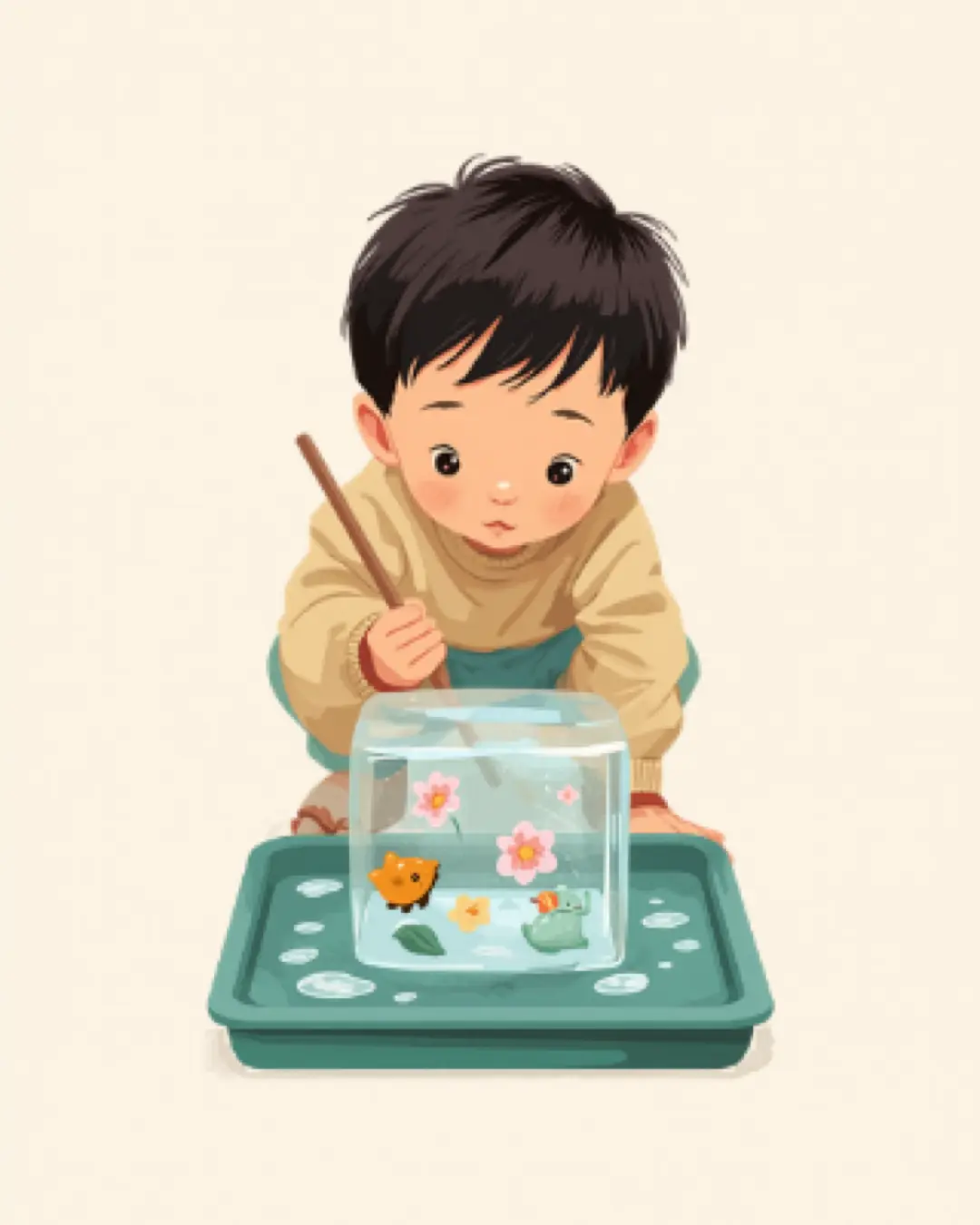
Freezing small toys inside ice creates a captivating experiment teaching cause and effect, temperature concepts, and patience. Toddlers discover that warm water melts ice and persistence pays off when the toy breaks free. The sensory contrast between cold ice and warm water provides rich tactile input, and the problem-solving builds cognitive flexibility and sustained attention.

Best for this moment

when your toddler needs focused engagement, especially when you need something flexible indoors or outdoors.

Parent tip

Set out ice cubes and plastic containers before inviting your toddler in so the first minute feels smooth.
What success looks like

A good outcome is a few minutes of engaged play, some back-and-forth with you, and a small sign of progress in cognitive skills.

More help for this situation

Instructions

Get ready
  • The night before, place small toys in a plastic container and fill with water
  • Freeze overnight until solid
  1. The night before, place small toys in a plastic container and fill with water
  2. Freeze overnight until solid
  3. Pop the ice block out onto a tray or into a shallow bin
  4. Give your child cups of warm water to pour over the ice
  5. Watch as the ice slowly melts and toys begin to appear
  6. Use spoons or fingers to chip at the ice gently
  7. Talk about what is happening: 'The warm water is melting the ice!'
  8. Celebrate each rescued toy together

Why it helps

Discovering that warm water melts ice teaches cause and effect and builds patience. The sensory contrast between cold ice and warm water provides rich tactile input, and the problem-solving involved in freeing each toy builds cognitive flexibility and sustained attention.

Variations

  • Add food colouring to the water before freezing for colourful ice blocks.
  • Use pipettes to drip warm water onto the ice for a more targeted melt.
  • Freeze items in layers so they appear at different stages as the ice melts.

Safety tips

  • Use warm (not hot) water to prevent burns.
  • Ensure frozen toys are too large to be a choking hazard.
  • Lay towels underneath as melting ice creates a lot of water.

When to pause and seek extra support

Stop if your child becomes distressed, unsafe, or consistently frustrated by the activity. If play, behaviour, or development worries keep showing up across settings, check in with a qualified professional.

Get weekly activity ideas for your toddler

One email a week with practical toddler activities, behaviour tips, and developmental insights. No spam, unsubscribe any time.