Set out three or four colours of washable paint in small pots or on a paper plate palette.
Lay a large sheet of paper on the floor or table — the bigger the better for free expression.
1/4
Set out three or four colours of washable paint in small pots or on a paper plate palette.
Lay a large sheet of paper on the floor or table — the bigger the better for free expression.
Say 'Today we're going to paint our feelings. What colour feels happy to you?' Accept whatever they choose.
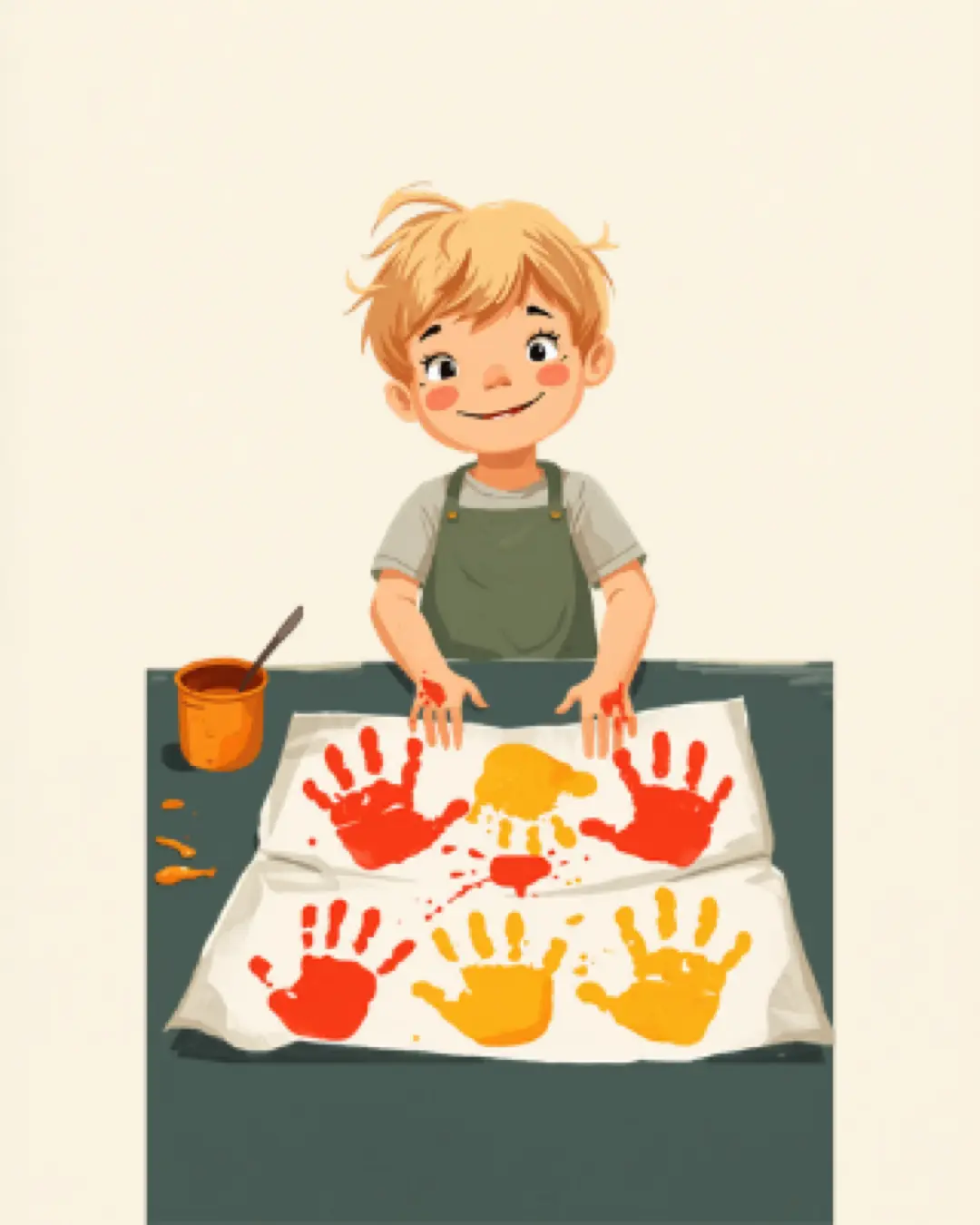
Show them how to dip fingers or a sponge and splodge it onto the paper: 'This is my happy yellow! Splodge splodge!'
Ask 'What colour feels grumpy?' and let them choose and splodge that colour somewhere else on the page.
If they have words, name the feelings together. If they don't, simply narrate: 'Lots of red today. Big, strong red.'
Encourage different textures: dabbing, smearing, finger-dragging, palm-printing — each feels different emotionally.
When they are finished, hold up the painting together and say 'Look at all those feelings! They are all okay to have.'
Parent tip
Set out newspaper and sponges before inviting your toddler in so the first minute feels smooth.
What success looks like
Messy hands and a child who doesn’t want to stop. The artwork doesn’t need to look like anything — the process is the point.
Your child chooses a colour for a feeling (red for cross, blue for sad, yellow for happy) and splodges, dabs, or smears paint onto paper. There is no picture to produce — the point is the physical and emotional release of putting a feeling onto the page. This activity works for all children because it requires no fine motor precision, no verbal explanation, and no 'right answer.' The paint does the talking, and naming the colour-feeling connection builds emotional vocabulary in a pressure-free way.
Why it helps
The EYFS framework identifies art and design activities as developing fine motor skills while encouraging children to explore materials and express their ideas creatively. Art therapy research consistently shows that non-verbal expression through colour and mark-making helps children process emotions they cannot yet articulate. For children with social-emotional or communication differences, removing the requirement for words takes the pressure off while still building emotional literacy. The act of choosing a colour for a feeling exercises symbolic thinking — the understanding that one thing can represent another — which is a key cognitive milestone.
Variations
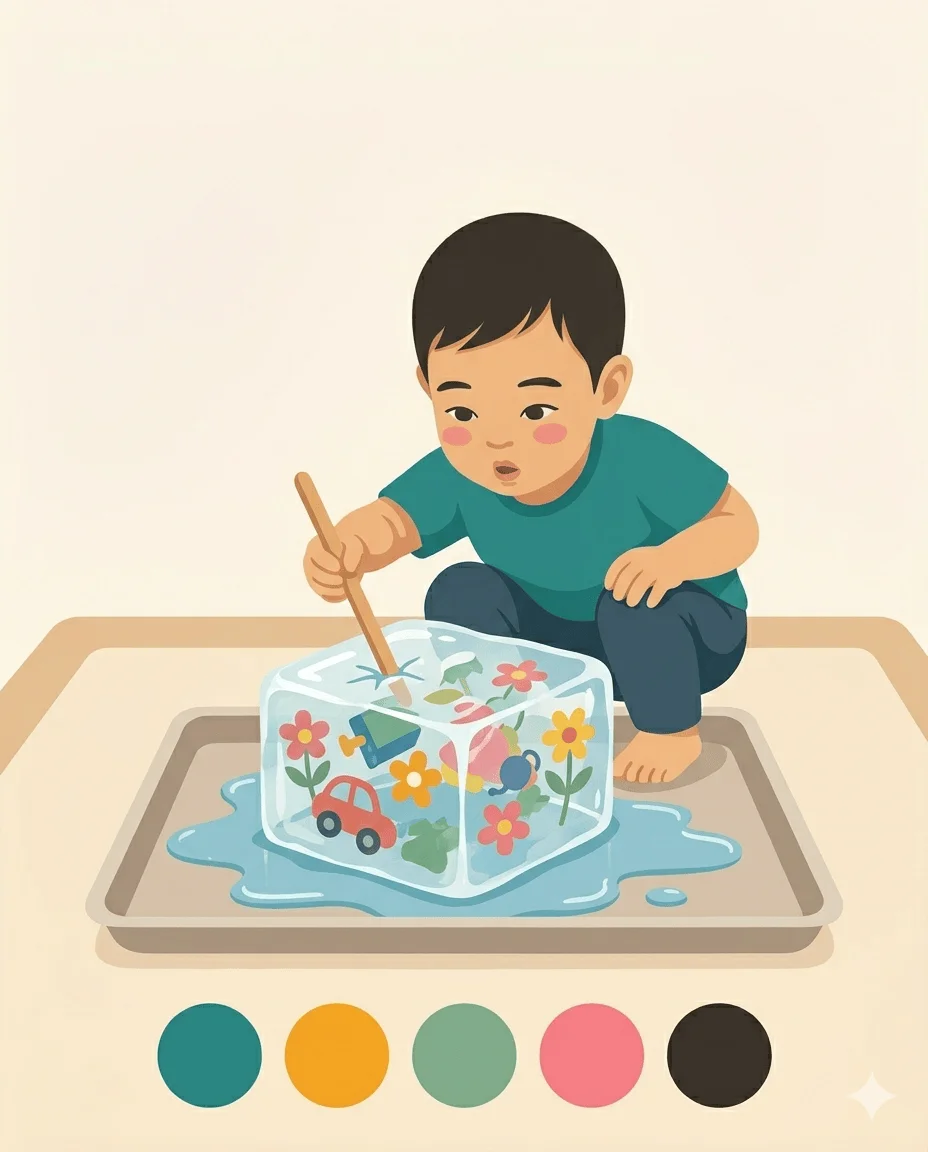
Use ice cubes made from coloured water — the cold adds a sensory dimension and the mess is minimal.
Tape the paper to the wall and let them paint standing up — a bigger range of movement changes how it feels.
Do this activity regularly and keep the paintings — over time you build a 'feelings gallery' your child can revisit.
Safety tips
Use washable, non-toxic paint only — check the label, especially if your child mouths their fingers.
Cover the floor or table with newspaper or an old sheet for easy clean-up.
Have warm soapy water and a towel ready so your child can wash hands as soon as they finish — some children dislike paint drying on skin.
Try one of these next
A few connected ideas chosen by theme, energy, set-up, and age fit.