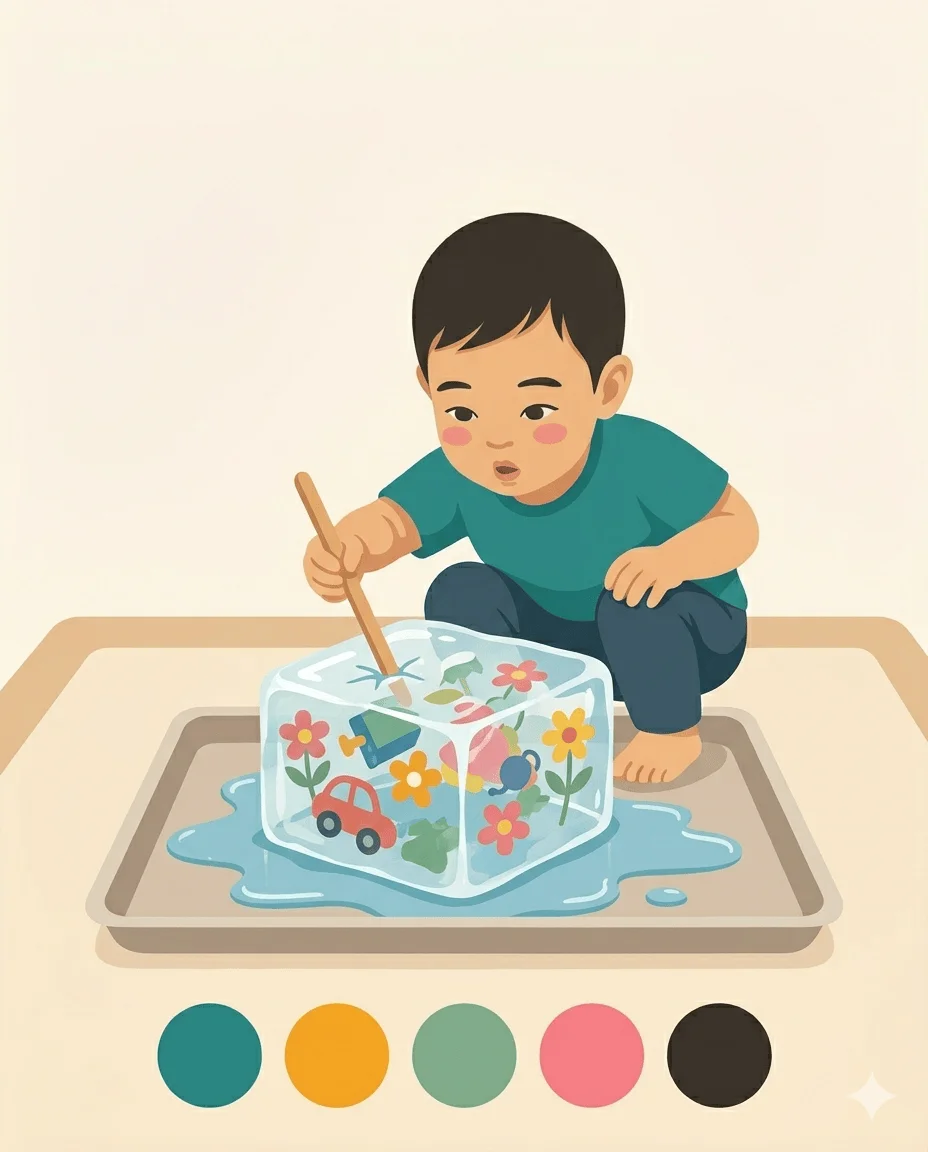
Offer frozen fruit and textured teethers to satisfy the urge to bite with safe, soothing alternatives.
Activity details
12m–2y10 minslowindoorMirrorSpongesTowels
Instructions
Tiny Steps
Get ready
Freeze a few banana slices and damp flannels for at least two hours beforehand.
Set out a towel on the floor or highchair tray to catch drips.
1/4
Freeze a few banana slices and damp flannels for at least two hours beforehand.
Set out a towel on the floor or highchair tray to catch drips.
Place the frozen banana slices, a clean damp sponge, and a silicone teether on the towel.
Invite your child to explore each item with their mouth — say 'this one is cold' or 'this one is squishy' as they go.
Gently narrate what you see: 'You're biting the cold banana — that feels nice on your gums.'
If your child reaches for your hand or arm, redirect them back to the items: 'Teeth are for these things, not for people.'
Let them return to favourite items as many times as they like — repetition is the point.
Wind down by offering a drink of water and wiping hands and face together, naming body parts as you go.
Parent tip
Set out mirror and sponges before inviting your toddler in so the first minute feels smooth.
What success looks like
Watch for focused exploration — fingers digging in, pouring back and forth, or sorting by feel. Even a few minutes of this builds concentration.
When toddlers bite, it's often because their mouths are seeking intense sensory input — not because they're being naughty. This activity channels that oral sensory need into a structured exploration of frozen and textured items, giving little ones a satisfying chomp without anyone getting hurt. It builds body awareness around the mouth and jaw while introducing early vocabulary for textures and temperatures.
Why it helps
The NHS Best Start in Life programme highlights sensory play — including activities that provide deep pressure and body awareness — as supporting children's emotional regulation and physical development. Biting in toddlers is frequently driven by oral proprioceptive seeking — the jaw craves deep pressure input, especially during teething or periods of high emotion. Providing safe items to bite gives the sensory feedback the child's nervous system is requesting, while narrating the experience supports interoceptive awareness (recognising internal body signals). Over time, this helps children learn to self-regulate the biting impulse.
Variations
Freeze damp flannels into different shapes (rolled, folded, scrunched) so each one feels different in the mouth.
Try chilled cucumber sticks or frozen mango strips for older toddlers who are confident with finger foods.
Add a mirror so your child can watch themselves biting — this builds facial awareness and often makes them giggle.
Safety tips
Always supervise closely — frozen items can be slippery and pose a choking risk for younger toddlers.
Check that frozen fruit pieces are large enough that they cannot be swallowed whole.
Discard any sponge or flannel that starts to break apart, as small pieces could be a choking hazard.
Try one of these next
A few connected ideas chosen by theme, energy, set-up, and age fit.