TinyStepper

Vegetable Stamping Art

At a glance: A kitchen craft — cut vegetables in half and stamp them in paint to make colourful prints. A 15-minute, low-energy indoor activity for ages 18m4y.

Built by a parent of toddlersBest for 18m-4y

Field-tested ideas shaped by direct parenting experience and advice from reputable sources, including NHS Best Start in Life and NSPCC child development research.

18m4y15 minslow energyindoorlots mess

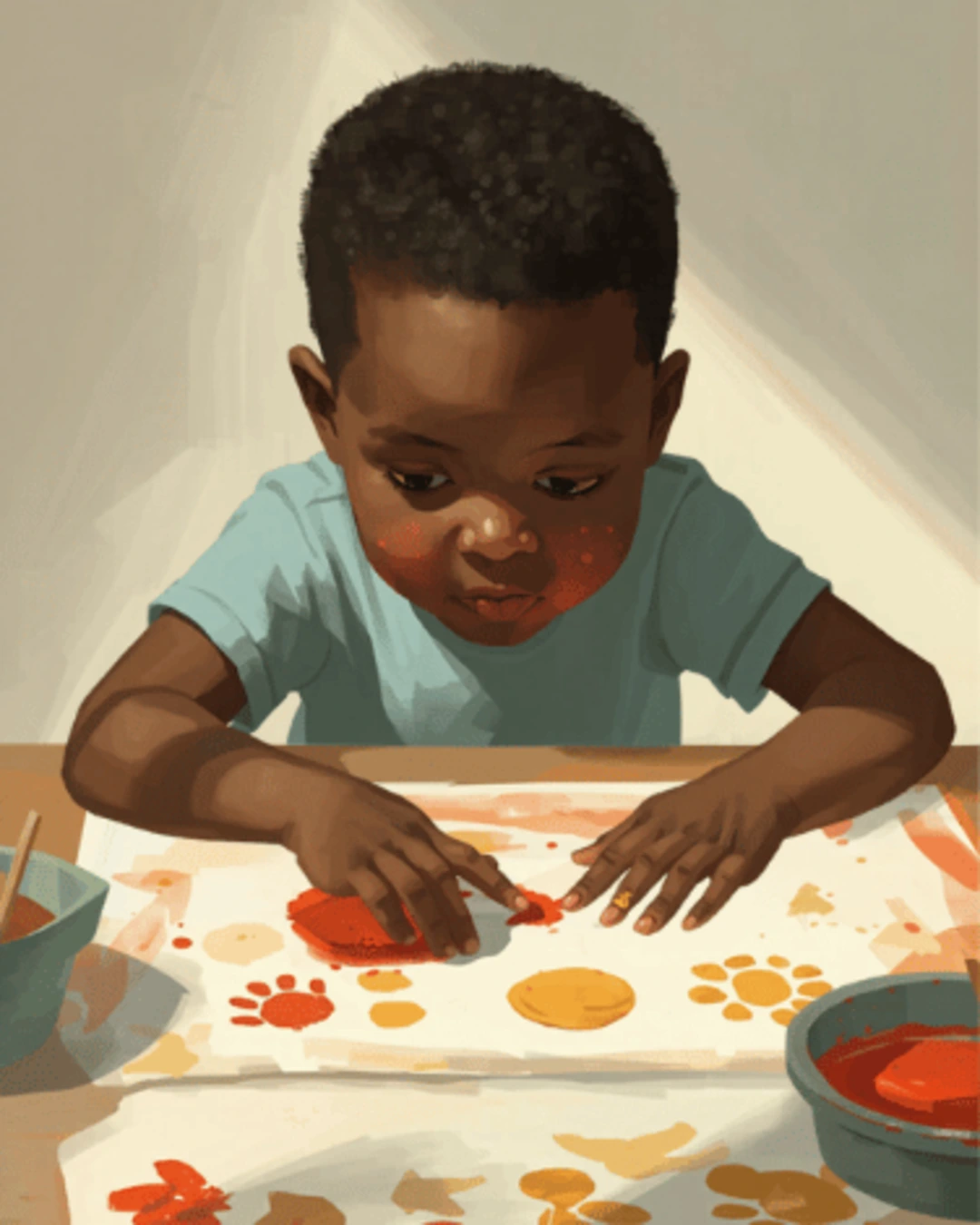
Slice a pepper, potato, celery stick, or broccoli floret in half, dip it in washable paint, and press it onto paper. The focus is art, not eating — but the incidental handling, smelling, and exploring of vegetables builds the sensory familiarity that precedes willingness to taste. Many parents report that children who stamp with vegetables become curious enough to lick or taste them during the activity.

Best for this moment

for calmer, lower-pressure moments, especially when you need an indoor option.

Parent tip

Set out construction paper and washable paint before inviting your toddler in so the first minute feels smooth.
What success looks like

A good outcome is a few minutes of engaged play, some back-and-forth with you, and a small sign of progress in creativity.

More help for this situation

Instructions

Get ready
  • Cut vegetables in half to create flat stamping surfaces
  • Good options: pepper (makes a flower shape), potato, celery, broccoli, corn on the cob
  1. Cut vegetables in half to create flat stamping surfaces
  2. Good options: pepper (makes a flower shape), potato, celery, broccoli, corn on the cob
  3. Pour small amounts of washable paint into shallow plates
  4. Show your toddler how to dip the vegetable and press it onto paper
  5. Try different vegetables: 'Look at the pattern the celery makes!'
  6. Name the vegetables as you use them — no pressure to eat, just explore
  7. Let them experiment freely — messy prints are the best ones
  8. Display the artwork when dry

Why it helps

Non-threatening food exposure through play is NHS-recommended for fussy eaters. Touching, smelling, and visually exploring vegetables in a no-pressure context builds the sensory bridges that eventually lead to tasting. The stamping motion itself builds hand-eye coordination and grip strength. The unpredictable patterns each vegetable makes encourage curiosity and experimentation.
Variations

  • Use autumn colours (red, orange, yellow, brown) for a seasonal feel.
  • Print onto a paper bag to make a gift bag.
  • For older toddlers, create a pattern: pepper, celery, pepper, celery.

Safety tips

  • Use only washable, non-toxic paint.
  • Pre-cut all vegetables yourself — keep knives away from toddlers.
  • Cover surfaces well — vegetable stamping is gloriously messy.

When to pause and seek extra support

Stop if your child becomes distressed, unsafe, or consistently frustrated by the activity. If play, behaviour, or development worries keep showing up across settings, check in with a qualified professional.

Get weekly activity ideas for your toddler

One email a week with practical toddler activities, behaviour tips, and developmental insights. No spam, unsubscribe any time.