Parent tip
Set out sponges and stuffed animals before inviting your toddler in so the first minute feels smooth.
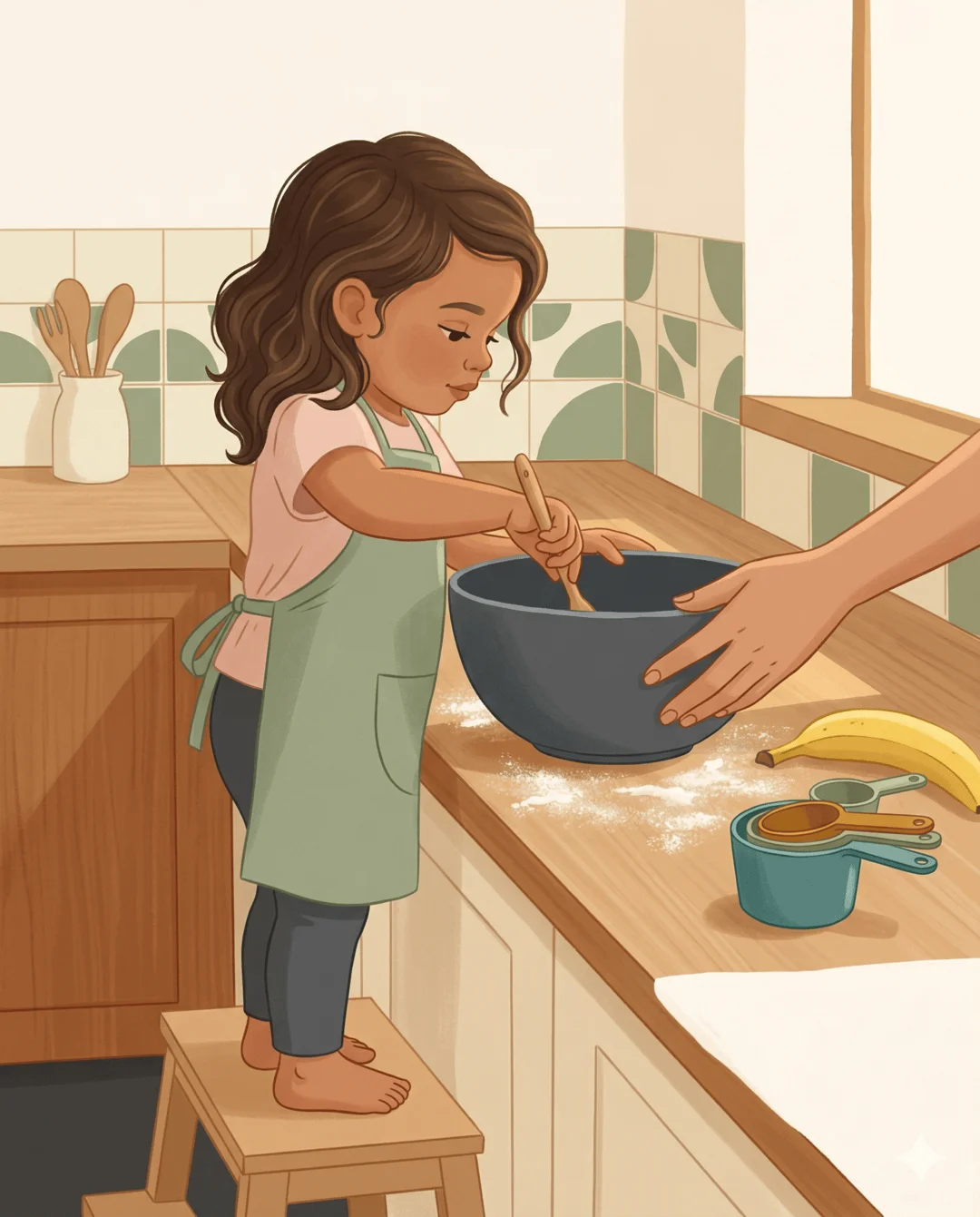
Teddy 'has an accident' on the floor and your child helps clean it up gently — normalising mistakes and removing the shame that drives potty resistance.
Tiny Steps
Set out sponges and stuffed animals before inviting your toddler in so the first minute feels smooth.

Back-and-forth between you — words, gestures, shared pretend. Connection is the real outcome here.
Set up a scenario where teddy 'has an accident' on a wipeable mat — you splash a small amount of water on the floor and explain that teddy didn't quite make it to the potty in time. Together, you and your toddler help teddy clean up calmly. No drama, no shame, just practical care. This rehearses the response your toddler will need when their own accidents happen, so they don't experience the real moment as disaster — it's just what happens sometimes.
ERIC's potty training guidance is very clear: when your child has an accident, clean it up together and remind them to use the potty next time, but do not shame or punish, as stress and upset can make it harder to learn together. AAP HealthyChildren takes the same line: there is no cause to criticise or punish a child for accidents, and shame is one of the strongest predictors of regression. Rehearsing the cleanup with teddy lets your toddler experience the no-shame response in advance, which makes the real version feel survivable.
One email a week with practical toddler activities, behaviour tips, and developmental insights. No spam, unsubscribe any time.