Set up a warm soapy bowl and let your toddler wash, scrub, and dry their plastic toys — pretend domestic play that builds independence and care skills.
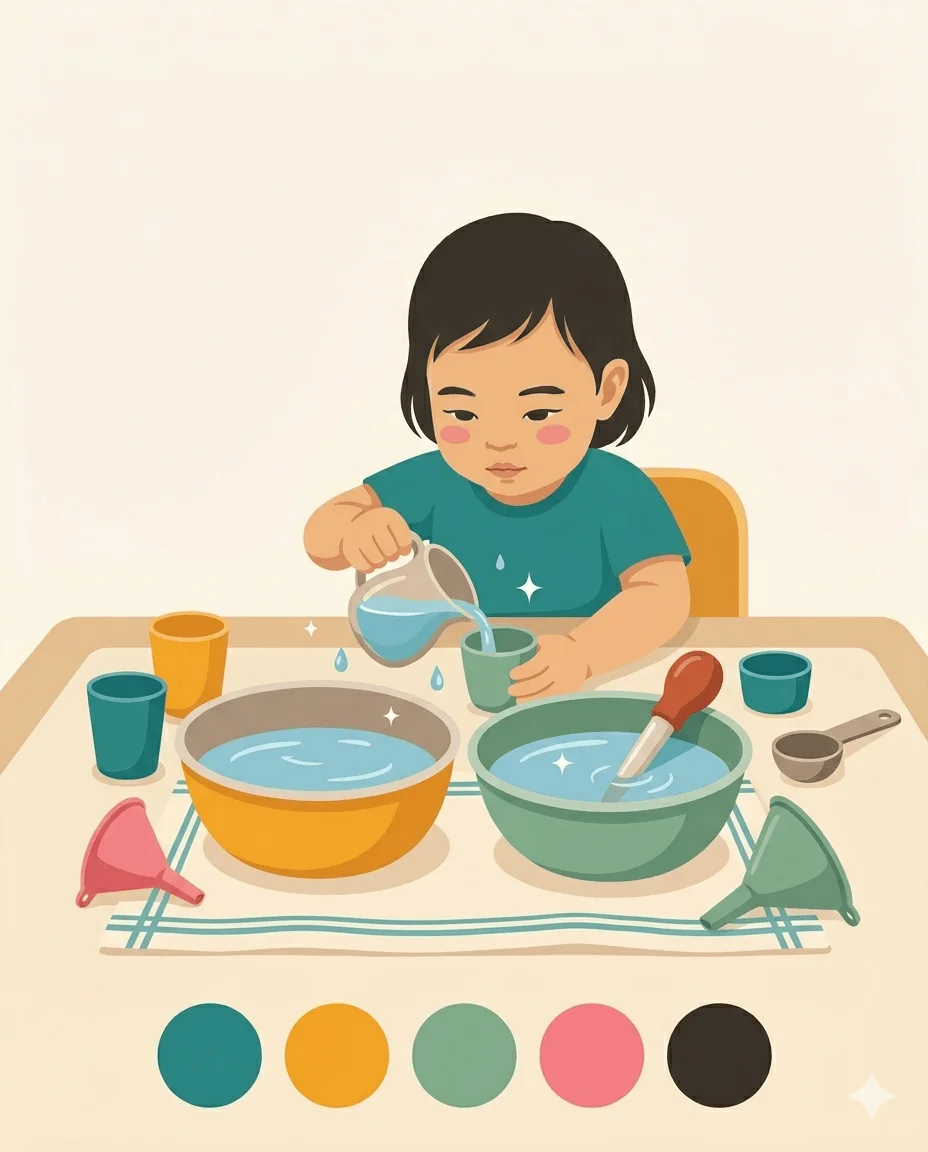
Fill a washing-up bowl with warm water and add a small squeeze of washing-up liquid — enough for bubbles but not too slippery.
Lay a towel on the floor or table underneath to catch splashes, and set a dry towel to one side for drying.
1/4
Fill a washing-up bowl with warm water and add a small squeeze of washing-up liquid — enough for bubbles but not too slippery.
Lay a towel on the floor or table underneath to catch splashes, and set a dry towel to one side for drying.
Gather a selection of waterproof toys: plastic animals, toy cars, bath toys, or rubber ducks.
Show your child how to dip a sponge in the water, squeeze it, and scrub a toy: 'This car is so dirty! Let's give it a good wash.'
Let your child take over, choosing which toys to wash and how thoroughly — some children will scrub for ages, others will move on quickly.
After washing, show them how to place the clean toy on the drying towel: 'Now pat it dry — well done, it's all clean!'
Encourage them to line up the clean toys neatly, building a satisfying visual display of their work.
When finished, let your child help tip the water out (outdoors is easiest) and wring out the sponge — the clean-up is part of the play.
Parent tip
Set out plastic containers and sponges before inviting your toddler in so the first minute feels smooth.
What success looks like
Watch for focused exploration — fingers digging in, pouring back and forth, or sorting by feel. Even a few minutes of this builds concentration.
Toddlers are fascinated by the domestic tasks they see adults doing every day, and toy washing channels that fascination into purposeful, absorbing play. This activity gives your child a washing-up bowl of warm soapy water, a sponge, and a collection of waterproof toys to scrub clean. The process of washing, rinsing, and drying mirrors real-life routines, building the schema for 'looking after things' that underpins independence and empathy. The water play element adds sensory richness that keeps even the most active toddlers focused.
Why it helps
Pretend domestic play taps into what Montessori educators call 'practical life activities' — real-world tasks scaled down to toddler size. These activities build concentration, sequencing skills, and a sense of competence that transfers to genuine self-care tasks like handwashing and tidying up. The water element adds proprioceptive and tactile input through the sponge squeezing and pouring, which is calming for the nervous system and particularly beneficial for children who seek sensory stimulation.
Variations
Set up a 'car wash' — line up toy cars, take them through soap → scrub → rinse → dry. The multi-step sequence builds working memory and executive function.
Add a toothbrush for scrubbing small details — wheel arches on toy cars, between the toes of plastic animals — for an extra fine motor challenge.
Move the station outdoors on a warm day and let your child use a watering can to rinse — perfect for a spring clean of toys that have been sitting in the shed all winter.
Safety tips
Never leave your child unattended near water, even shallow bowls — active supervision is essential throughout.
Check the water temperature before your child puts their hands in — warm but not hot, tested with your elbow or wrist.
Ensure the floor surface is non-slip, as splashed water on tiles or wood can become dangerously slippery.
Try one of these next
A few connected ideas chosen by theme, energy, set-up, and age fit.