Pull mystery objects from a bag and weave them into an improvised story together.
Activity details
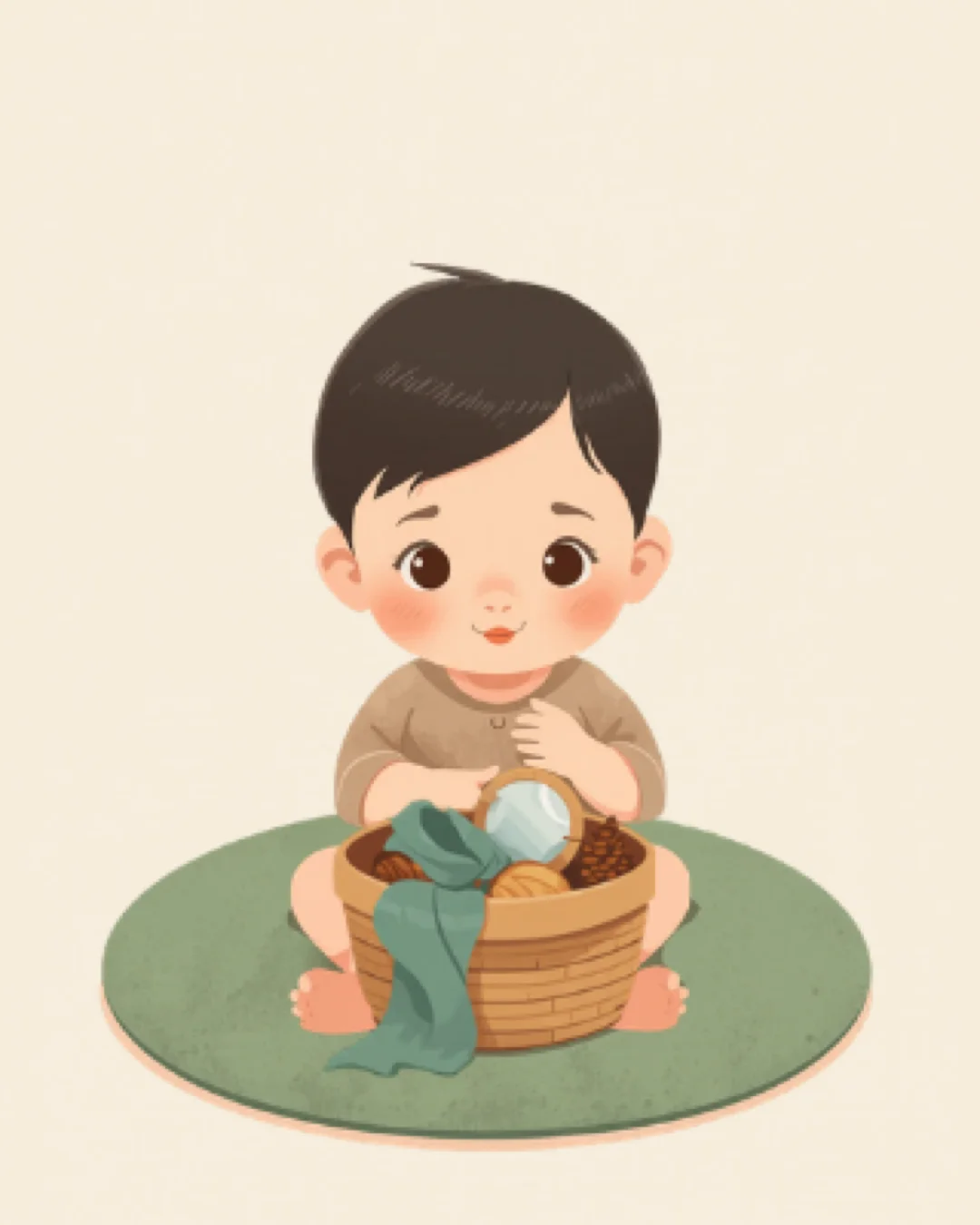
19m–4y15 minsmediumbothBasket or Bin
Instructions
Tiny Steps
Get ready
Gather 4-5 random household objects and place them in an opaque bag or pillowcase
Sit together and explain: 'We’re going to make up a story with whatever we find in the bag!'
1/4
Gather 4-5 random household objects and place them in an opaque bag or pillowcase
Sit together and explain: 'We’re going to make up a story with whatever we find in the bag!'
Pull out the first object and start: 'Once upon a time, there was a... spoon! And this spoon went on an adventure...'
Let your toddler pull the next object and help them add it to the story
Use dramatic voices and gestures to bring each object’s role to life
Encourage your toddler to decide what happens next: 'Where does the sock go?'
Build towards a silly ending that includes all the objects
Retell the story from the beginning, letting your toddler fill in details they remember
Parent tip
Set out basket or bin before inviting your toddler in so the first minute feels smooth.
What success looks like
Intense focus, even briefly. Watch for the small ‘aha’ moment when they figure out how something works.
Fill a small bag with 4-5 random household objects — a spoon, a sock, a toy animal, a leaf. Your toddler pulls one out at a time and you build a story together, incorporating each object as it appears. This unpredictable storytelling format develops narrative thinking and vocabulary while keeping engagement high through the element of surprise.
Why it helps
Speech and Language UK recommends looking at books together as a great way to help children learn new words and build communication skills. Improvised storytelling builds narrative structure understanding — beginning, middle, and end — which is a foundational early-literacy skill. The surprise element exercises cognitive flexibility, a key executive function, as children must adapt their story when an unexpected object appears. Handling and naming objects also reinforces vocabulary acquisition through multi-sensory engagement.
Variations
Take the bag on a car journey or to a waiting room — pull objects from a travel bag for an on-the-go story.
Let your toddler fill the bag themselves and surprise you with the objects — then you lead the story.
For older toddlers, use picture cards instead of objects to expand vocabulary beyond what you can carry.
Safety tips
Check all objects are safe to handle — no sharp edges, small parts, or choking hazards.
Avoid fragile items that could break if dropped or waved about enthusiastically.
If playing in a car, keep objects soft and lightweight so nothing becomes a projectile.
Try one of these next
A few connected ideas chosen by theme, energy, set-up, and age fit.