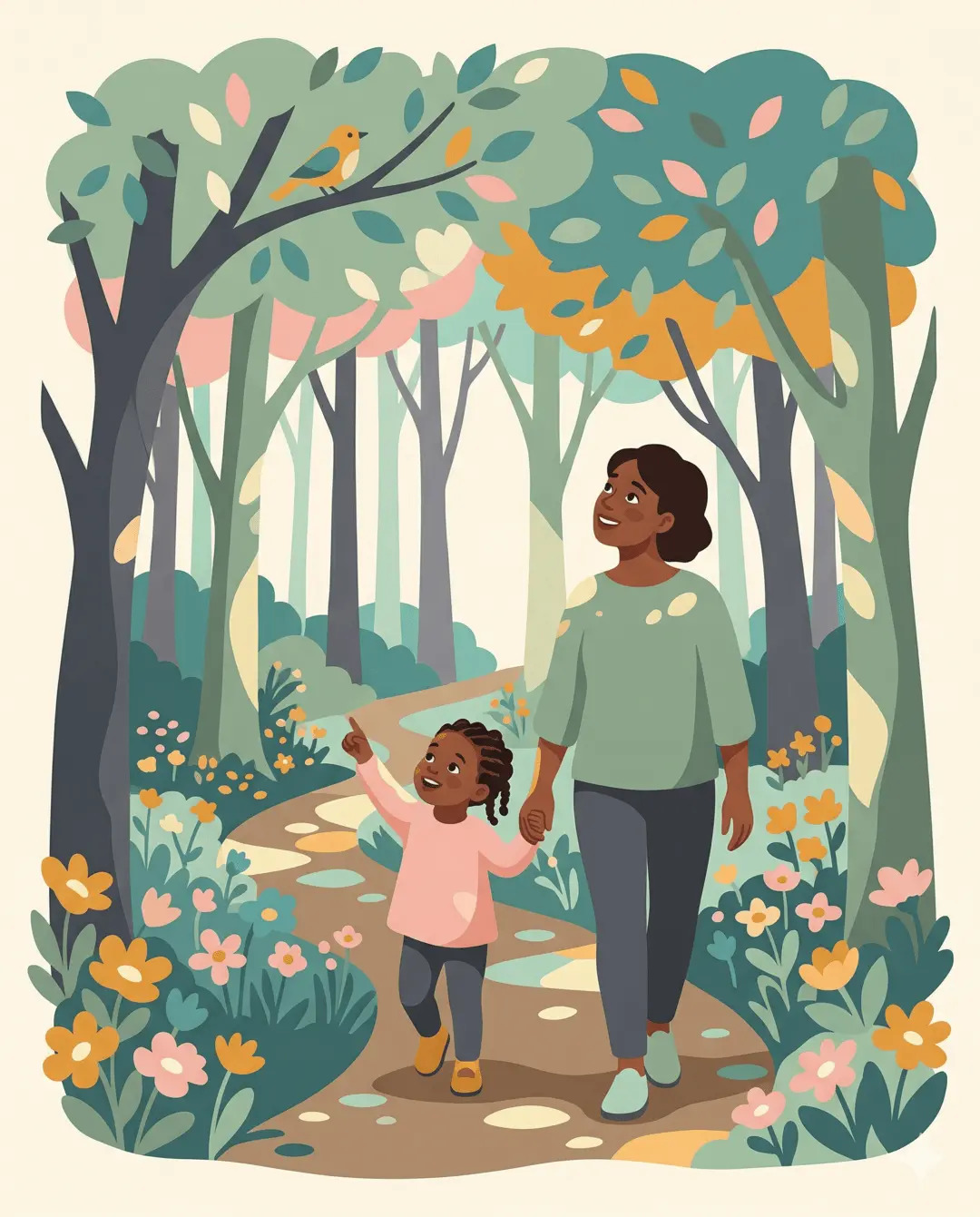
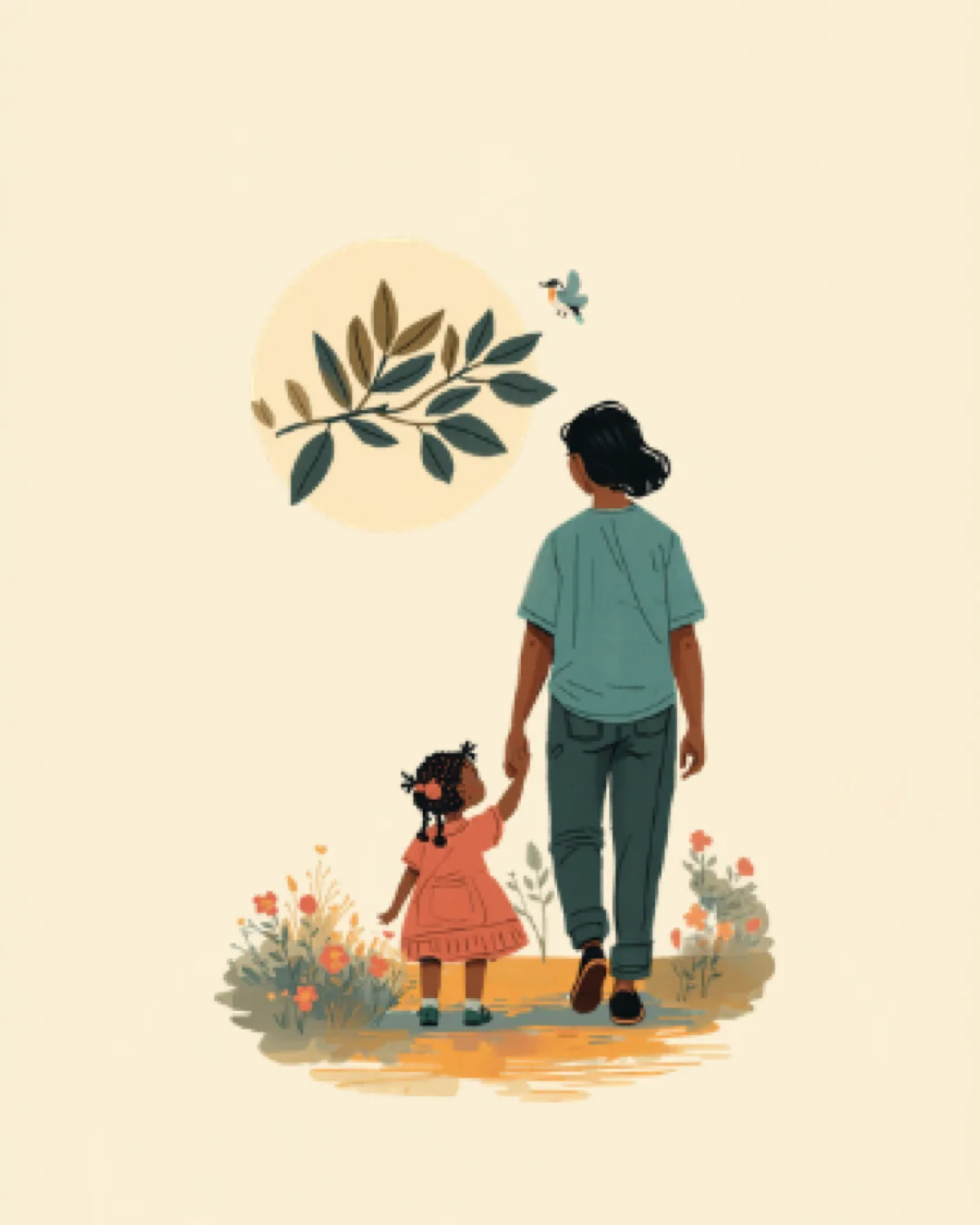
Walk slowly and stop every time you hear a new sound — a bird, a car, the wind — and name what made it.
Activity details
18m–3y10 minslowoutdoorNo prep
Instructions
Tiny Steps
Get ready
Start walking slowly together — a quiet street or park works best.
Stop and hold up your hand: 'Wait — can you hear that? What is it?'
1/4
Start walking slowly together — a quiet street or park works best.
Stop and hold up your hand: 'Wait — can you hear that? What is it?'
Listen together for 5 seconds. Name the sound: 'I can hear a bird singing!'
Walk on until you hear the next sound. Stop again.
Ask your child: 'What can YOU hear?' Wait for them to respond — even a point or a babble counts.
Try to hear 5 different sounds on one walk.
Compare sounds: 'The car was loud. The bird was quiet. Which was louder?'
At the end, recall together: 'We heard a bird, a car, the wind, a dog, and a door closing. Five sounds!'
Parent tip
Start before you overthink it. No-prep activities work best when you begin while the moment is still recoverable.
What success looks like
Curiosity in action — pointing, collecting, asking ‘what’s that?’ A child engaged with nature is learning without knowing it.
On a walk, you and your child stop each time you hear a different sound. You name the source together: 'A dog barking! A car engine! The wind in the leaves!' Connecting sounds to their sources builds the auditory discrimination that underpins phonemic awareness — the ability to hear and distinguish individual sounds, which is foundational to reading.
Why it helps
Auditory discrimination — telling apart different sounds — is a precursor to phonemic awareness, the ability to hear individual speech sounds in words. The National Literacy Trust identifies sound discrimination activities as one of the most effective early literacy interventions for under-threes. Children who practise careful listening develop stronger decoding skills when they encounter print.
Variations
Bring paper and crayons — draw a simple picture of each sound you hear for a 'sound diary'.
Try it at different times of day — morning sounds are different from evening sounds.
For older toddlers, close your eyes and try to identify sounds without seeing the source.
Safety tips
Stay on safe paths — stopping suddenly near roads is dangerous. Choose parks or quiet streets.
Hold hands at all times near traffic, especially during the 'stop and listen' moments.
Keep listening pauses short (5-10 seconds) — toddlers have limited patience for standing still.
Try one of these next
A few connected ideas chosen by theme, energy, set-up, and age fit.