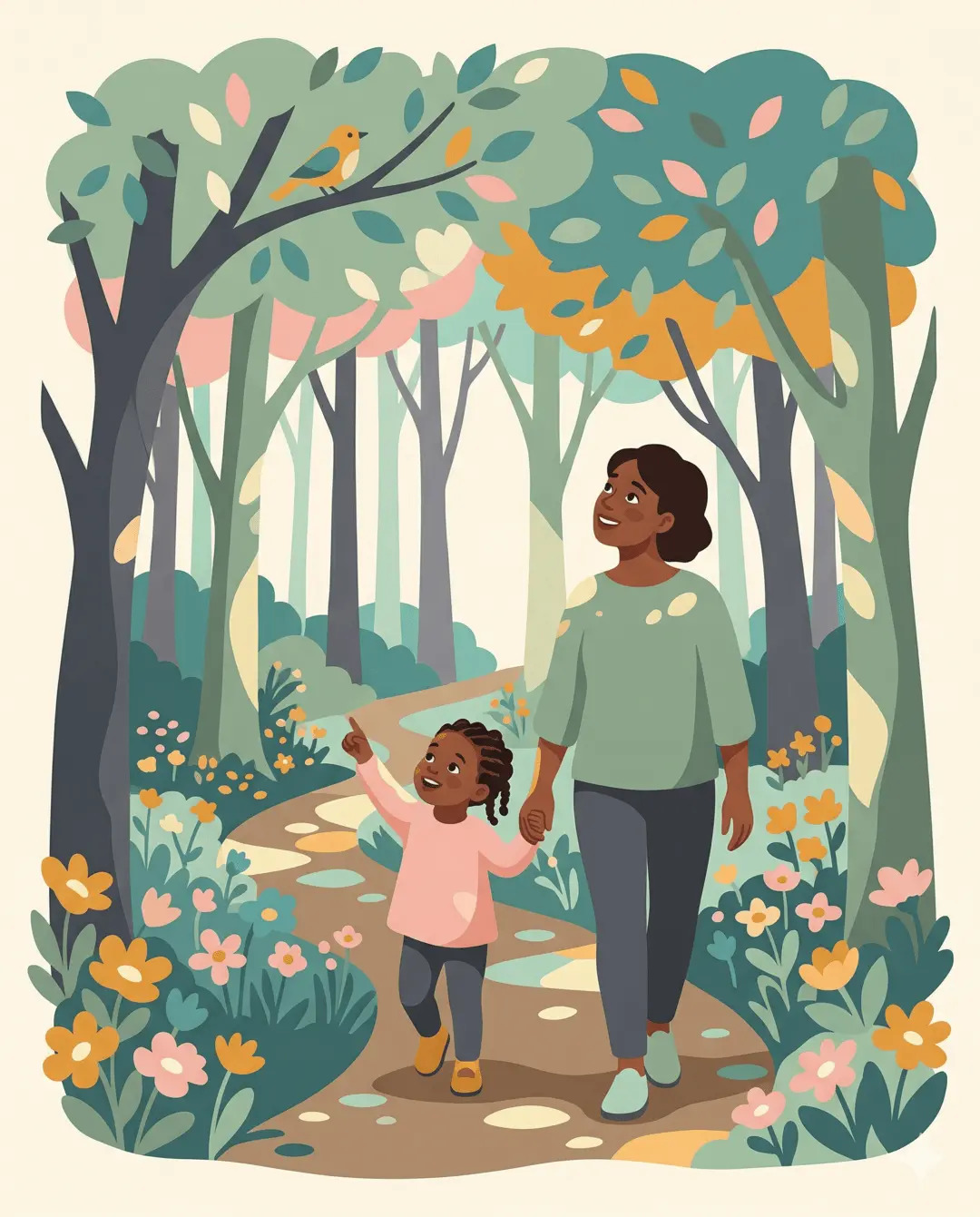
Sit quietly in the garden with binoculars or bare eyes, counting birds and describing what they look like.
Activity details
2y–4y10 minslowoutdoorNo prep
Instructions
Tiny Steps
Get ready
Scatter some breadcrumbs or seeds near where you will sit — this attracts birds.
Sit down together in a comfortable spot with a clear view of the garden.
1/4
Scatter some breadcrumbs or seeds near where you will sit — this attracts birds.
Sit down together in a comfortable spot with a clear view of the garden.
Whisper: 'Let us be very quiet and see who comes to visit.'
When a bird appears, point gently: 'Look — a small brown one. Can you see it?'
Ask questions: 'What colour is its tummy? Is it bigger or smaller than your hand?'
Count together: 'That is two birds now. Can you see a third one?'
Watch what the birds do: 'It is pecking at the ground. What do you think it is eating?'
After a few minutes, move slowly inside and draw or talk about what you saw.
Parent tip
Start before you overthink it. No-prep activities work best when you begin while the moment is still recoverable.
What success looks like
Curiosity in action — pointing, collecting, asking ‘what’s that?’ A child engaged with nature is learning without knowing it.
Your child sits still in the garden (a big ask for a toddler!) and watches for birds. They count how many they see, describe colours and sizes, and notice behaviour — hopping, pecking, flying. This gentle observation activity builds patience, focus, and the kind of careful attention that supports learning across every domain.
Why it helps
Sustained observation builds executive function — specifically inhibitory control (staying still) and selective attention (focusing on one thing in a busy environment). The National Literacy Trust highlights that describing living things in real time develops richer vocabulary than describing pictures, because the child must find words for movement, sound, and behaviour as they happen.
Variations
Make simple binoculars from two toilet roll tubes taped together — the 'binoculars' frame the view and help focus attention.
Keep a bird tally chart over several days — draw or stick pictures of each type of bird seen.
Put out different foods (seeds, apple, bread) on different days and see which attracts the most visitors.
Safety tips
Wash hands after handling bird food or touching surfaces where birds have been.
Keep a safe distance from birds — teach your child to watch, not chase.
If using real binoculars, ensure the strap is worn around the neck to prevent drops.
Try one of these next
A few connected ideas chosen by theme, energy, set-up, and age fit.