A standing collage craft — tape sticky-side-out contact paper to the wall and press lightweight bits onto it.
Activity details
12m–2y10 minslowindoorCotton BallsFeathersFelt PiecesPainter's TapeTissue Paper
Instructions
Tiny Steps
Get ready
Cut a piece of cling film or wide painter's tape and fix it to the wall at your child's standing height, sticky side facing out.
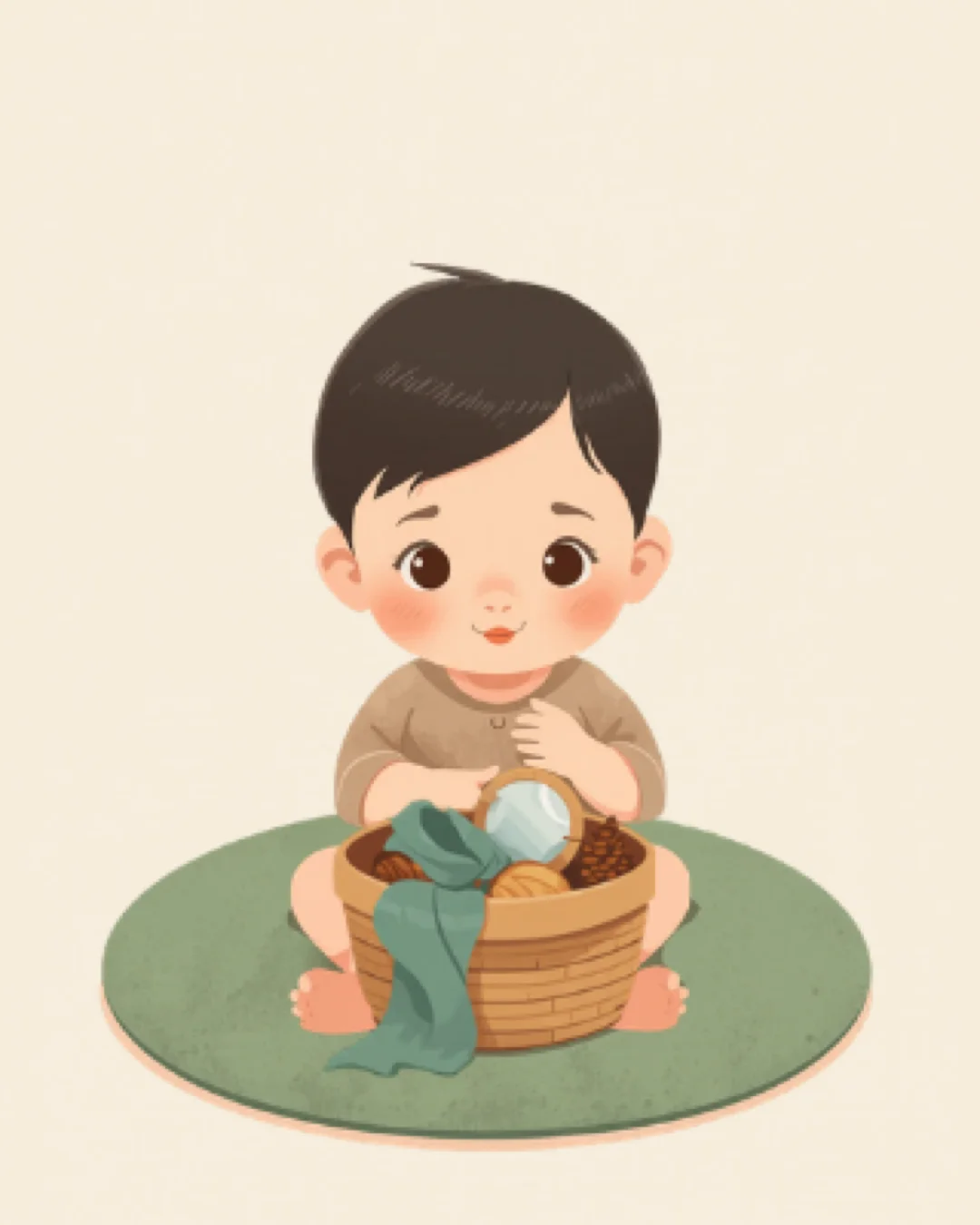
Gather lightweight items: feathers, tissue paper scraps, cotton balls, and small felt pieces.
1/4
Cut a piece of cling film or wide painter's tape and fix it to the wall at your child's standing height, sticky side facing out.
Gather lightweight items: feathers, tissue paper scraps, cotton balls, and small felt pieces.
Place the items in a small basket on the floor next to the wall.
Show your child how to press a feather onto the sticky surface: 'Look — it sticks! Can you try?'
Let them pick items from the basket and press them on, one by one, using their pincer grip.
Name the textures and colours as they work: 'That's a fluffy white cotton ball. And a smooth green leaf.'
Show them how to peel items off too — the pulling motion exercises different hand muscles from the pressing.
When the surface is full, step back together and admire their creation: 'You made a beautiful picture!'
Parent tip
Set out cotton balls and feathers before inviting your toddler in so the first minute feels smooth.
What success looks like
Messy hands and a child who doesn’t want to stop. The artwork doesn’t need to look like anything — the process is the point.
Toddlers who have just learned to walk are spending most of their play time on the floor, but their arms and hands need practice at standing height too. A sheet of adhesive contact paper taped to the wall at toddler height creates an irresistible vertical surface where lightweight items — feathers, tissue paper, felt pieces, cotton balls — stick like magic. The reaching, pressing, and peeling movements develop hand strength and bilateral coordination, while standing to play strengthens core muscles and improves balance endurance.
Why it helps
Vertical surface play is recommended by paediatric occupational therapists because it positions the wrist in extension — the optimal angle for developing hand strength and fine motor control. The pincer grip required to pick up and place small items directly targets the NHS 12-month fine motor milestone. Standing while playing also builds postural endurance, training the core muscles that support walking and eventually sitting still for longer activities.
Variations
Use coloured tissue paper pieces and arrange them in a pattern — stripes, a rainbow, or a shape — for an art activity.
Add nature items collected from the garden: small leaves, petals, and blades of grass for an outdoor-themed collage.
For older toddlers, draw a simple outline on the paper first (a tree, a face) and ask them to fill it in with the sticky items.
Safety tips
Supervise closely, as small items like cotton balls and feathers are a choking risk if mouthed.
Ensure the tape or contact paper is securely fixed and won't peel off the wall and stick to your child's face or hands.
Check that the wall surface won't be damaged by the adhesive — test a small patch first or use painter's tape as a backing.
Try one of these next
A few connected ideas chosen by theme, energy, set-up, and age fit.