Fill a low kitchen cupboard with safe items for your toddler to open, explore, and empty — satisfying their urge to investigate cause and effect.
Activity details
12m–18m10 minslowindoorMeasuring CupsPots and PansSpongesWooden Spoons
Instructions
Tiny Steps
Get ready
Choose a low cupboard your child can reach while standing and remove anything breakable or unsafe.
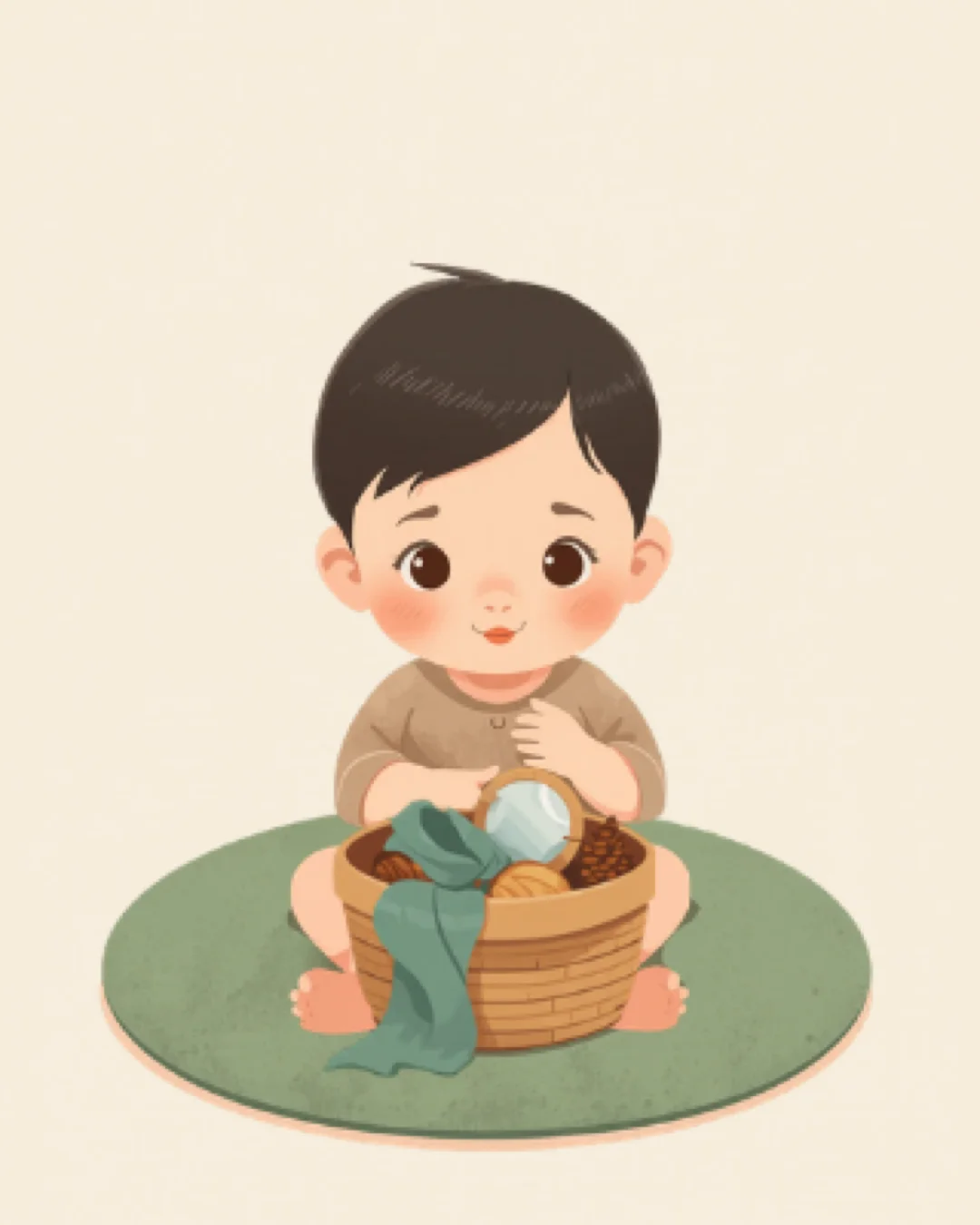
Fill it with five or six interesting items: a wooden spoon, a plastic measuring cup, a small pot with a lid, a clean sponge, and a whisk.
1/4
Choose a low cupboard your child can reach while standing and remove anything breakable or unsafe.
Fill it with five or six interesting items: a wooden spoon, a plastic measuring cup, a small pot with a lid, a clean sponge, and a whisk.
Close the cupboard door and sit nearby while your child plays.
When they open the door, react with genuine interest: 'Ooh, what's in there? What have you found?'
Name each item as they pull it out: 'That's a wooden spoon — can you bang it on the pot?'
Let them empty the entire cupboard if they want to — the emptying is the play.
After everything is out, show them how to put one item back and close the door: 'Shall we put the spoon away? Close the door — well done!'
Swap out the items every few days to renew the sense of discovery and keep the activity fresh.
Parent tip
Set out measuring cups and pots and pans before inviting your toddler in so the first minute feels smooth.
What success looks like
Intense focus, even briefly. Watch for the small ‘aha’ moment when they figure out how something works.
Every parent of a new walker knows the scene: tiny hands reaching for every cupboard door in the kitchen. Rather than constantly redirecting, this activity designates one low cupboard as your toddler's own discovery zone, filled with safe, interesting items to pull out, examine, and put back. Opening a door, reaching inside, and discovering what's there is a powerful cause-and-effect loop that builds cognitive curiosity and independence. It also buys you five to ten minutes of engaged play while you get things done nearby.
Why it helps
Object permanence — understanding that things continue to exist even when hidden — consolidates between 8 and 18 months. A cupboard with a closed door is a perfect test of this concept: the child must remember that interesting things are inside, open the door to find them, and experience the confirmation that they were right. This cognitive loop builds memory, prediction, and independent exploration. The NHS highlights active exploration of household objects as a key learning behaviour in the 12-18 month window.
Variations
Wrap one item in a tea towel so your child has to unwrap it — adding a layer of fine motor challenge and surprise.
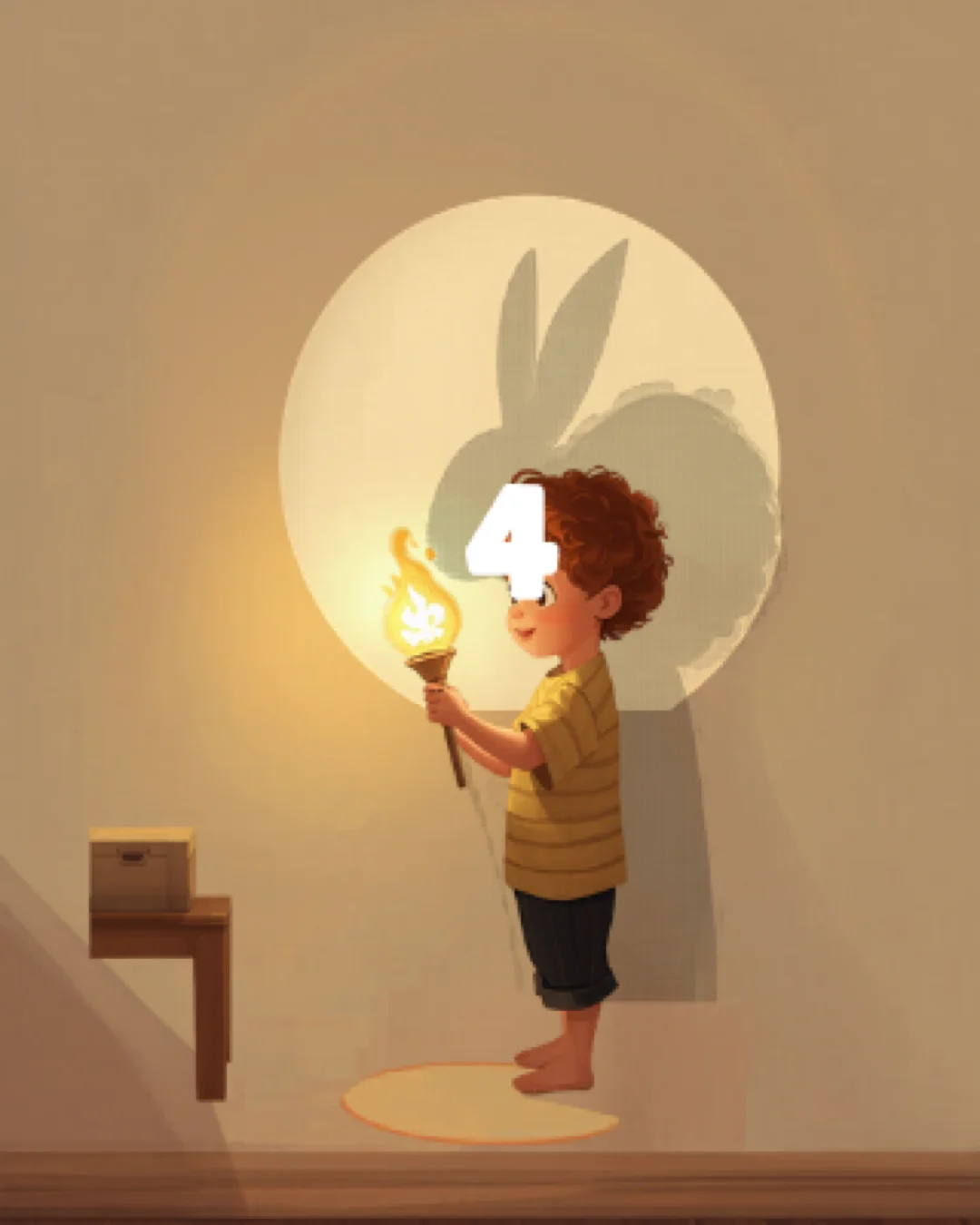
Place a torch inside the cupboard so it lights up when the door opens, creating a magical discovery moment.
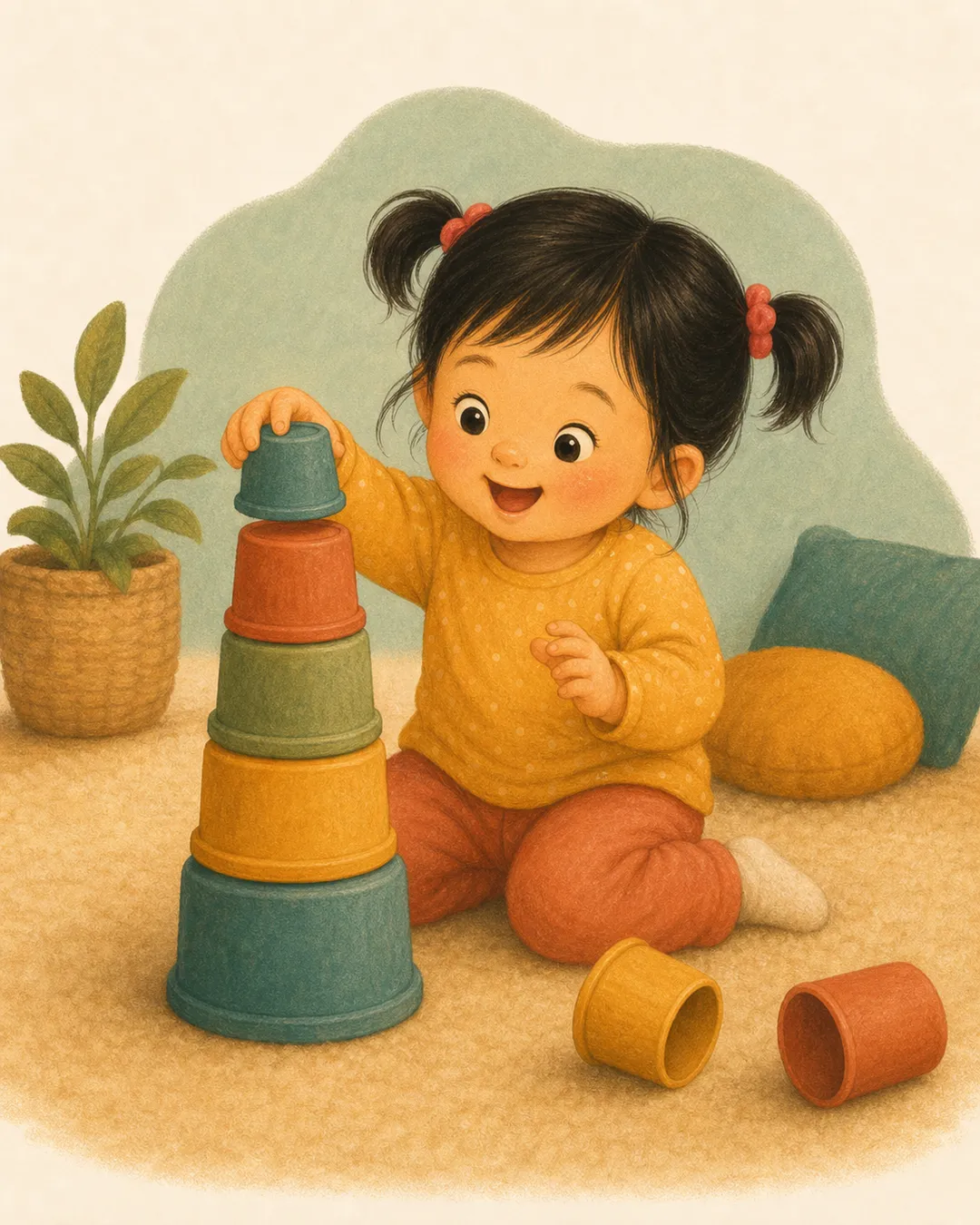
For older toddlers, add items that nest inside each other (measuring cups, stacking containers) to introduce size comparison.
Safety tips
Ensure all other kitchen cupboards and drawers are securely child-locked, especially those containing cleaning products, sharp objects, or heavy items.
Check that the cupboard door cannot pinch small fingers — consider adding a soft bumper if the hinge is stiff.
Inspect all items for sharp edges, loose parts, or anything small enough to be a choking hazard before placing them in the cupboard.
Try one of these next
A few connected ideas chosen by theme, energy, set-up, and age fit.