Stack stones, sticks, and natural bits into the tallest tower you can — a patience-building outdoor construction challenge.
Activity details
19m–4y15 minslowoutdoorNo prepRocks
Instructions
Tiny Steps
Get ready
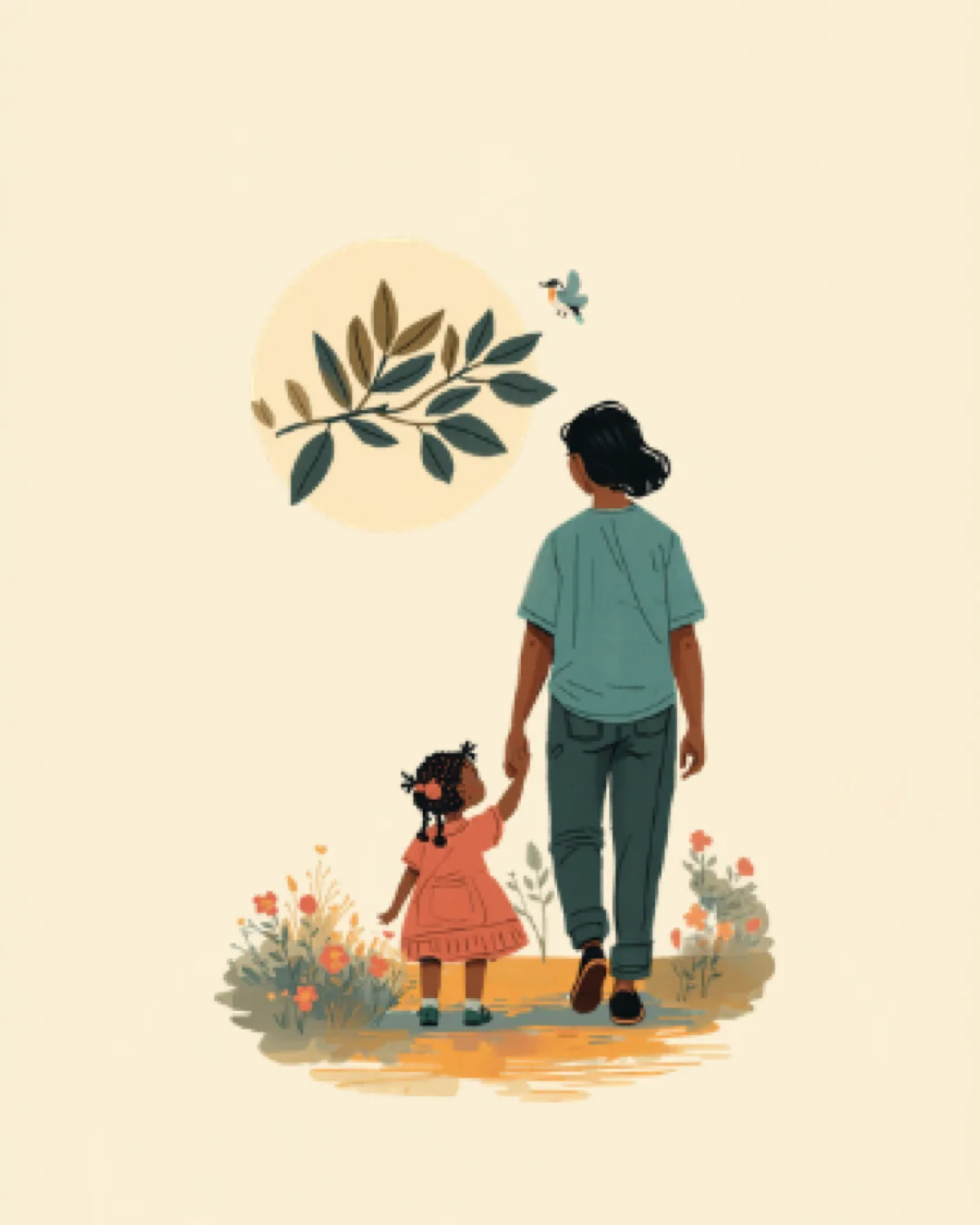
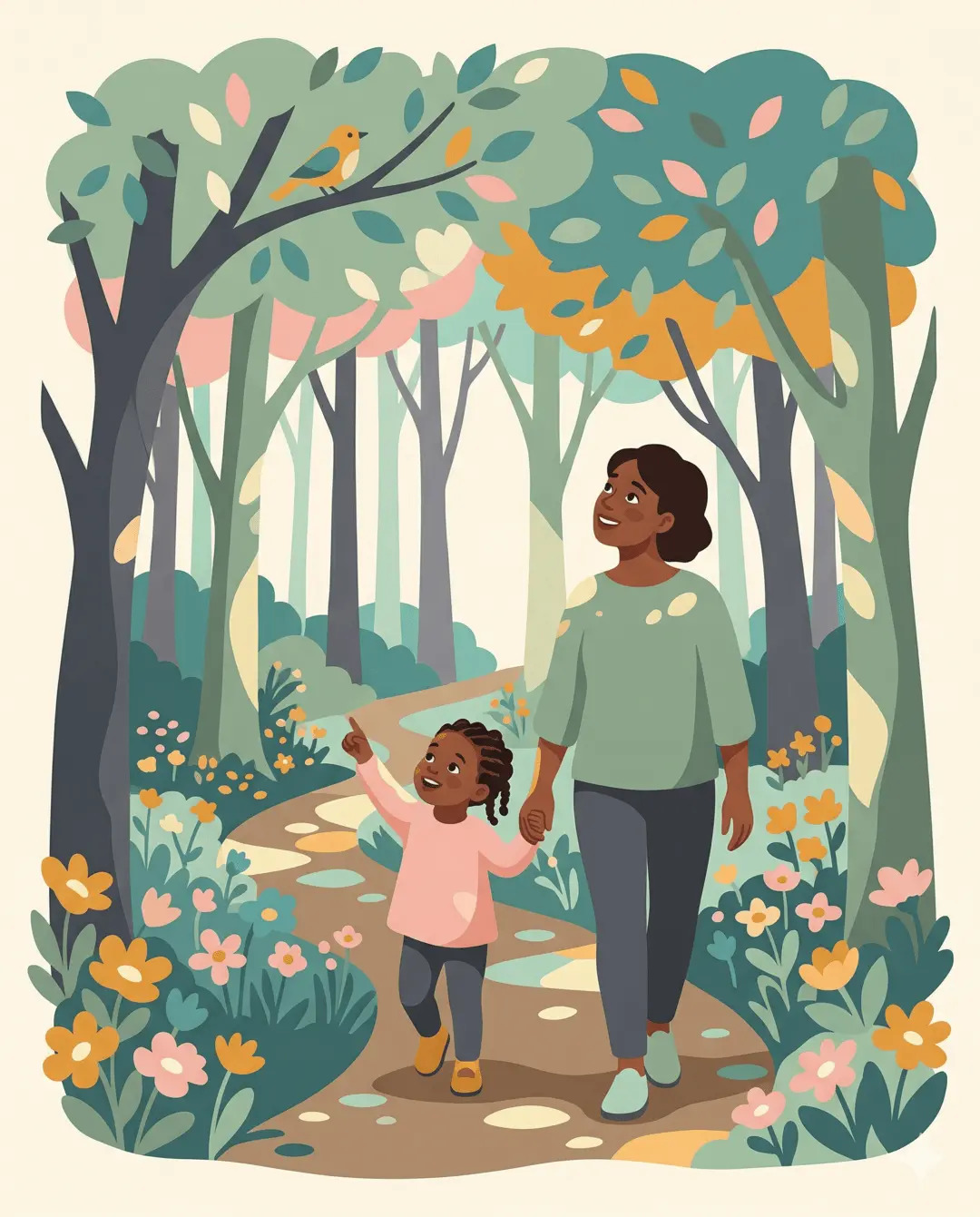
Go on a short collecting walk to gather flat stones, sturdy sticks, bark pieces, and pinecones — look for different sizes.
Find a flat, stable surface to build on — a paving slab, tree stump, or level patch of ground.
1/4
Go on a short collecting walk to gather flat stones, sturdy sticks, bark pieces, and pinecones — look for different sizes.
Find a flat, stable surface to build on — a paving slab, tree stump, or level patch of ground.
Start with the largest, flattest stone as a base: 'We need a strong bottom so our tower doesn't wobble.'
Let your child choose the next piece and experiment with placement: 'Where do you think this one will balance?'
Build together, taking turns to add one piece at a time. Hold your breath together as each piece is placed: 'Will it stay...?'
When it topples (and it will), react with excitement not disappointment: 'Crash! That was amazing — shall we try again?'
Try different strategies: 'What if we put the flat ones at the bottom and the round ones on top this time?'
Photograph the tallest tower before it falls, and count how many pieces you used: 'Eight pieces! Can we beat eight next time?'
Parent tip
Start before you overthink it. No-prep activities work best when you begin while the moment is still recoverable.
What success looks like
Curiosity in action — pointing, collecting, asking ‘what’s that?’ A child engaged with nature is learning without knowing it.
Using only materials found on the ground — stones, sticks, bark, pinecones — your child attempts to build a tower or structure that stands up on its own. The irregular shapes and unpredictable balance points make this far more challenging and interesting than stacking uniform blocks. Every placement requires careful assessment of weight, shape, and balance, building spatial reasoning and problem-solving skills. The inevitable topples teach resilience and the joy of trying again, while the collaborative element strengthens social skills when done together.
Why it helps
The NHS Best Start in Life programme identifies problem-solving and decision-making among the key cognitive skills that develop through active play. Balancing irregular natural objects requires sophisticated spatial reasoning and trial-and-error problem solving — skills that developmental psychologists link to later mathematical and scientific thinking. Each failed attempt provides immediate feedback that helps the child adjust their approach, building what psychologist Carol Dweck calls a 'growth mindset.' The turn-taking and shared suspense also make this an excellent social activity that practises patience and cooperation.
Variations
Challenge your child to build a tower as tall as their knee, then as tall as their waist — setting body-referenced height goals.
Build two towers side by side and lay a stick across the top to make a 'bridge' — extending the engineering challenge.
In autumn, use conkers (horse chestnuts) as balancing pieces — their round shape makes them beautifully tricky.
Safety tips
Check that stones and sticks are not sharp-edged or splintered before handling, and wash hands after play.
Keep tower heights manageable — a tall stone tower that falls on toes can hurt, so cap it at your child's waist height.
Ensure younger toddlers don't mouth small stones or pinecones, which could be a choking hazard.
Try one of these next
A few connected ideas chosen by theme, energy, set-up, and age fit.