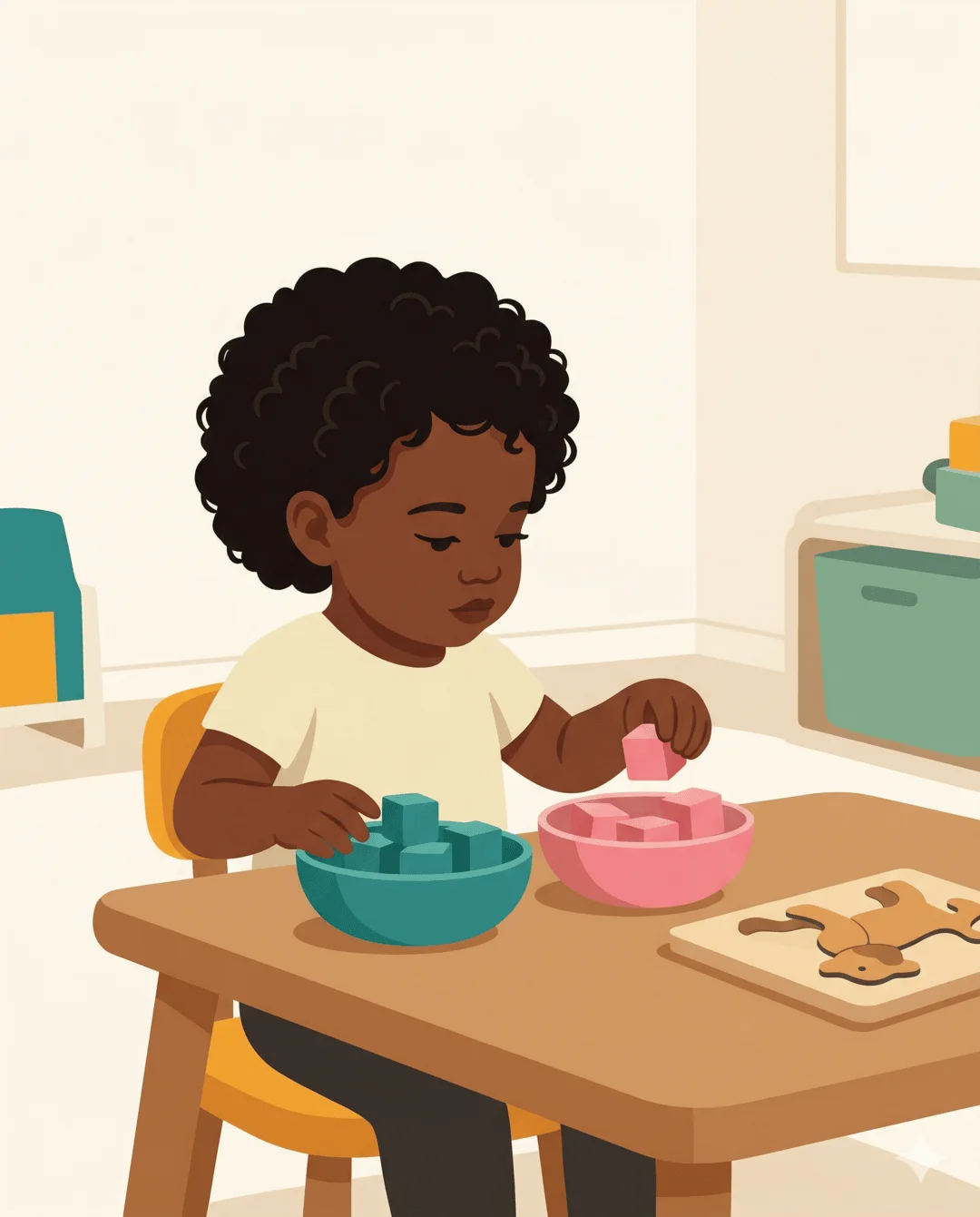
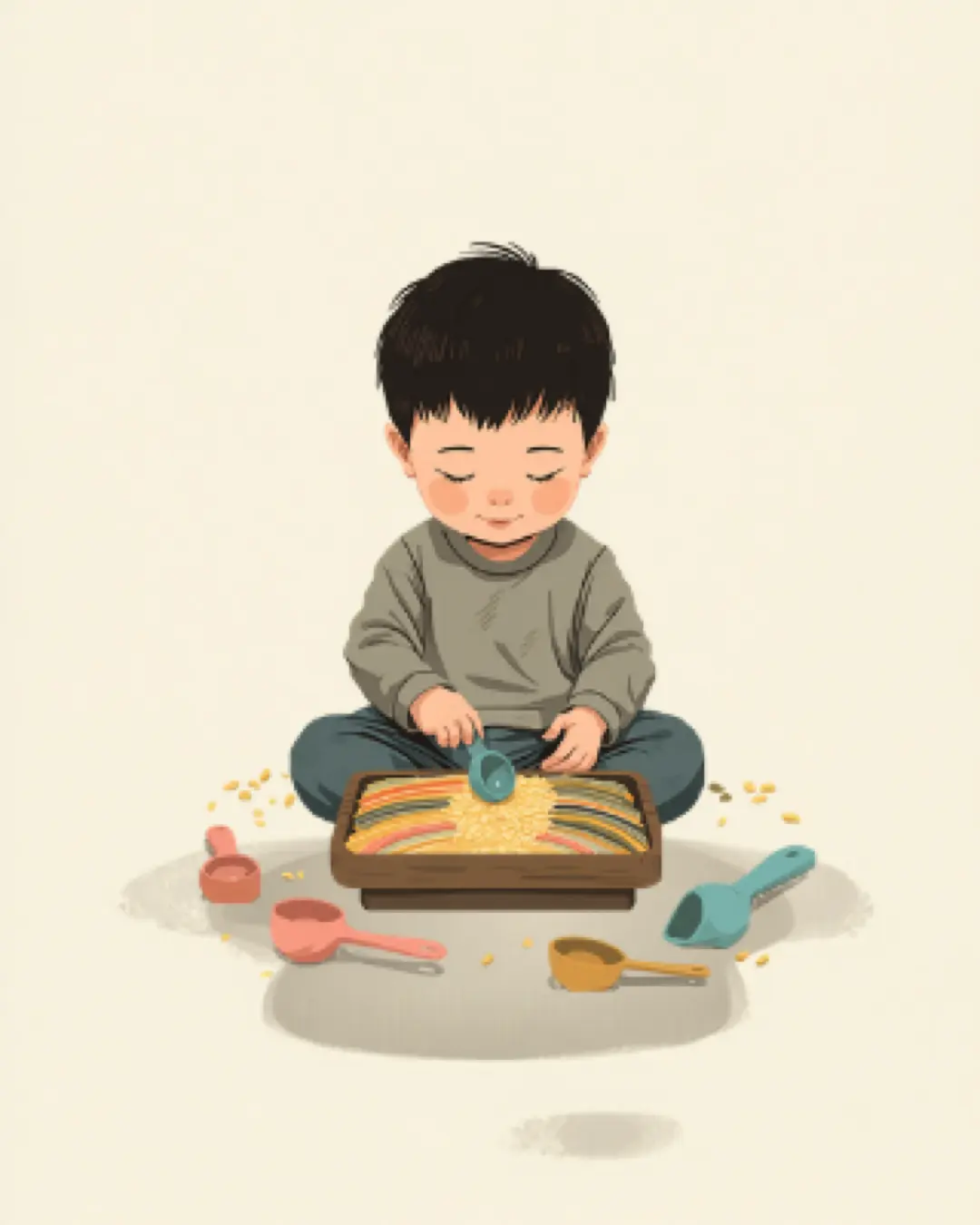
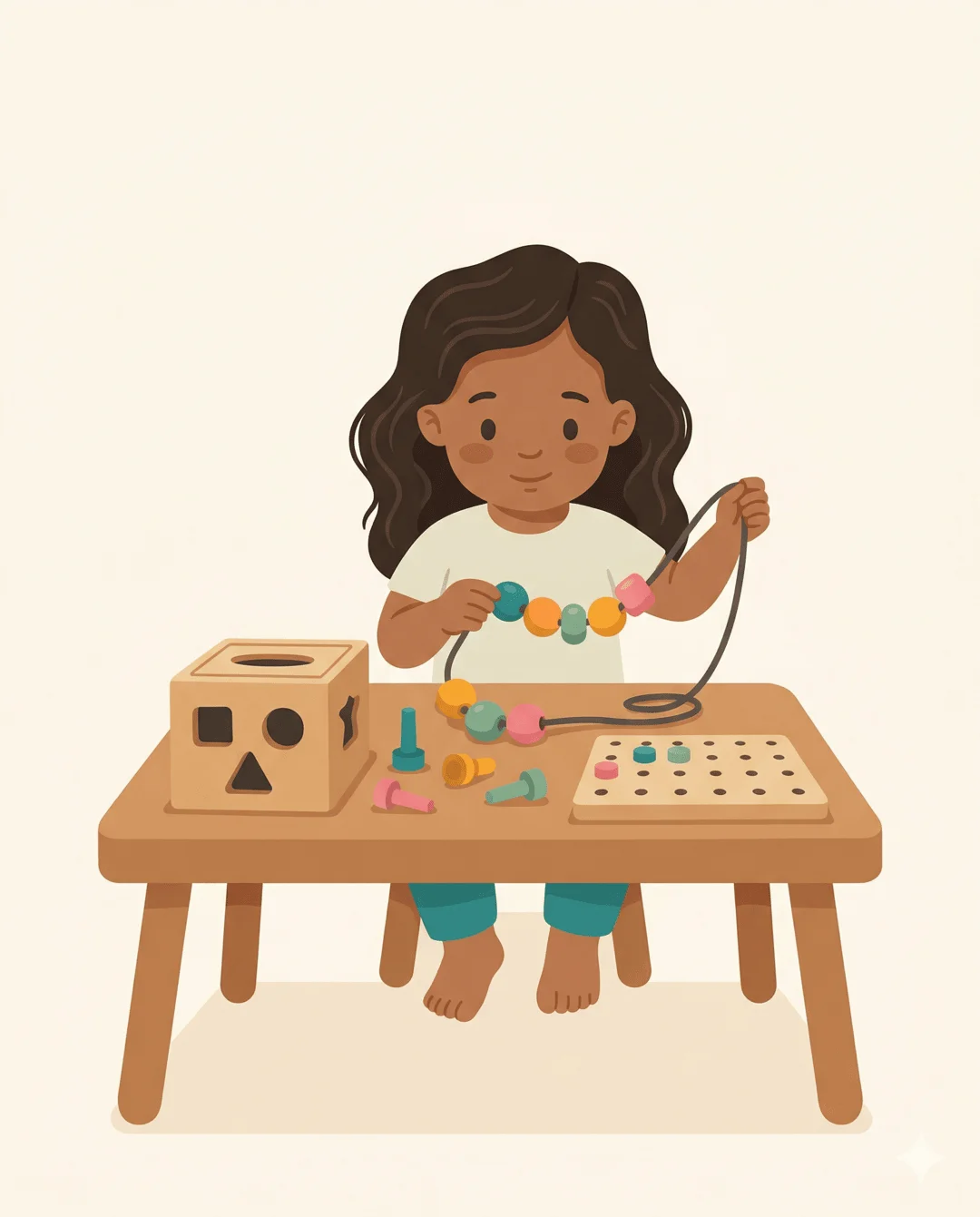
Set up two plastic containers side by side on a low table or the floor. Fill one with small pom poms or cotton balls.
Give your child a wooden spoon and show them how to scoop a ball: 'Scoop it up — like this!'
1/4
Set up two plastic containers side by side on a low table or the floor. Fill one with small pom poms or cotton balls.
Give your child a wooden spoon and show them how to scoop a ball: 'Scoop it up — like this!'
Tip the ball into the empty container: 'And tip it in! Did you hear it land?'
Hand the spoon to your child and let them try. Expect lots of dropping — that's part of the learning.
If the spoon is too tricky, let them use the spoon to push balls from one container to the other — this is still valuable practice.
Count the balls as they transfer: 'One in this pot, two in this pot — which one has more?'
When all the balls are transferred, say 'This one is empty! Can you fill it up again?' and reverse the direction.
Finish by letting your child tip both containers out at once — the big spill is a satisfying sensory reward.
Parent tip
Set out cotton balls and plastic containers before inviting your toddler in so the first minute feels smooth.
What success looks like
Intense focus, even briefly. Watch for the small ‘aha’ moment when they figure out how something works.
Using a spoon to move objects from one container to another is a beautifully layered activity for early walkers. It develops the same wrist rotation and grip pattern used for self-feeding, builds hand-eye coordination through the scooping-and-tipping action, and introduces early mathematical concepts like full, empty, more, and fewer. The activity can be done at a low table while standing — perfect for a toddler who wants to be upright but also needs calm, focused play.
Why it helps
Spoon use is one of the earliest tool-use skills, and practising it through play removes the pressure of mealtimes. The scooping motion develops the wrist rotation (pronation and supination) that is essential for self-feeding, handwriting, and many daily living tasks. Occupational therapists identify transferring activities as foundational for developing bilateral coordination — one hand holds the container steady while the other manipulates the spoon. The EYFS framework puts hands-on exploration at the heart of physical development — these small, focused movements are the building blocks of hand control.
Variations
Use water and a ladle instead of balls for a different sensory experience — move outdoors or use a towel underneath.
Try transferring dried pasta shapes, which are harder to balance on a spoon, for an added fine motor challenge.
For older toddlers, add a third container and ask them to sort by colour: 'Red pom poms here, blue pom poms there.'
Safety tips
Supervise closely if using pom poms or cotton balls, as these are a choking hazard if mouthed.
Ensure containers are lightweight and unbreakable — avoid glass or ceramic bowls.
If your child becomes frustrated with the spoon, let them use their hands and try the spoon again another day.
Try one of these next
A few connected ideas chosen by theme, energy, set-up, and age fit.