Parent tip
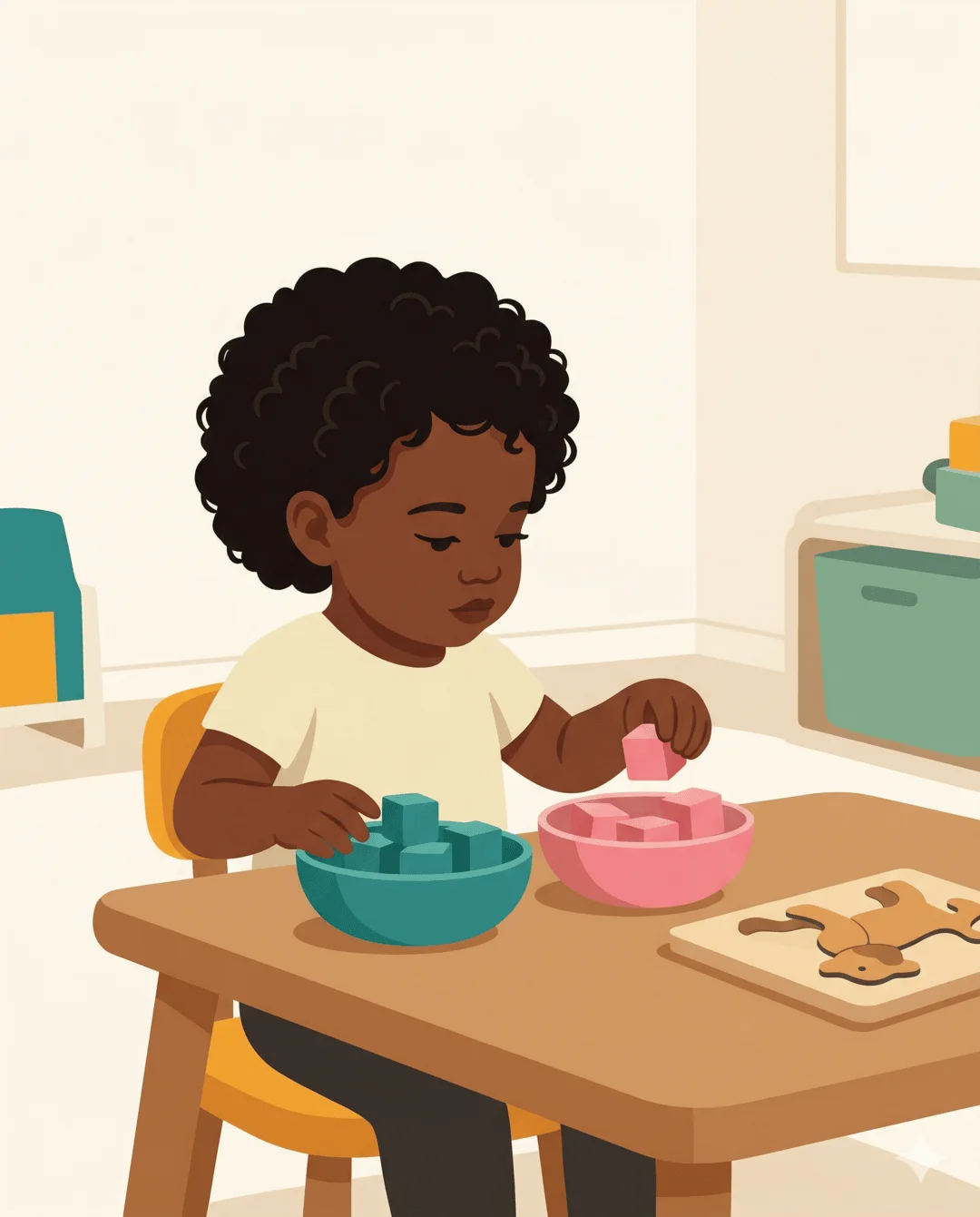
Set out basket or bin and building blocks before inviting your toddler in so the first minute feels smooth.

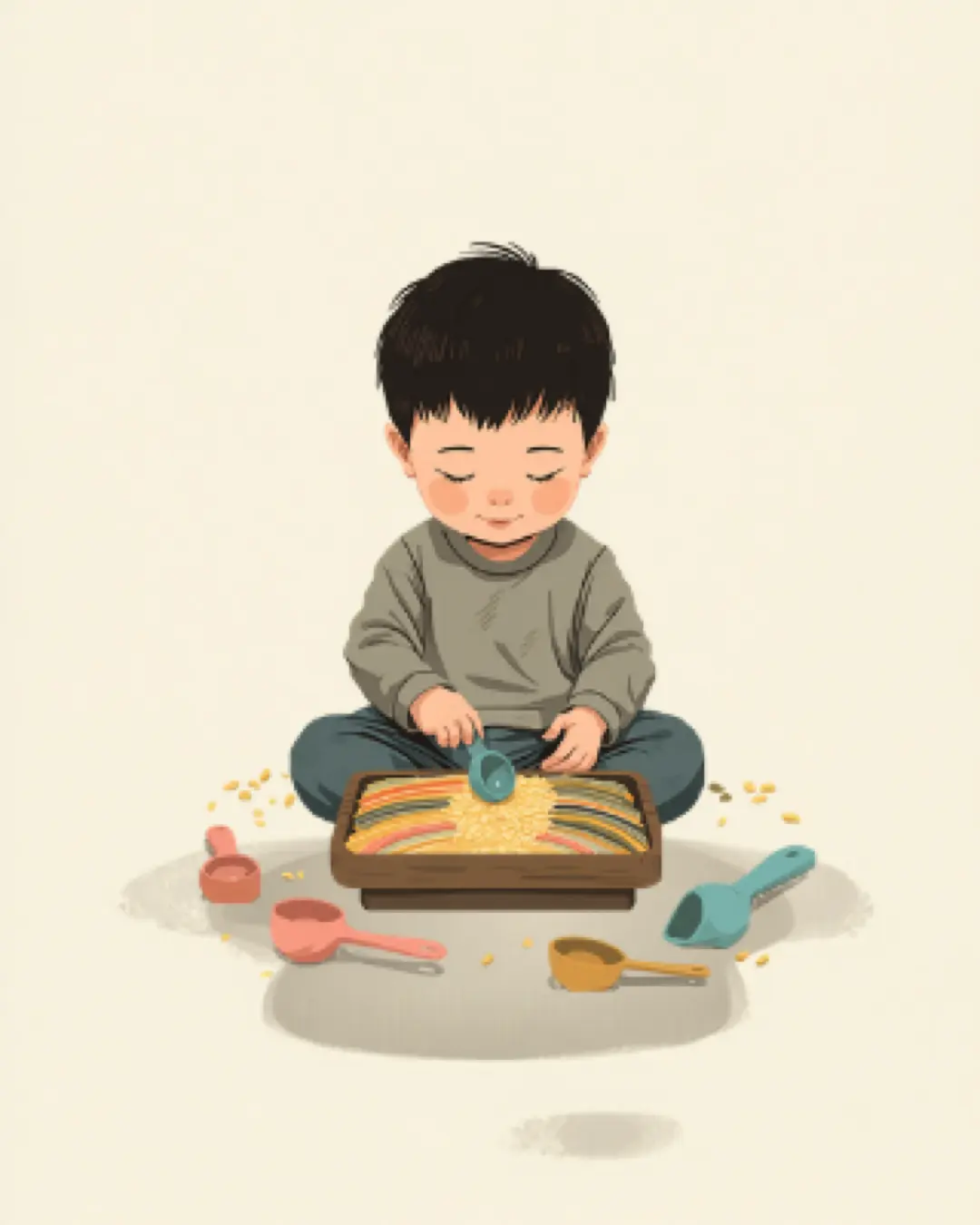
Fill containers with small objects and dump them out repeatedly.
Tiny Steps
Set out basket or bin and building blocks before inviting your toddler in so the first minute feels smooth.

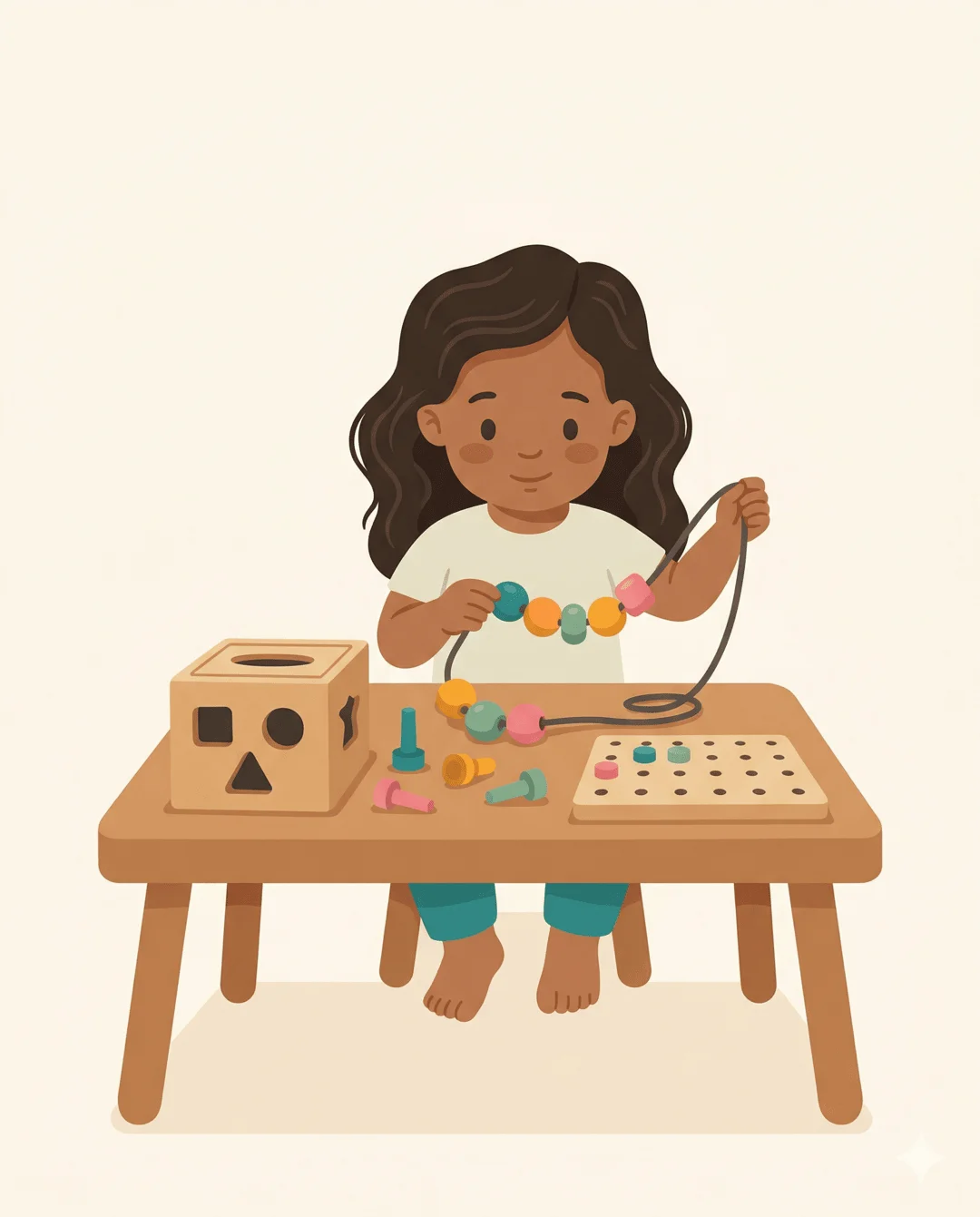
Intense focus, even briefly. Watch for the small ‘aha’ moment when they figure out how something works.
Early walkers are wired to fill things up and dump them out over and over, and leaning into this natural drive turns a potential mess into a powerful learning activity. The filling motion develops the pincer grip and hand-eye coordination, while the dumping satisfies the cause-and-effect curiosity that drives so much toddler behaviour. Using containers of different sizes also introduces early concepts of volume, space, and quantity in a hands-on way that no toy or screen can match.
Filling and dumping is a natural drive that builds the pincer grip and hand-eye coordination needed for self-feeding and dressing. Using containers of different sizes introduces early concepts of volume and space, while the repetitive cycle builds focus and persistence. The EYFS Physical Development goals include exactly this kind of careful hand movement — it is how children build the dexterity they will need for everyday tasks.
One email a week with practical toddler activities, behaviour tips, and developmental insights. No spam, unsubscribe any time.