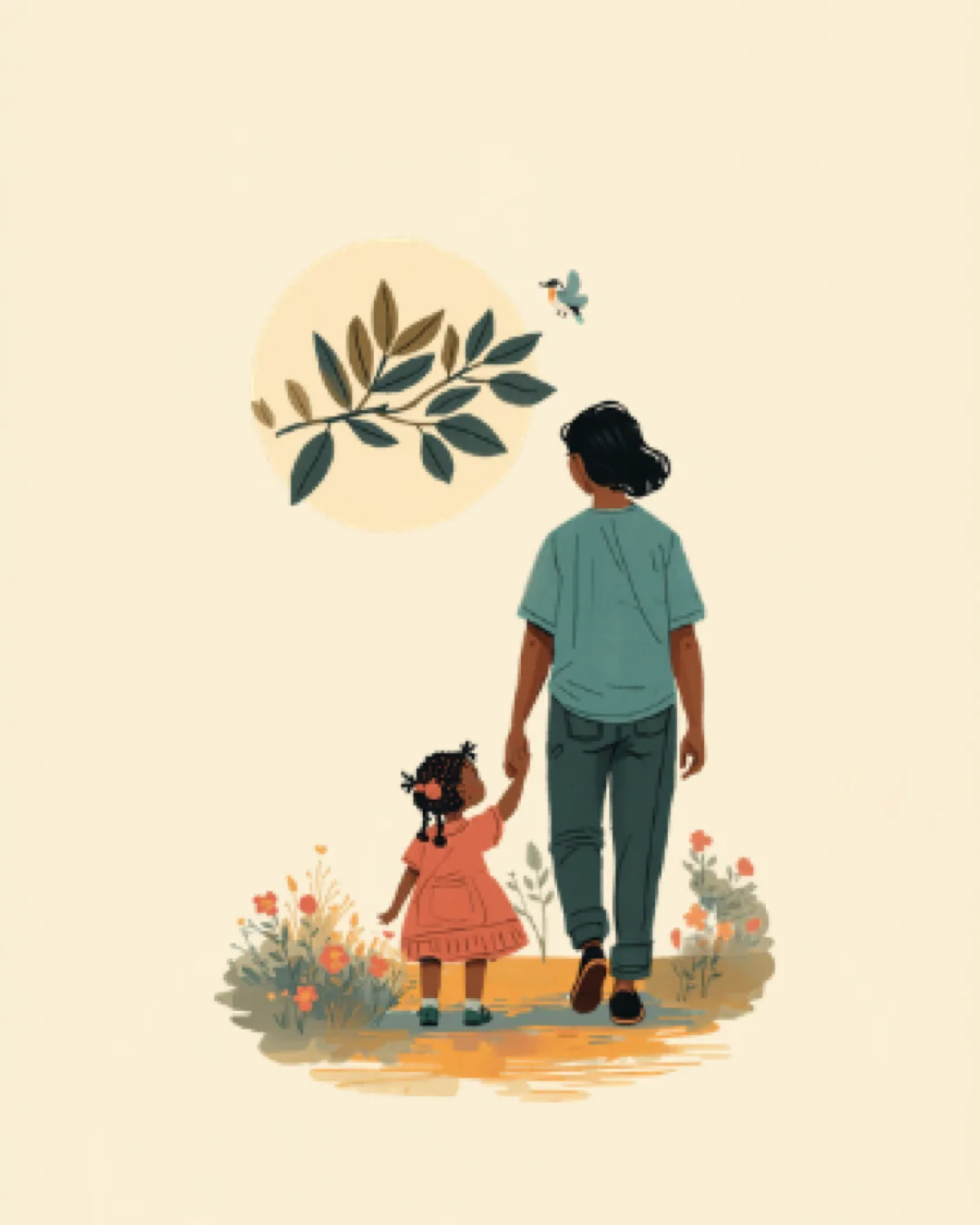
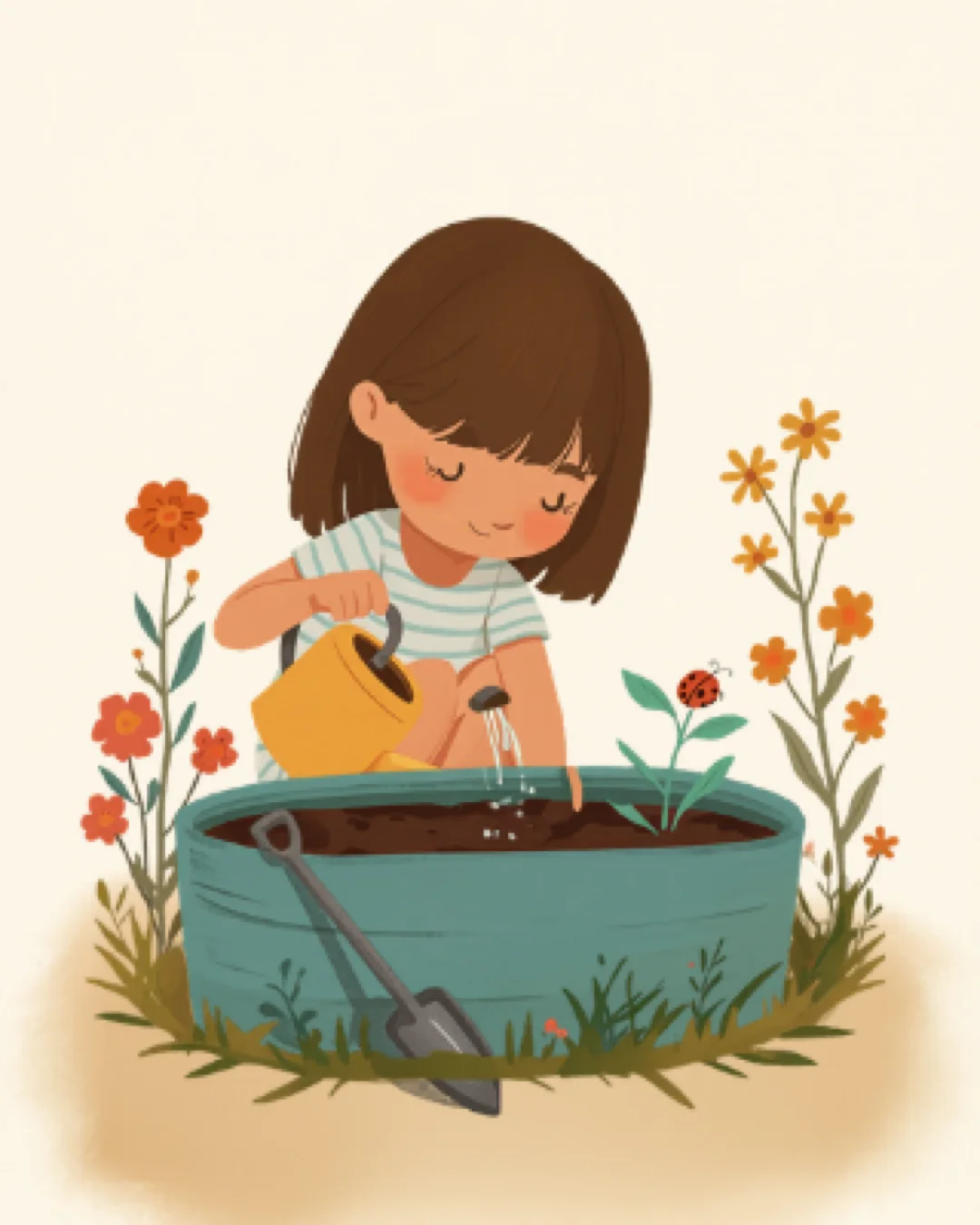
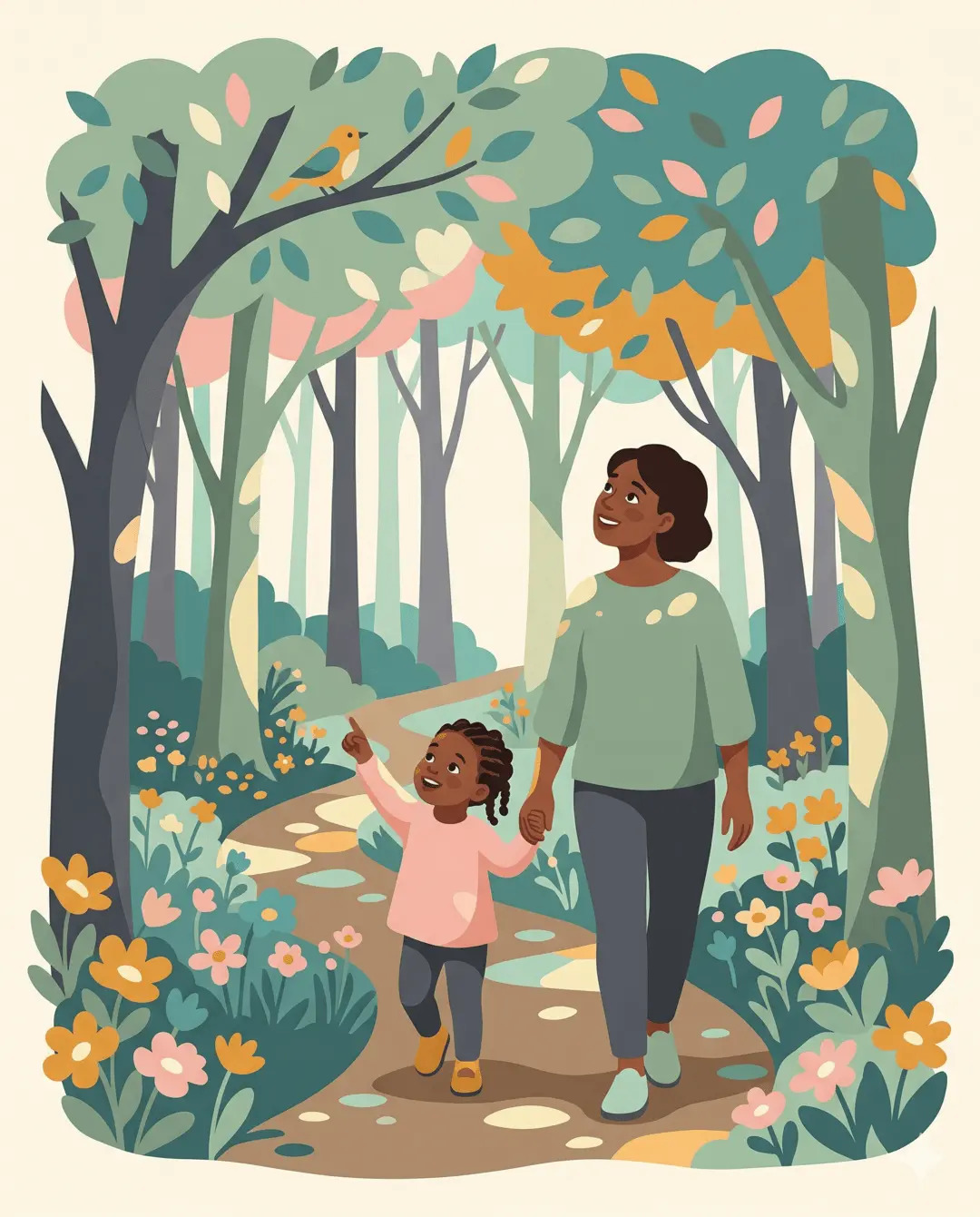
Press one seed into a patch of damp soil, water it, mark the spot — and then come back every day to check. The whole activity is the waiting.
Activity details
2y–4y10 minslowoutdoorSoilWatering Can
Instructions
Tiny Steps
Get ready
Choose a big, easy seed — sunflower, nasturtium, pea, runner bean. Anything with a visible seed your toddler can see the shape of.
Find a patch of damp soil in the garden, or fill a yoghurt pot with compost if you don't have outdoor soil.
1/4
Choose a big, easy seed — sunflower, nasturtium, pea, runner bean. Anything with a visible seed your toddler can see the shape of.
Find a patch of damp soil in the garden, or fill a yoghurt pot with compost if you don't have outdoor soil.
Help your toddler scoop a small dip in the soil with their finger or a child-sized trowel.
Place the seed in and cover gently. Let your toddler pat the soil down.
Water once — not much. A tiny watering can or the top half of a plastic bottle with holes.
Push a stick into the ground next to the spot so you can find it tomorrow.
Tell your toddler the whole truth: 'it will take days. We'll come back every day to look.'
Come back every single day, even for ten seconds. Patience is the skill, not the shoot.
Parent tip
Set out soil and watering can before inviting your toddler in so the first minute feels smooth.
What success looks like
Curiosity in action — pointing, collecting, asking ‘what’s that?’ A child engaged with nature is learning without knowing it.
Pick one seed — a sunflower, a cress seed, a nasturtium, something big enough for a toddler's fingers to find. Together, scoop a small dip in a patch of damp garden soil or a pot of compost. Press the seed in gently. Cover it. Water it with a tiny watering can or the top of a plastic bottle. Mark the spot with a stick. Then walk away. The whole activity is the waiting. Over the next week or two, you'll come back every day to check, and that daily check — 'any change?' — is the real reason to do this with your toddler.
Why it helps
NHS early-years guidance highlights outdoor, child-chosen activity — including 'making dens' and 'pop on some walking shoes or wellies' type play — as the natural way toddlers learn sequencing and delayed gratification. A planted seed is one of the longest patience lessons a toddler can attempt, and because the change is genuinely visible after a week, the waiting actually pays. The daily check becomes a predictable routine together — one more reason your child has to go outside, one more moment of shared attention, one more first step into the science of the physical world.
Variations
Plant three seeds in three spots and label them with their names — compare growth over two weeks. Good for older toddlers who can hold three things in mind.
Use an egg carton and planted seeds indoors if you haven't got outdoor soil — the daily check routine still works.
Photograph the spot every visit — looking at the sequence of photos after a shoot appears makes the slow change visible in a way the daily check doesn't.
Safety tips
Check the seed packet for toxicity — sunflower, nasturtium, and cress are all safe; some ornamental seeds are not. RoSPA warn specifically that garden chemicals and plant food 'can all be deadly if swallowed by children,' so keep anything beyond the seeds themselves out of reach.
Wash hands after handling soil — spring compost carries bacteria that aren't pleasant in a toddler mouth.
Keep the daily-check spot fenced off if you have a dog — toddler-sized dig marks attract attention.
Try one of these next
A few connected ideas chosen by theme, energy, set-up, and age fit.