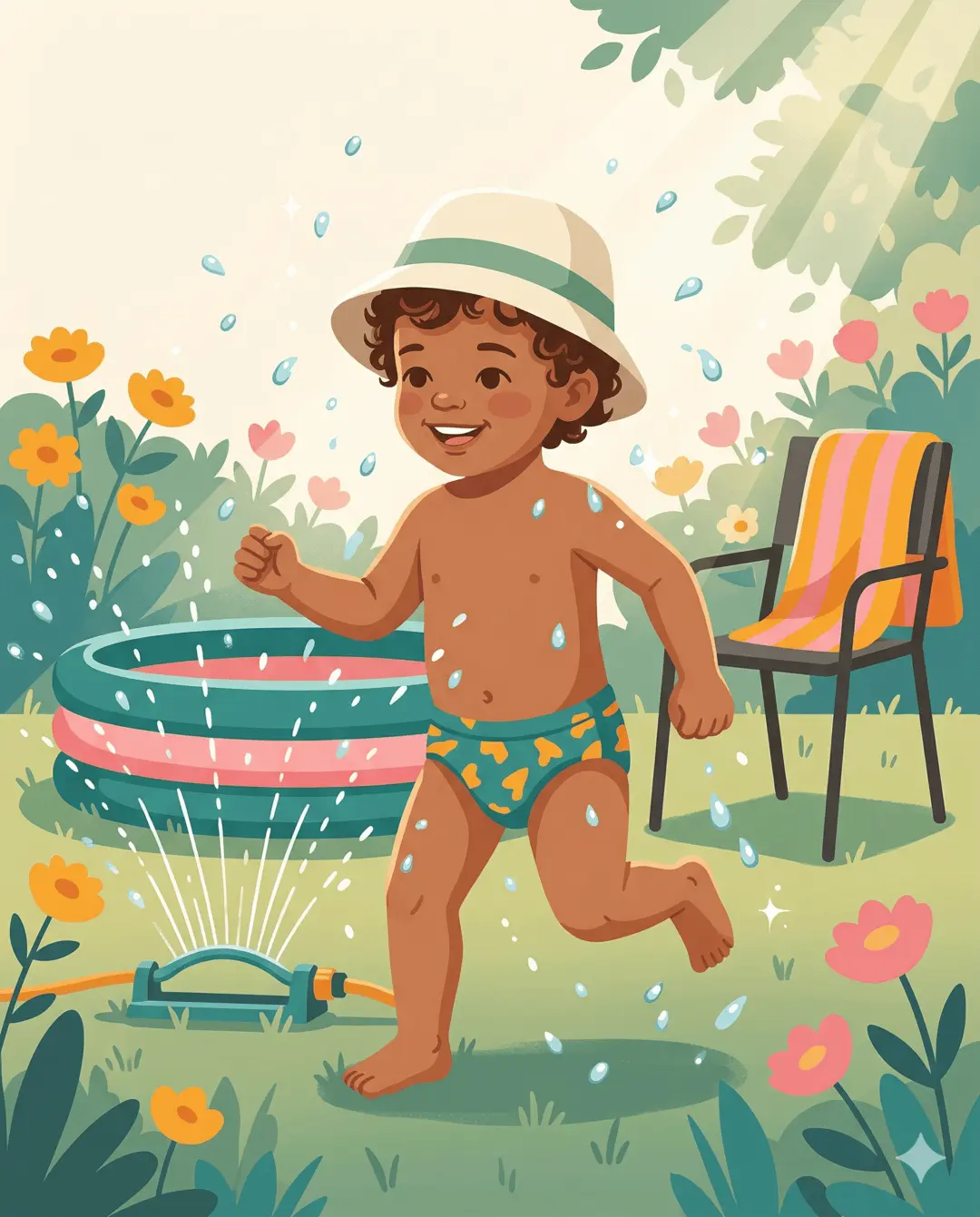
Find a shallow puddle and stomp it two ways — the biggest stomp your wellies can make, then the tiniest one. Loud and quiet, taking turns.
Activity details
19m–4y10 minsmediumoutdoorRain Boots
Instructions
Tiny Steps
Get ready
Put wellies on and find a safe shallow puddle — pavement or driveway, well away from traffic.
Announce the rules: 'big stomp, tiny stomp — we take turns.'
1/4
Put wellies on and find a safe shallow puddle — pavement or driveway, well away from traffic.
Announce the rules: 'big stomp, tiny stomp — we take turns.'
Go first yourself: biggest splash you can manage, then say 'your turn.'
Your child does their LOUD stomp. Cheer it.
Model the TINY stomp next — barely break the surface, with an exaggerated whisper-voice: 'soooo quiet.'
Your child does their tiny stomp. Cheer this harder than the loud one — quiet effort deserves more praise.
Alternate for six or seven rounds. Stop before they tire of it, not after.
Walk on. If they stomp the next puddle unprompted, let them choose loud or quiet themselves.
Parent tip
Set out rain boots before inviting your toddler in so the first minute feels smooth.
What success looks like
Watch for focused exploration — fingers digging in, pouring back and forth, or sorting by feel. Even a few minutes of this builds concentration.
After a spring shower, pick a safe shallow puddle on the pavement or driveway. You and your toddler take turns: one 'LOUD stomp' that splashes as much water as possible, then one 'tiny stomp' where you barely break the surface. The physical contrast — big voice, small voice, through the feet — lets your child rehearse voice modulation with their whole body. This is the same skill that, indoors, sounds like whining versus asking. Doing it feet-first, outside, with a puddle, is far easier than practising it sitting down during a meltdown.
Why it helps
The WHO physical activity guidelines for 1-4 year olds recommend at least 180 minutes daily 'in a variety of types of physical activities at any intensity, spread throughout the day.' A stomp-and-whisper puddle session hits that target and adds voice-modulation practice on top: your child feels what loud-voice and tiny-voice do through their feet, so when you whisper 'use your asking voice' later, indoors, the distinction is a physical memory rather than an abstract rule. It is far easier for a toddler to reach for a regulation tool they have rehearsed with their body.
Variations
Add a 'medium stomp' for older toddlers — three volumes means they hold three patterns in mind at once, a genuine cognitive stretch.
Sing 'Incy Wincy Spider' between rounds — the rain song gives the whole thing a narrative shape toddlers find easier to follow.
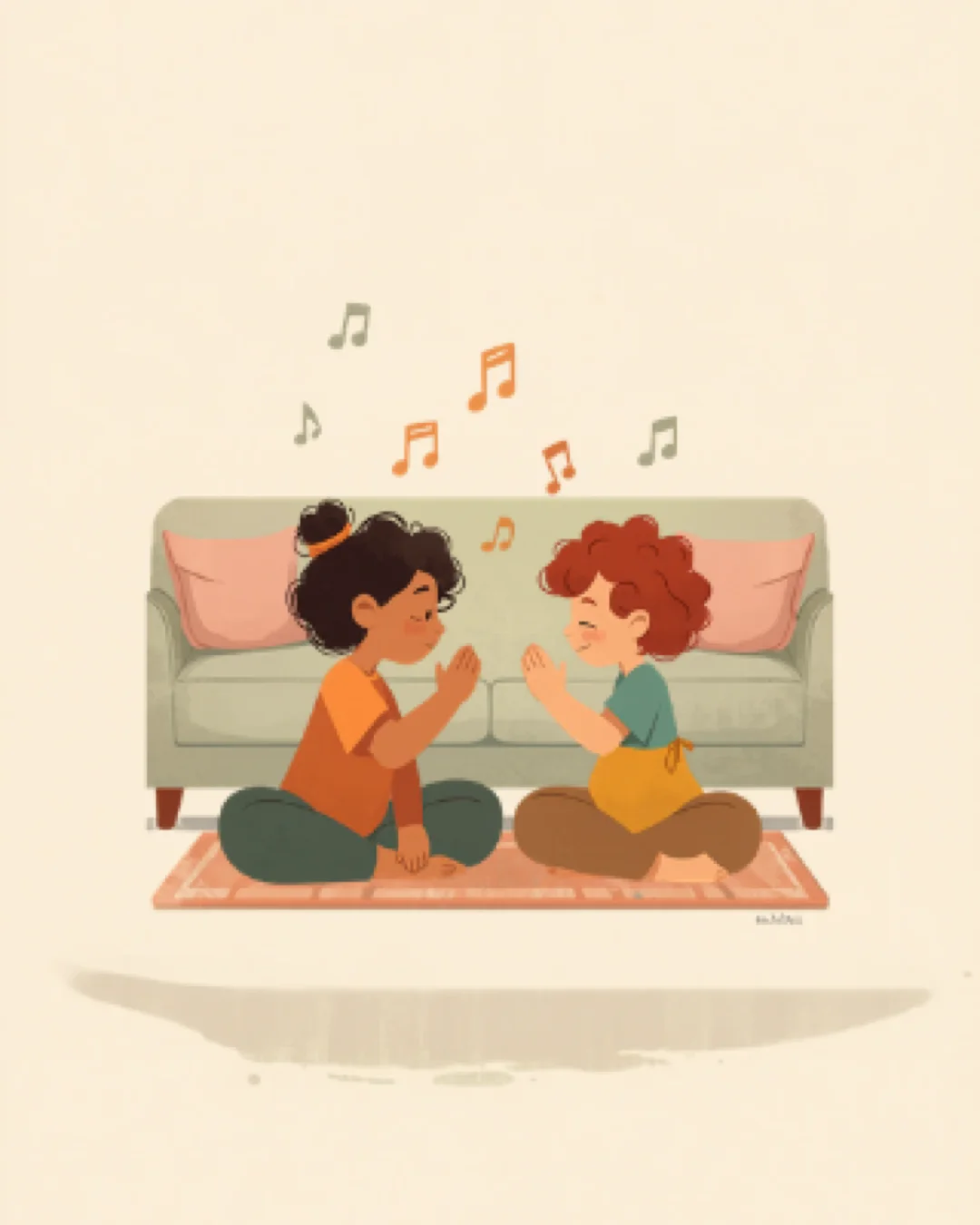
Swap for 'loud clap, tiny clap' on dry days indoors — the same mechanic, same voice skill, different body part doing the work.
Safety tips
Check each puddle before stomping — broken glass, sharp debris, or oil film means skip this one and find another.
Stay close to a pavement or grass verge — never stomp in standing water near traffic where a splash could startle a driver.
Change wet socks and feet the moment you're home — cold wet feet are how toddler colds start.
Try one of these next
A few connected ideas chosen by theme, energy, set-up, and age fit.