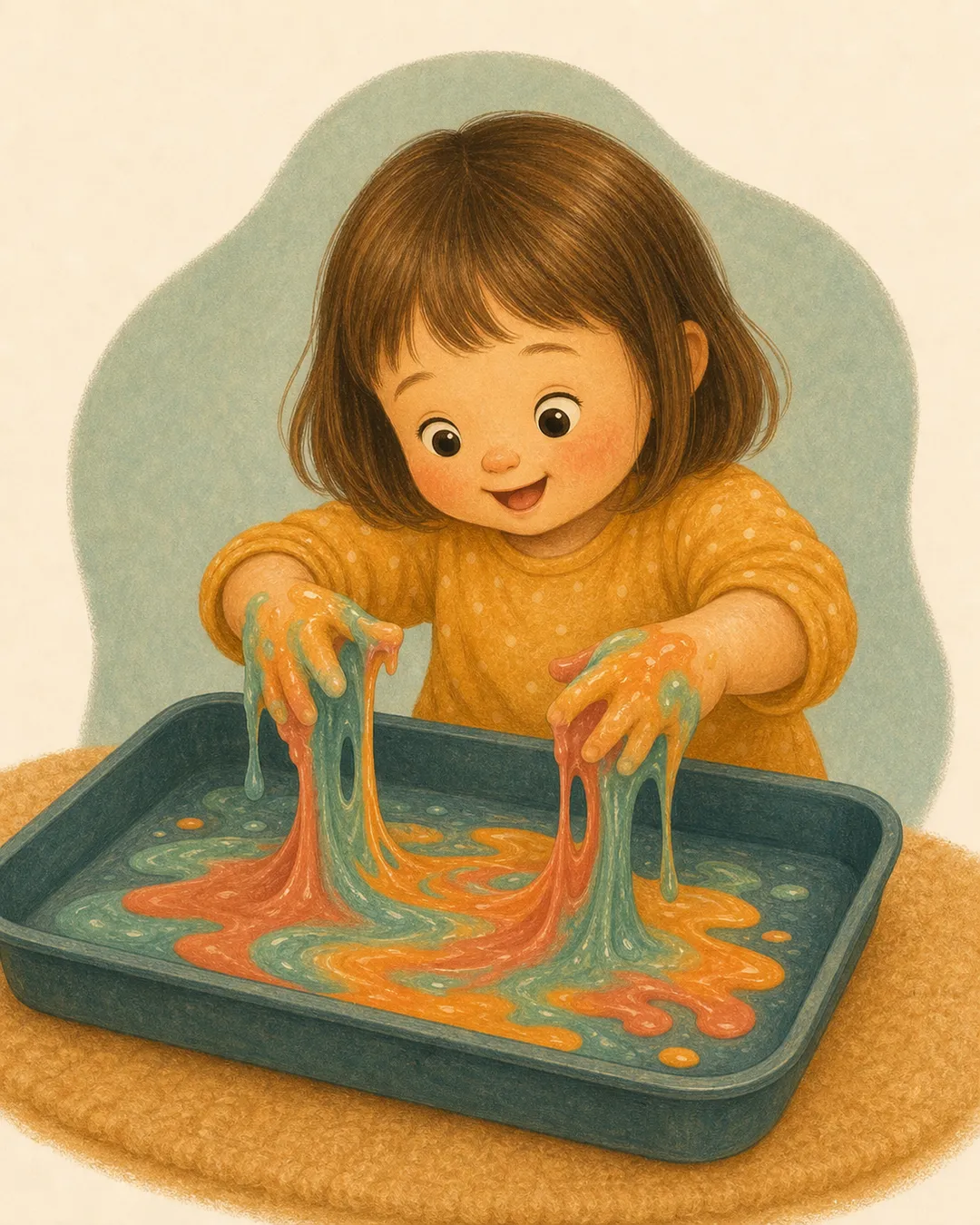
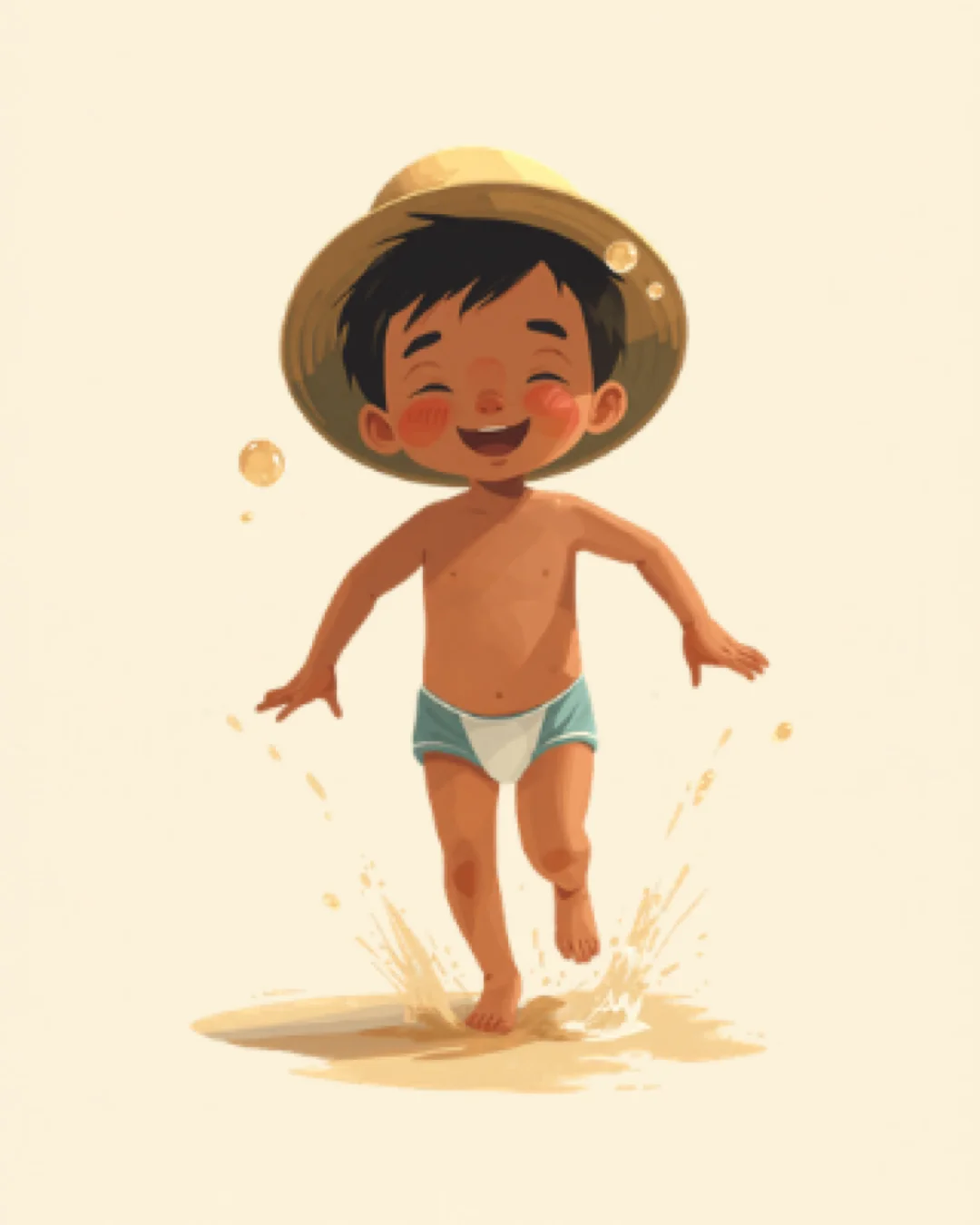
Paint fences, paths, and walls with plain water and big brushes — it dries and they start again.
Activity details
18m–3y15 minslowoutdoorBucketPaintbrushesWater
Instructions
Tiny Steps
Get ready
Fill a bucket with water and find a large paintbrush — a cheap decorator's brush works best.
Show your child how to dip the brush in the water and paint a stripe on the fence or path.
1/4
Fill a bucket with water and find a large paintbrush — a cheap decorator's brush works best.
Show your child how to dip the brush in the water and paint a stripe on the fence or path.
Let them choose what to paint — fences, walls, patio slabs, plant pots, the shed.
Point out how the marks are dark at first, then slowly disappear — 'Look, it is drying! Where did it go?'
Try painting letters, shapes, or faces on the paving slabs together.
Race the sun — can they paint faster than the marks dry?
Give them a smaller brush or sponge for detailed work alongside the big brush.
When they are finished, pour out the bucket water on the garden — no waste, no cleanup.
Parent tip
Set out bucket and paintbrushes before inviting your toddler in so the first minute feels smooth.
What success looks like
Watch for focused exploration — fingers digging in, pouring back and forth, or sorting by feel. Even a few minutes of this builds concentration.
Give your child a bucket of water and a large decorator's paintbrush or a foam brush. They paint fences, patio slabs, walls, and paths with water, watching the dark wet marks appear and then slowly fade as they dry in the sun. No mess, no cleanup, infinite canvas. The disappearing marks are fascinating to toddlers and encourage them to keep going.
Why it helps
Large brush strokes across vertical surfaces build shoulder stability and arm strength — the same muscles needed for later handwriting. The disappearing marks teach early concepts about evaporation and change, while the open-ended nature of the activity supports independence and sustained creative play. The EYFS framework puts hands-on exploration at the heart of physical development — these small, focused movements are the building blocks of hand control.
Variations
Use a spray bottle instead of a brush for a different grip and spray pattern — great for hand strength.
Add a tiny drop of food colouring to the water for semi-permanent marks that fade over a few days.
Paint targets on the fence and throw wet sponges at them — combines art with gross motor throwing.
Safety tips
Check that painted surfaces are free from splinters or rough edges.
Use clean water only — avoid puddle water which may contain bacteria.
Ensure your child does not drink the painting water.
Try one of these next
A few connected ideas chosen by theme, energy, set-up, and age fit.