Collect sticks and find things to hit — logs, fences, stones, pots — to make an outdoor orchestra.
Activity details
12m–3y10 minsmediumoutdoorNo prep
Instructions
Tiny Steps
Get ready
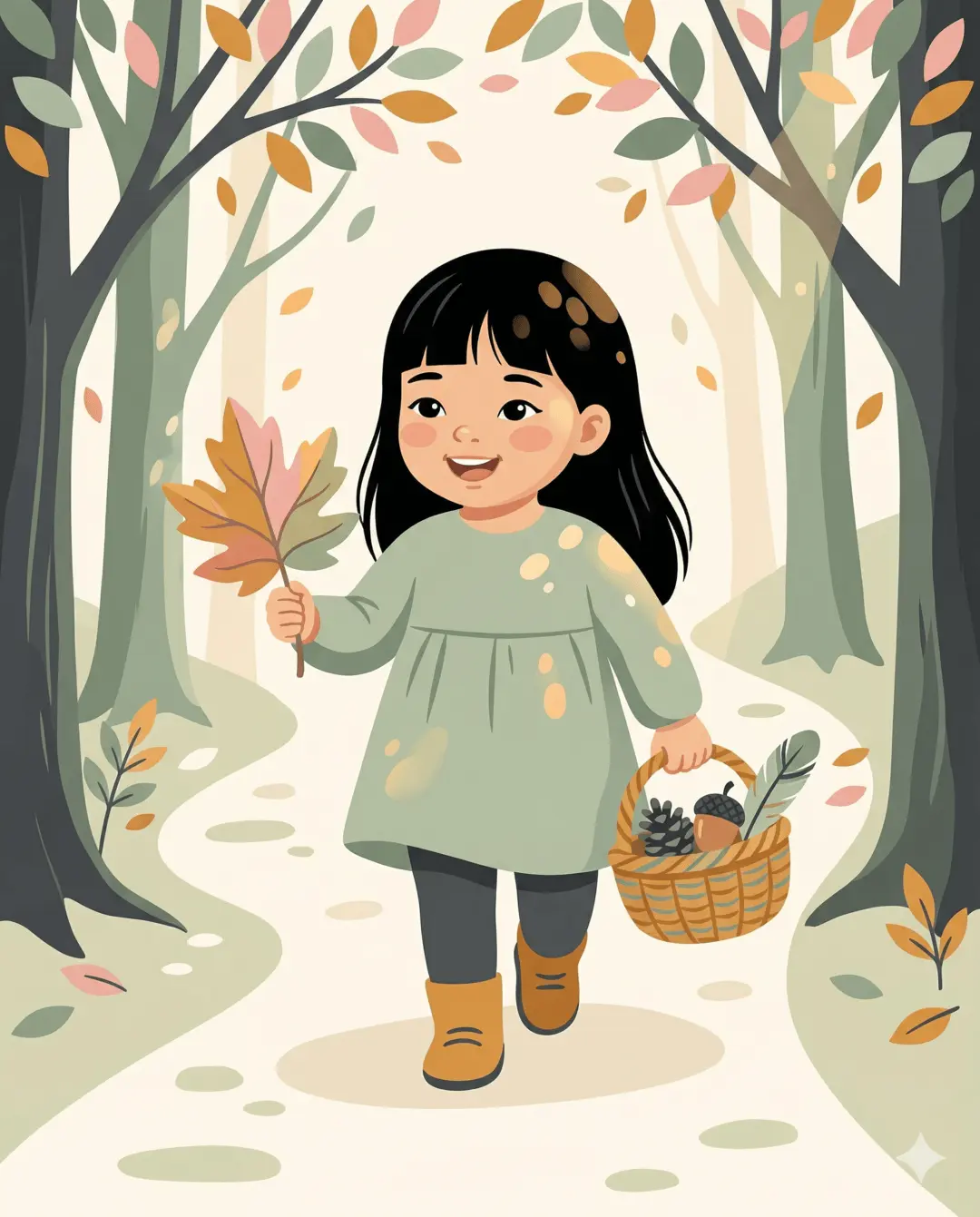
Head outside and help your child find 2-3 sticks of different sizes — one thin, one thick.
Show them how to tap a stick against a fence, a tree trunk, or a stone.
1/4
Head outside and help your child find 2-3 sticks of different sizes — one thin, one thick.
Show them how to tap a stick against a fence, a tree trunk, or a stone.
Say 'Listen! What sound does that make?' and tap something different.
Let them explore freely — tapping, banging, scraping sticks across surfaces.
Introduce words for the sounds: 'That one is loud! This one is quiet. Can you make a tap-tap-tap?'
Try tapping fast, then slow. Loud, then soft.
If they are enjoying it, set up a 'stage' with different objects in a line — a bucket, a pot, a stone, a log — and let them play along the row.
Wind down by finding the quietest sound they can make.
Parent tip
Start before you overthink it. No-prep activities work best when you begin while the moment is still recoverable.
What success looks like
Curiosity in action — pointing, collecting, asking ‘what’s that?’ A child engaged with nature is learning without knowing it.
Your child finds sticks of different sizes and then experiments with hitting different surfaces to discover the sounds they make. A wooden fence sounds different from a stone, which sounds different from an upturned bucket. This is open-ended music-making powered by curiosity and cause-and-effect learning.
Why it helps
Hitting objects with sticks develops bilateral coordination — using both hands together with controlled force. The EYFS Expressive Arts and Design area highlights that exploring sounds and rhythms builds auditory discrimination, which underpins phonemic awareness and early literacy.
Variations
Add water to a bucket and tap it — the sound changes as the water level rises, introducing early science concepts.
Sing a familiar song and let them 'drum' along with their sticks to practise rhythm.
For older toddlers, try a call-and-response game: you tap a pattern, they copy it.
Safety tips
Choose sticks without sharp or splintered ends — snap off any points.
Set a boundary for where sticks can be used: 'We hit objects, not people or animals.'
Keep an eye on stick length — very long sticks can catch other children or trip your toddler.
Try one of these next
A few connected ideas chosen by theme, energy, set-up, and age fit.