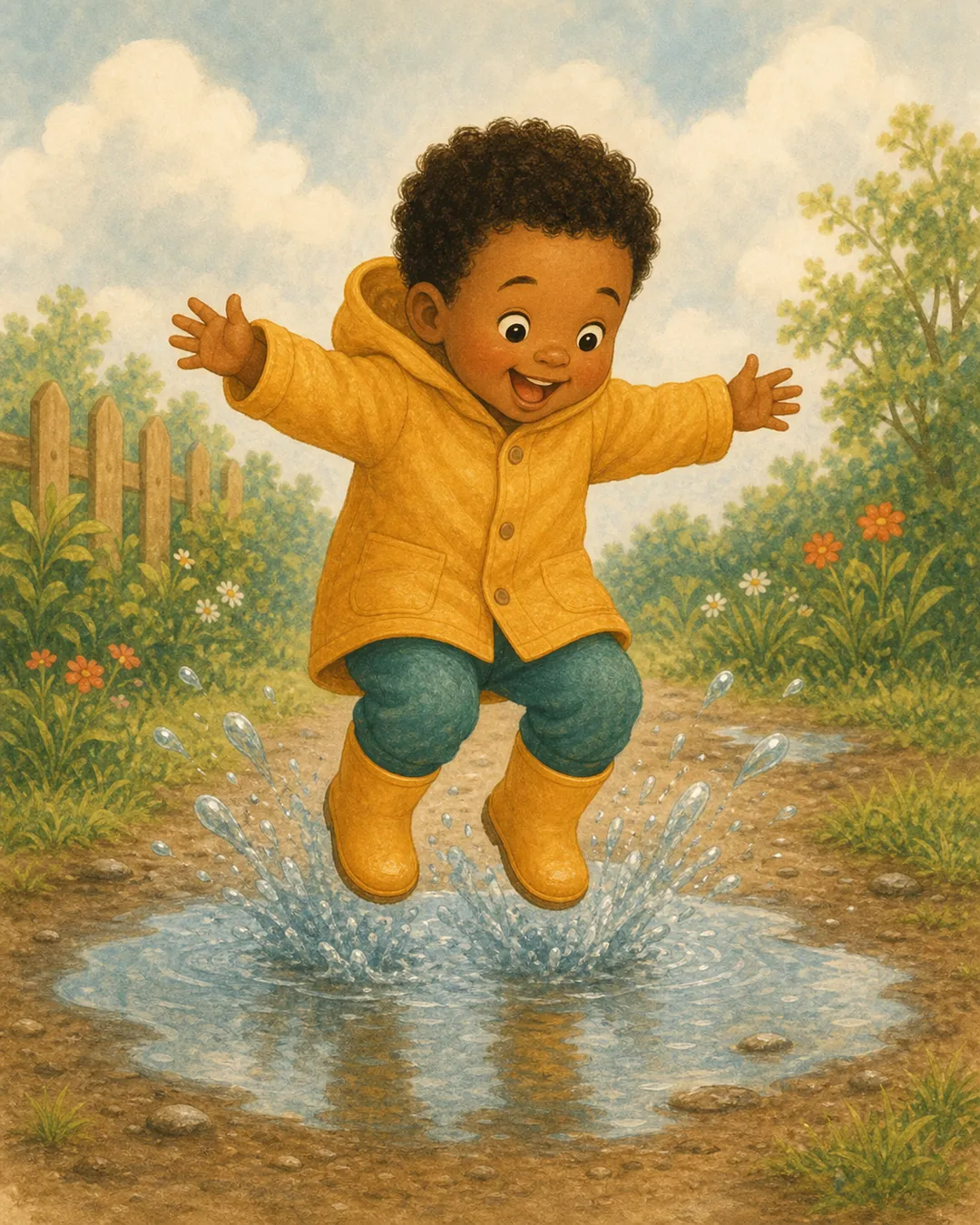
Walk outside in light spring rain, feeling the drops on skin, listening to the sounds, and splashing through puddles.
Activity details
12m–3y15 minsmediumoutdoorNo prepRain Boots
Instructions
Tiny Steps
Get ready
Wait for a light, warm spring shower — not a cold downpour — and dress your toddler in wellies and a waterproof.
Step outside together and stand still for a moment: 'Can you feel the rain on your hands?'
1/4
Wait for a light, warm spring shower — not a cold downpour — and dress your toddler in wellies and a waterproof.
Step outside together and stand still for a moment: 'Can you feel the rain on your hands?'
Hold out your palms and let the rain collect — show your toddler: 'Look, tiny drops of water.'
Walk slowly, listening: 'What does the rain sound like on the path? On the leaves? On your hood?'
Find a puddle and let them stamp: splashing is the whole point.
Look for water flowing along gutters, dripping off roofs, or running down windows.
Catch raindrops on your tongue together — a moment of pure joy.
Head back inside when ready, change into dry clothes, and warm up with a drink.
Parent tip
Start before you overthink it. No-prep activities work best when you begin while the moment is still recoverable.
What success looks like
Curiosity in action — pointing, collecting, asking ‘what’s that?’ A child engaged with nature is learning without knowing it.
Instead of waiting for the rain to stop, put on wellies and a waterproof and head outside into it. Your toddler feels raindrops on their hands and face, listens to rain hitting different surfaces, stamps in puddles, and watches water run along gutters. It is a full sensory experience that reframes rain as something to enjoy rather than avoid.
Why it helps
Sensory walks in rain build tolerance for different environmental sensations — wet skin, cold air, loud splashing — which strengthens sensory processing. The focused listening and feeling develops auditory and tactile discrimination, while walking on wet surfaces challenges balance and proprioception.
Variations
Bring a cup or bowl and collect rainwater to measure later — how full did it get?
Walk barefoot on warm spring grass in the rain for an extra sensory layer — the texture is completely different wet.
Stand under a tree and listen to the different sound rain makes hitting leaves compared to open ground.
Safety tips
Only go out in light, warm rain — avoid thunderstorms, heavy downpours, or cold conditions.
Dress warmly underneath the waterproof and keep the walk short if your toddler gets cold.
Avoid walking near fast-flowing drains or gutters — even shallow running water can be surprisingly strong for small legs.
Try one of these next
A few connected ideas chosen by theme, energy, set-up, and age fit.