The day before: mix water with food colouring in 3-4 different colours. Pour into ice lolly moulds or small cups with lolly sticks.
Freeze overnight.
1/4
The day before: mix water with food colouring in 3-4 different colours. Pour into ice lolly moulds or small cups with lolly sticks.
Freeze overnight.
Next day, lay a large sheet of paper on a tray or on the patio.
Pop the ice lollies out of the moulds.
Hand one to your child and show them how to hold it over the paper: 'Watch the colour drip!'
Tilt the paper gently so the drips run across the surface.
Try holding two colours close together and letting them blend where they meet.
When the lollies have melted, admire the swirling pattern and leave the paper to dry in the sun.
Parent tip
Set out construction paper and food colouring before inviting your toddler in so the first minute feels smooth.
What success looks like
Messy hands and a child who doesn’t want to stop. The artwork doesn’t need to look like anything — the process is the point.
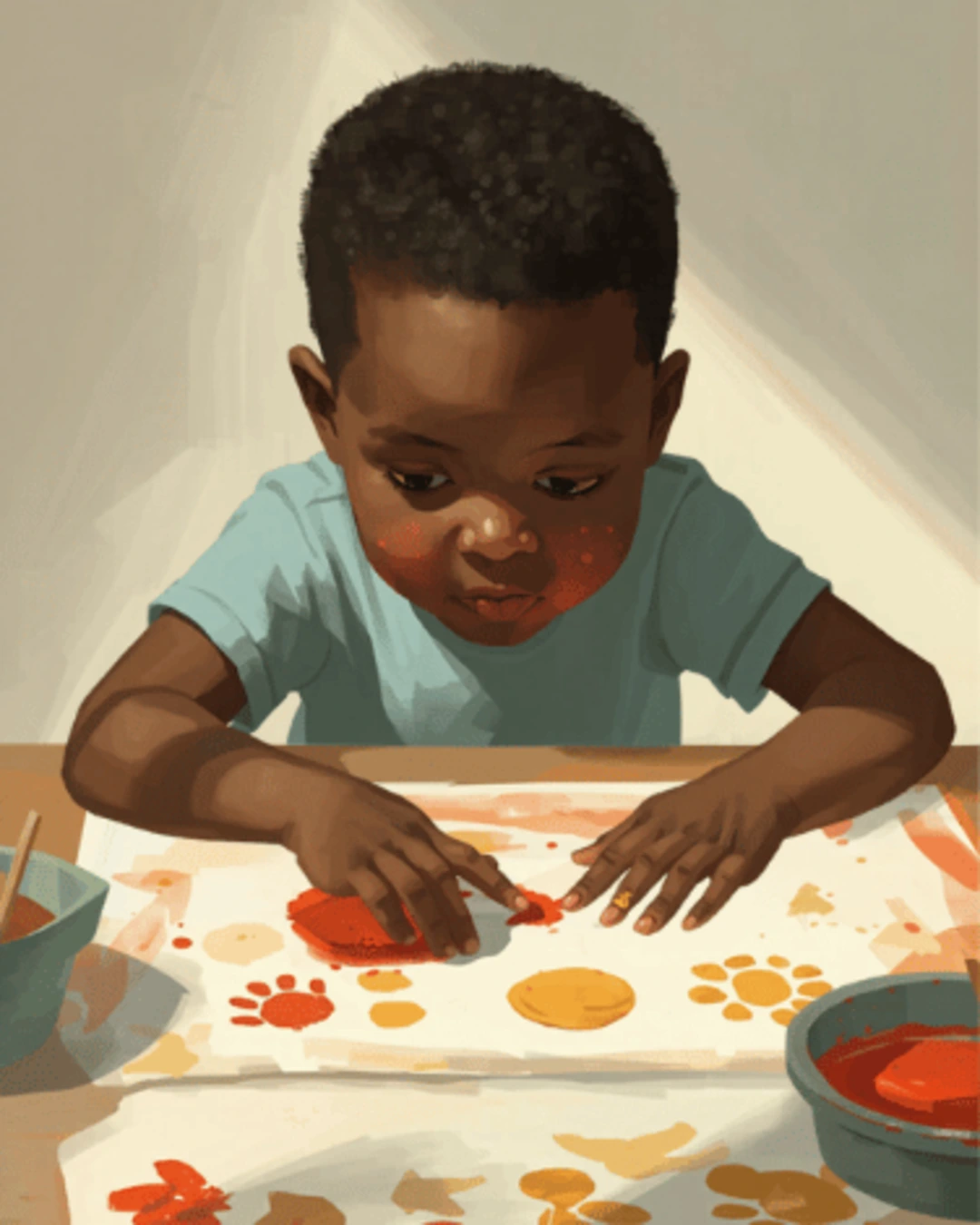
Mix food colouring with water and freeze it in ice lolly moulds or small cups with sticks. Outside on a warm day, your child holds the coloured ice over paper and watches it melt, drip, and create trails of colour. Tilting the paper makes the drips run and blend. It is slow, mesmerising, and produces beautiful results.
Why it helps
Watching ice melt introduces state changes (solid to liquid) in a hands-on way. The slow, controlled dripping builds patience and fine motor control — holding a melting, slippery object steady requires sustained grip strength. The EYFS Understanding the World area identifies first-hand exploration of materials and their properties as foundational to scientific thinking.
Variations
Freeze small objects inside the ice (plastic animals, beads, flowers) — the melting reveals hidden treasures.
Use the melting ice directly on the paper like a crayon — push and drag it to draw shapes.
Try it on different surfaces: card, fabric, paper towel — each absorbs the colour differently.
Safety tips
Remind your child these are not real ice lollies — do not eat them (food colouring is safe but the water may not be).
Food colouring stains — protect surfaces and clothing. Work on newspaper or outside.
Wash hands after handling, especially if using dark colours that stain skin.
Try one of these next
A few connected ideas chosen by theme, energy, set-up, and age fit.