Parent tip
Start before you overthink it. No-prep activities work best when you begin while the moment is still recoverable.
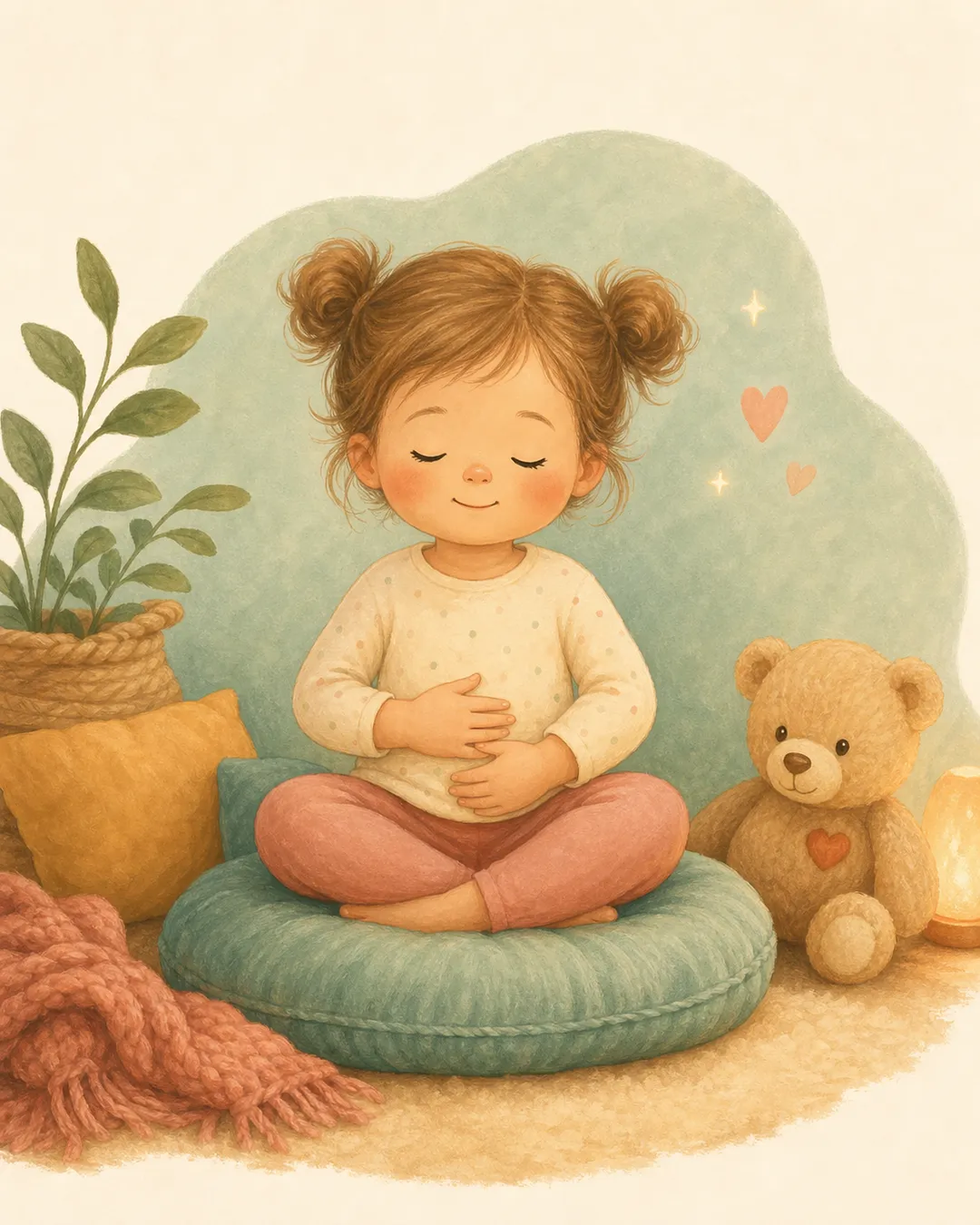
Hold your child and hum a slow melody while swaying gently — co-regulating through rhythm, warmth, and closeness.
Tiny Steps
Start before you overthink it. No-prep activities work best when you begin while the moment is still recoverable.

A few quiet minutes together without pressure. If your child relaxes even slightly, that’s self-regulation building.
This is one of the simplest and most powerful activities for emotional co-regulation. You hold your child, hum a familiar tune, and sway gently. The combination of physical closeness, rhythmic movement, and low-frequency vibration from humming activates the parasympathetic nervous system — the body's calming response. For children who struggle with emotional overwhelm, this activity teaches their nervous system what 'calm' feels like through your body rather than through words.
Birth to 5 Matters identifies self-regulation as children's developing ability to regulate their emotions, thoughts and behaviour, noting that co-regulation — where adults model calming strategies — is the foundation from which children build this skill. Co-regulation — a caregiver's use of their own calm state to help a child regulate — is the foundation upon which self-regulation is built. Porges' polyvagal theory explains that rhythmic movement and low-frequency sound activate the vagus nerve, shifting the autonomic nervous system from a stress response toward safety. For children with emotional or sensory regulation difficulties, repeated experiences of co-regulation literally build the neural pathways that will eventually support independent calming. The NHS advises that helping toddlers name and understand their feelings is one of the most important things parents can do for emotional development.
One email a week with practical toddler activities, behaviour tips, and developmental insights. No spam, unsubscribe any time.