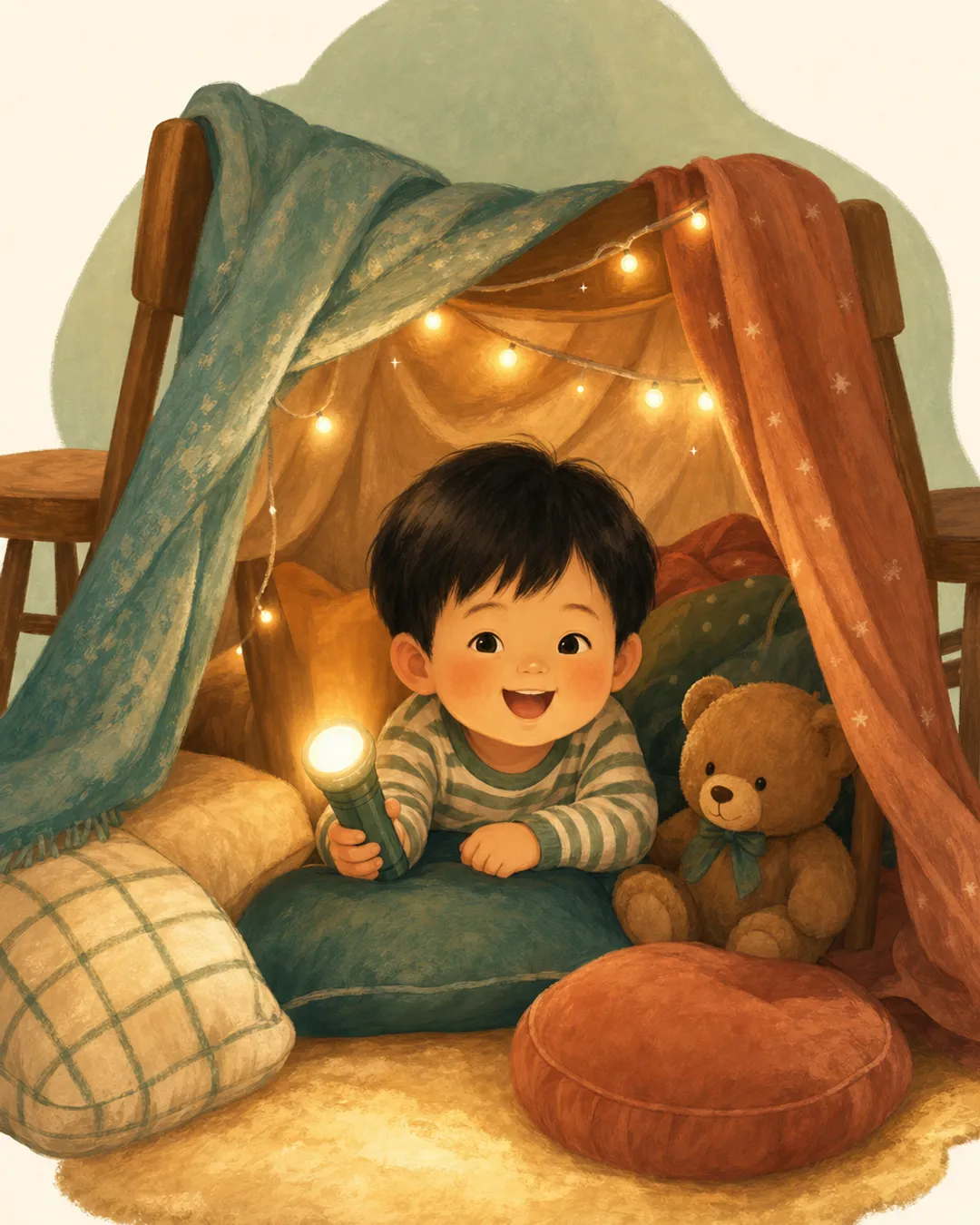
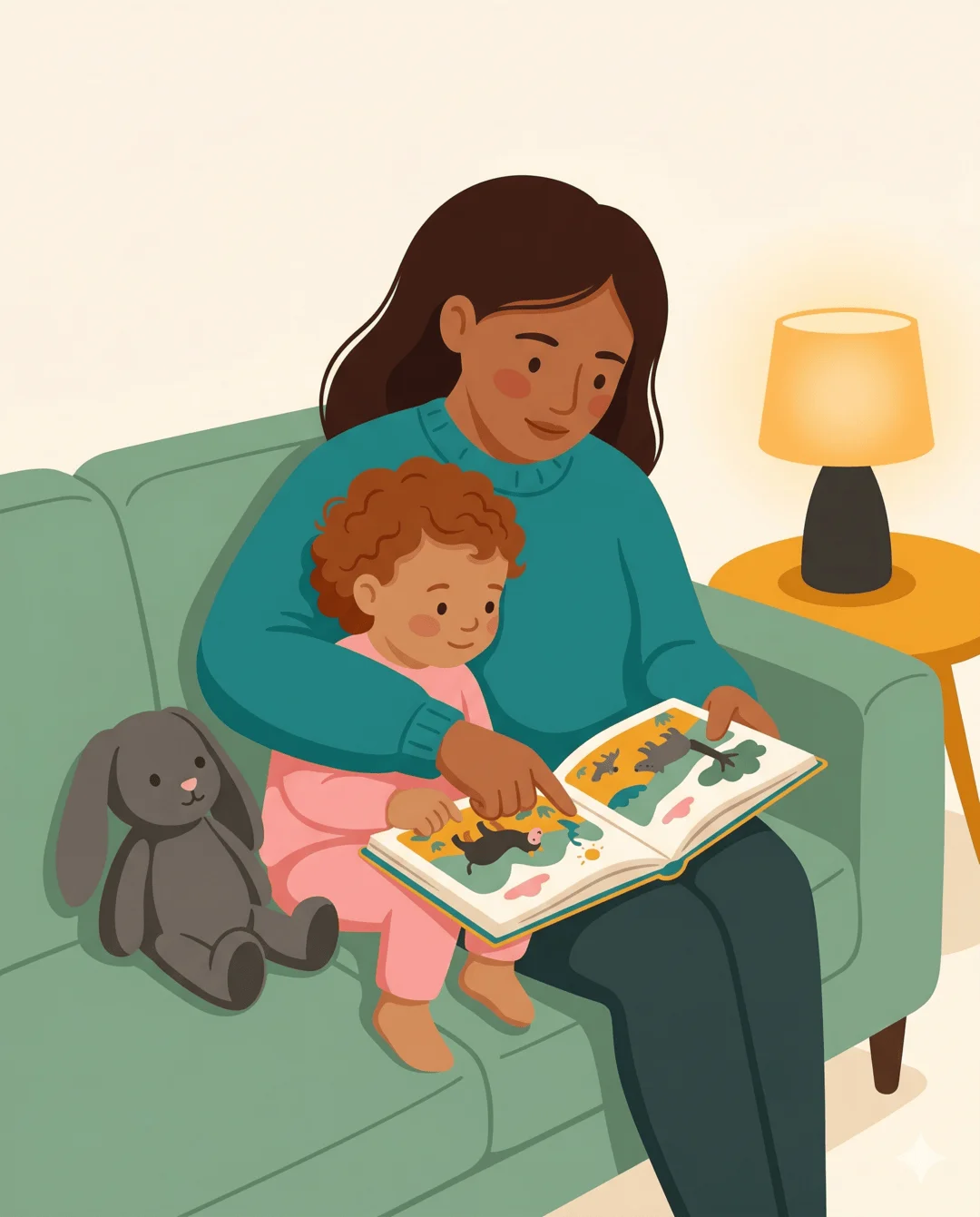
A tiny three-step bedtime ritual — one book, one stretch, one hum — done in the same order every night to build the predictable signal that sleep is coming.
Activity details
2y–4y8 minslowindoorPicture Books
Instructions
Tiny Steps
Get ready
Choose three calm actions that fit in your bedroom: one book, one stretch, one hum.
Talk to your child the first time: 'Every night now we do three quiet things before sleep. Same three, same order.'
1/4
Choose three calm actions that fit in your bedroom: one book, one stretch, one hum.
Talk to your child the first time: 'Every night now we do three quiet things before sleep. Same three, same order.'
Action one: read one short picture book together, sitting close.
Action two: lie back and do one gentle stretch — toes to fingers, then relax.
Action three: hum a familiar tune softly for thirty seconds. No words needed.
Say: 'That's our three. Time to settle.'
Tuck in and leave the room calmly — no extra negotiations.
Repeat the same three things in the same order every single night for at least a week.
Parent tip
Set out picture books before inviting your toddler in so the first minute feels smooth.
What success looks like
A few quiet minutes together without pressure. If your child relaxes even slightly, that’s self-regulation building.
Pick three small calming actions and do them in the same order, every single night, right before lights out: read one short book, do one slow stretch, hum one quiet tune. Three is the magic number — short enough to actually finish, long enough to drop your child's arousal level. Predictable bedtime sequences are the strongest single intervention for night-waking, because they give the brain the same 'sleep is coming' cue it can rely on every evening.
Why it helps
The NHS guidance on toddler sleep is unambiguous: 'Make sure you have a calming, predictable bedtime routine that happens at the same time and includes the same things every night.' The reason is biological — the consistent sequence becomes a conditioned cue that triggers melatonin release and lowers cortisol, which is what allows a toddler to fall asleep alone and resettle alone after a night waking.
Variations
If your child is older (3+), let them choose which three actions make up their wind-down — but once chosen, they're locked in.
Travel version: pick three actions that need no props at all (one finger story, one stretch, one hum) so the routine survives sleepovers and holidays.
On hard nights, offer the routine but also offer extra hand-holding while you hum — the structure stays, the comfort flexes.
Safety tips
Keep the bedroom dim during the routine — bright light defeats the wind-down purpose.
Avoid finishing with a song that has dramatic dynamics; hum a single quiet tune.
If your child resists one of the three actions persistently, swap it out for something else they accept — but only swap once, not nightly.
Try one of these next
A few connected ideas chosen by theme, energy, set-up, and age fit.