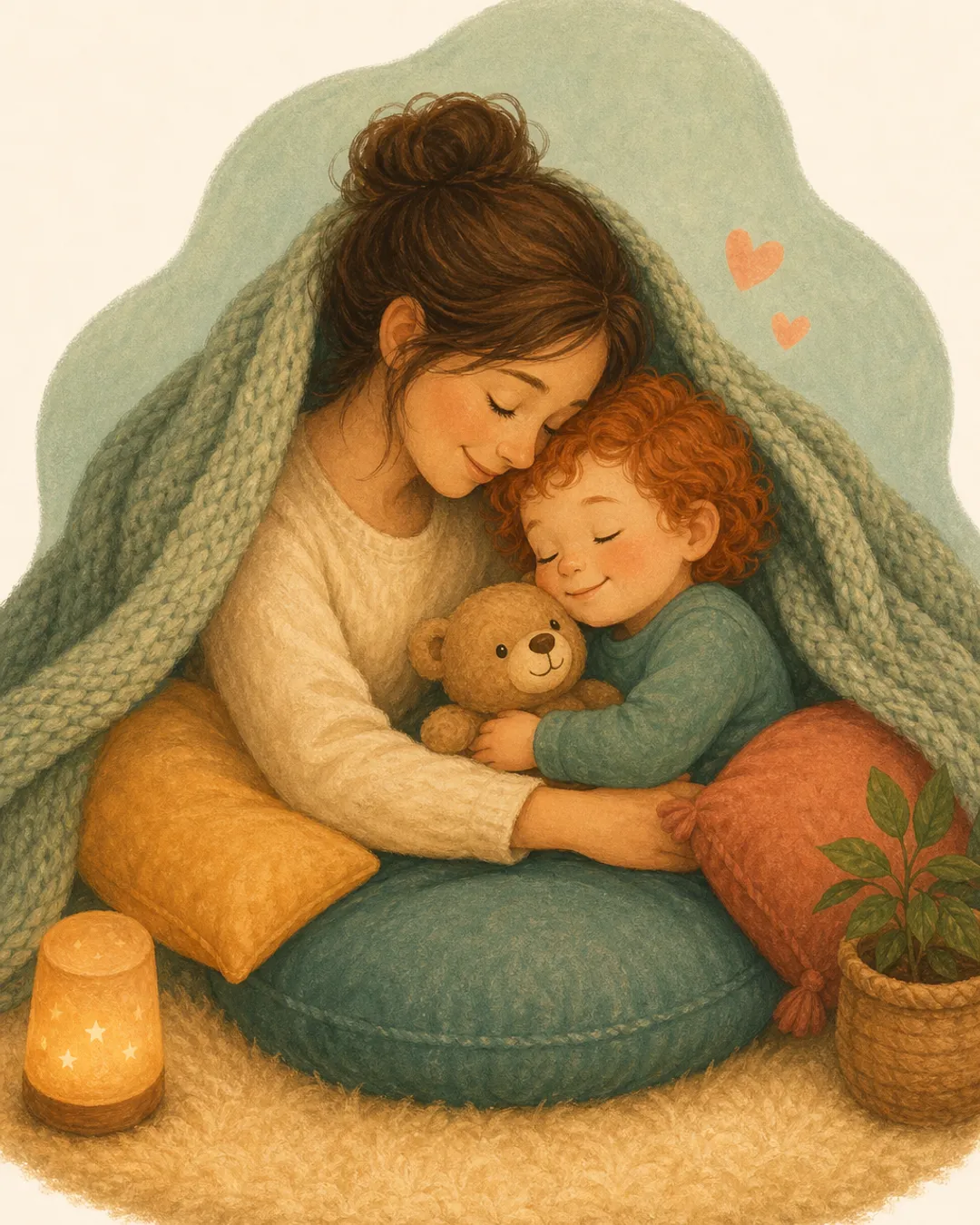
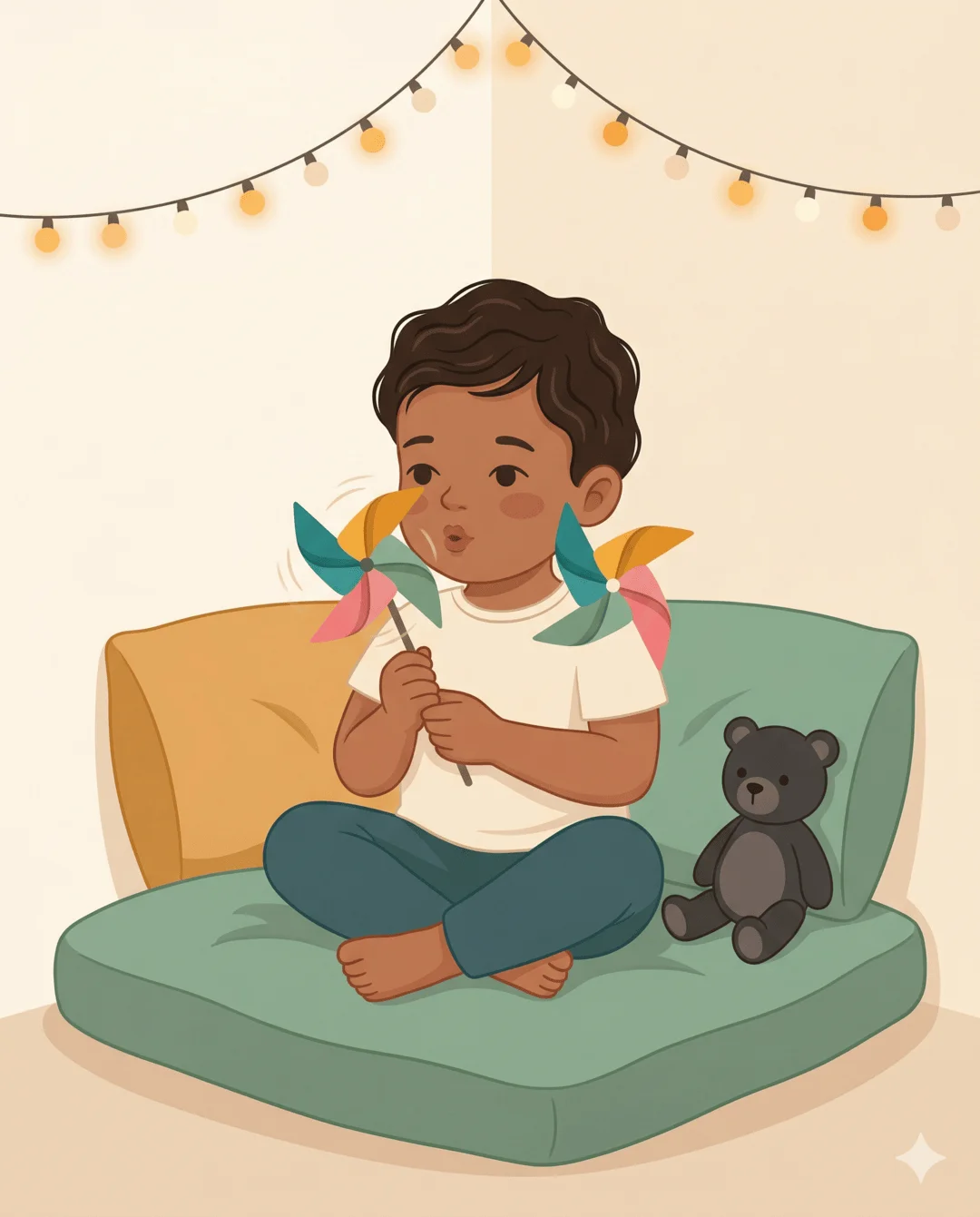
Sit on a cushion, listen to a short story, and sing a song together — a gentle rehearsal for nursery circle time.
Activity details
2y–3y8 minslowindoorCushionsPicture Books
Instructions
Tiny Steps
Get ready
Place a cushion on the floor and say: 'This is your special circle time seat'
Sit on your own cushion facing your toddler
1/4
Place a cushion on the floor and say: 'This is your special circle time seat'
Sit on your own cushion facing your toddler
Say: 'At circle time, we sit on our cushion and listen — let's practise!'
Read a short picture book with expression — keep it to 3-5 pages maximum
Ask one or two simple questions about the story: 'What colour was the cat?'
Sing a familiar nursery rhyme together with hand actions
Finish with a clear signal: 'Circle time is finished — well done for sitting so nicely!'
Gradually increase the duration over days as your toddler builds their sitting stamina
Parent tip
Set out cushions and picture books before inviting your toddler in so the first minute feels smooth.
What success looks like
A few quiet minutes together without pressure. If your child relaxes even slightly, that’s self-regulation building.
Place a cushion on the floor and invite your toddler to sit on it. Read a short picture book (3-5 pages), then sing one familiar song together. That is it — circle time done. Nursery circle time is one of the most unfamiliar structures a home-raised toddler will encounter: sitting in a group, listening to an adult, not wandering off. Practising this at home with just the two of you creates the muscle memory and expectation before they face it in a room full of new children.
Why it helps
Sustained attention — the ability to sit and focus on an adult-led activity — is a core executive function skill that develops gradually between ages two and four. Nursery circle time requires this skill in a challenging new environment, so rehearsing the format at home builds familiarity and reduces anxiety. The combination of listening, responding, and singing covers multiple EYFS Communication and Language early learning goals in a single, brief activity.
Variations
Invite stuffed animals to join circle time — 'Teddy needs to sit on his cushion too' — so your toddler practises in a group-like setting.
Let your toddler be the teacher and 'read' the book to you — this builds confidence and ownership of the routine.
Add a 'show and tell' element where your toddler brings one object to talk about — practising speaking in front of others.
Safety tips
Keep sessions short and positive — if your toddler wants to leave, let them; forcing stillness creates negative associations with circle time.
Ensure the cushion is on a non-slip surface so it does not slide when your toddler sits down.
Choose a distraction-free spot away from toys — visible toys make sitting still much harder.
Try one of these next
A few connected ideas chosen by theme, energy, set-up, and age fit.