Cut out or draw two or three clear pictures on a piece of construction paper — start with snack choices like banana, apple, and biscuit.
Stick them onto the paper using a glue stick, spacing them well apart so pointing is easy.
1/4
Cut out or draw two or three clear pictures on a piece of construction paper — start with snack choices like banana, apple, and biscuit.
Stick them onto the paper using a glue stick, spacing them well apart so pointing is easy.
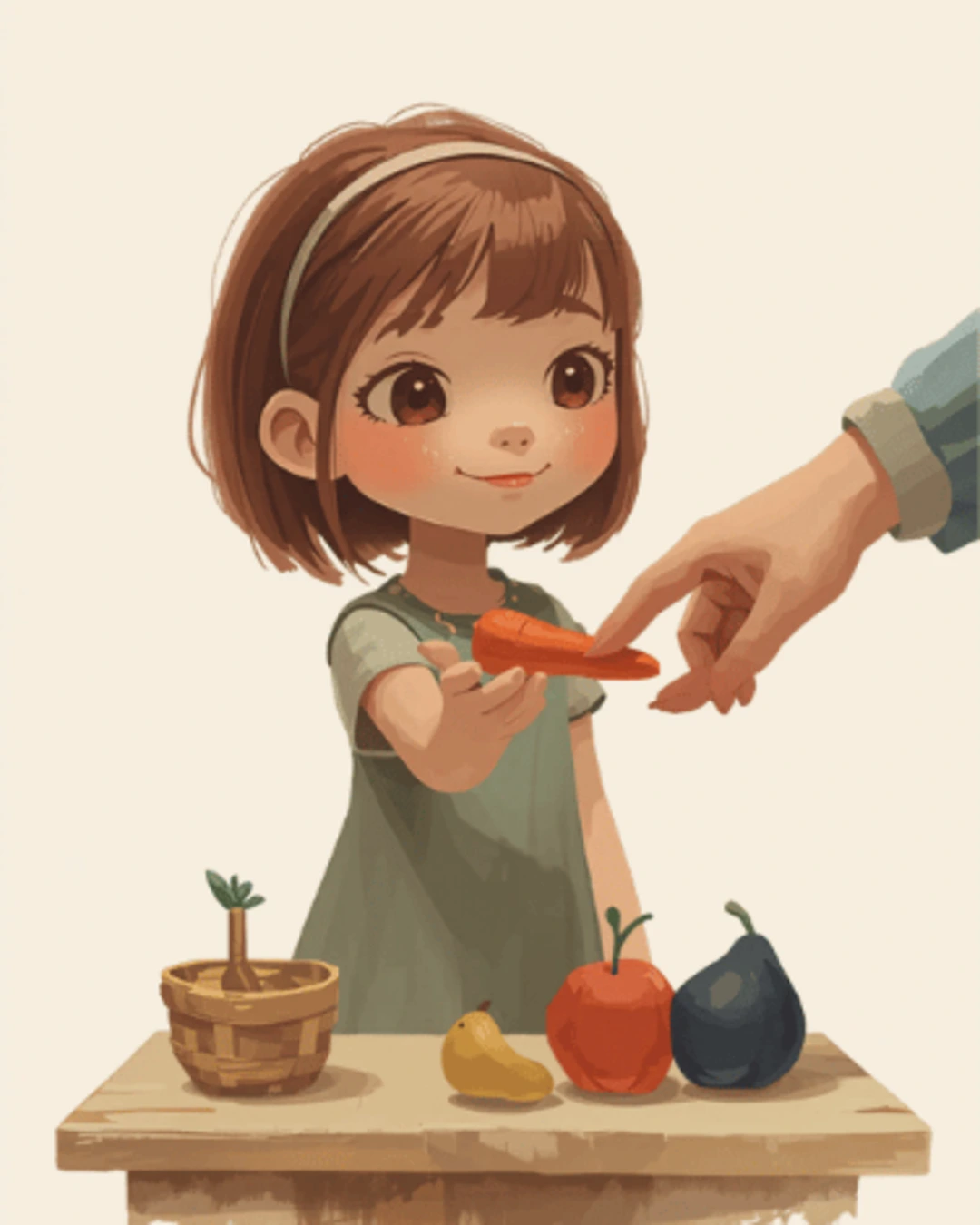
Hold the board at your child's eye level and say 'Which one would you like? You can point to it.'
Wait at least five seconds — give them time to look, process, and respond. Silence is not failure; it is thinking time.
When they point, touch, or even look at one option, respond immediately: 'You chose the banana! Great choice!' and give it to them.
Make a second board for a different choice — which toy to play with, which book to read, which song to sing.
Throughout the day, bring the board back: 'Shall we use our choosing board? Point to what you want.'
Over time, add a third and fourth option to gradually expand their decision-making.
Parent tip
Set out construction paper and glue stick before inviting your toddler in so the first minute feels smooth.
What success looks like
A few quiet minutes together without pressure. If your child relaxes even slightly, that’s self-regulation building.
A simple choices board made from paper and stickers or magazine cut-outs gives children a way to communicate preferences by pointing, touching, or looking. This mirrors the visual support strategies used in speech and language therapy and benefits all toddlers, not just those with identified communication needs. Every time a child points and receives a warm response, they learn that their communication matters — a powerful motivator to keep trying.
Why it helps
Speech and Language UK recommends following a child's lead during play and talking about what they are doing as one of the most effective ways to boost their language skills. Augmentative and alternative communication (AAC) research shows that visual choice-making supports language development for all children, not only those with communication needs. Pointing is an intentional communicative act that strengthens the neural pathways between wanting something and expressing that want. For children whose verbal language is still emerging, a choices board reduces frustration and validates non-verbal communication as equally valuable.
Variations
Use real objects placed on a tray instead of pictures — some children find three-dimensional choices easier to process.
Photograph your child's actual toys and print them out — familiar images can be more meaningful than generic pictures.
Let your child help make the board by choosing which stickers or pictures to stick on — this builds ownership and engagement.
Safety tips
Supervise glue stick use — younger toddlers may try to eat it; choose non-toxic brands.
Ensure magazine cut-outs have no staples or sharp edges that could scratch small fingers.
If your child becomes frustrated rather than engaged, simplify to just two clear choices and try again later.
Try one of these next
A few connected ideas chosen by theme, energy, set-up, and age fit.