Practise whisper, talking, and shouting voices outdoors where volume doesn't matter.
Activity details
2y–4y10 minsmediumoutdoorNo prep
Instructions
Tiny Steps
Get ready
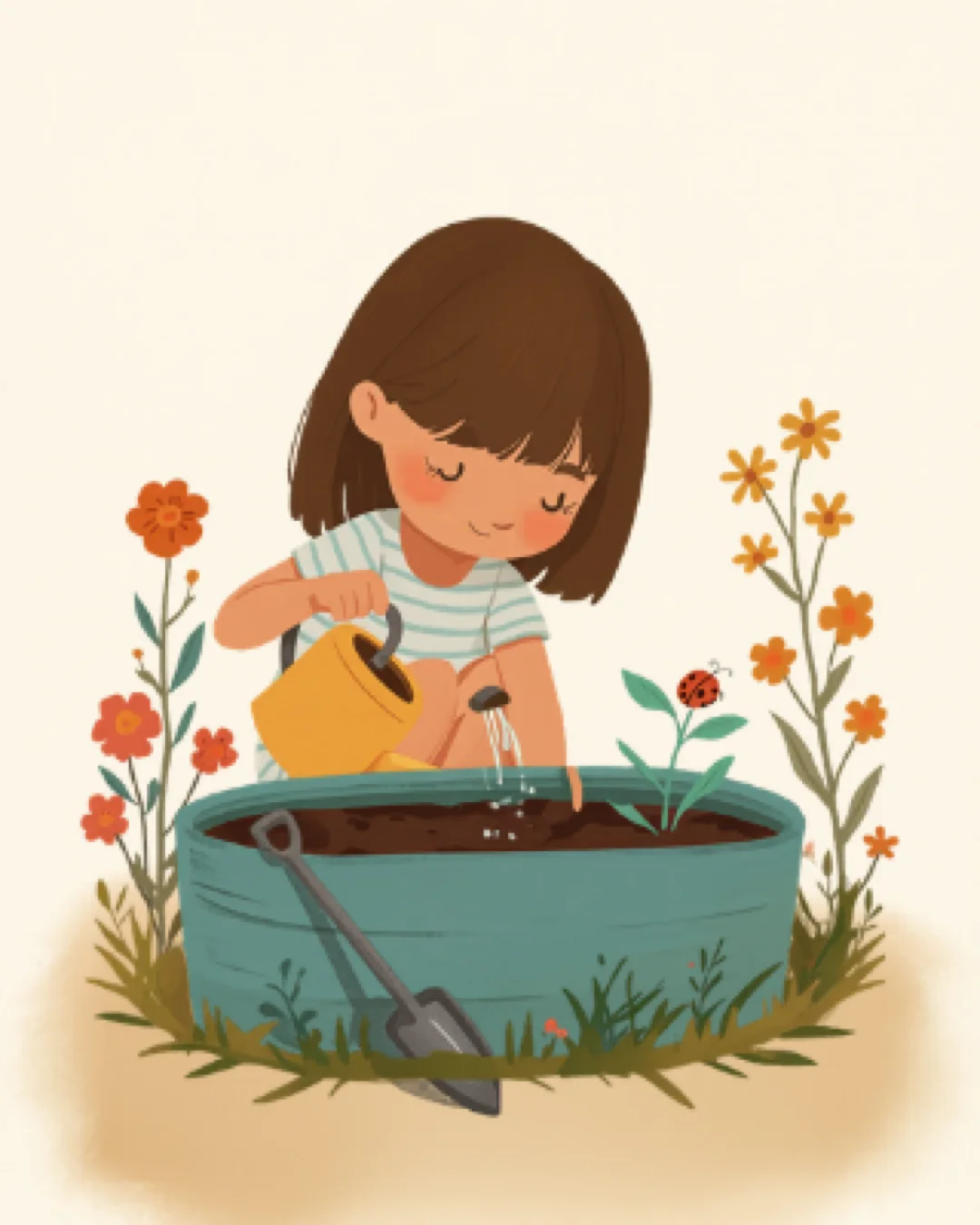
Go into the garden together and stand facing each other.
Introduce the whisper voice: cup your hand to your ear and whisper 'Can you hear this tiny voice?'
1/5
Go into the garden together and stand facing each other.
Introduce the whisper voice: cup your hand to your ear and whisper 'Can you hear this tiny voice?'
Let your child practise whispering back — exaggerate leaning in to listen.
Introduce the talking voice: 'Now here is my normal talking voice — hello!'
Let them practise their talking voice. Nod and smile: 'That is a brilliant talking voice.'
Introduce the shouting voice: 'And THIS is my BIGGEST VOICE!' Shout to the sky together.
Play a game: you call out a voice level and they switch to it. 'Whisper! ... Talking! ... SHOUTING!'
Mix it up faster and faster until everyone is laughing.
End with the talking voice: 'This is the one that works best for asking for things indoors.'
Parent tip
Start before you overthink it. No-prep activities work best when you begin while the moment is still recoverable.
What success looks like
Curiosity in action — pointing, collecting, asking ‘what’s that?’ A child engaged with nature is learning without knowing it.
Take your toddler into the garden and introduce three voices: whisper, talking, and shouting. Practise each one together with big, exaggerated demonstrations. The garden is the perfect venue because nobody minds if it gets loud. When whining starts later indoors, you have a shared reference: 'Can you use your talking voice? Like we did in the garden!' The game reframes voice control as a skill to be proud of rather than a behaviour to be corrected.
Why it helps
Zero to Three explains that 'by helping your child name her feelings and practise ways to manage their emotions, she learns over time how to do it herself.' Practising voice levels when your child is calm and happy — not mid-whine — means they have a positive reference point to draw on later. The NHS reinforces this: 'You can help your toddler to understand their feelings by naming them.' The outdoor setting removes the pressure of indoor volume rules, so the practice feels like play rather than correction.
Variations
Add a fourth level — 'singing voice' — and let them pick a favourite song at each volume.
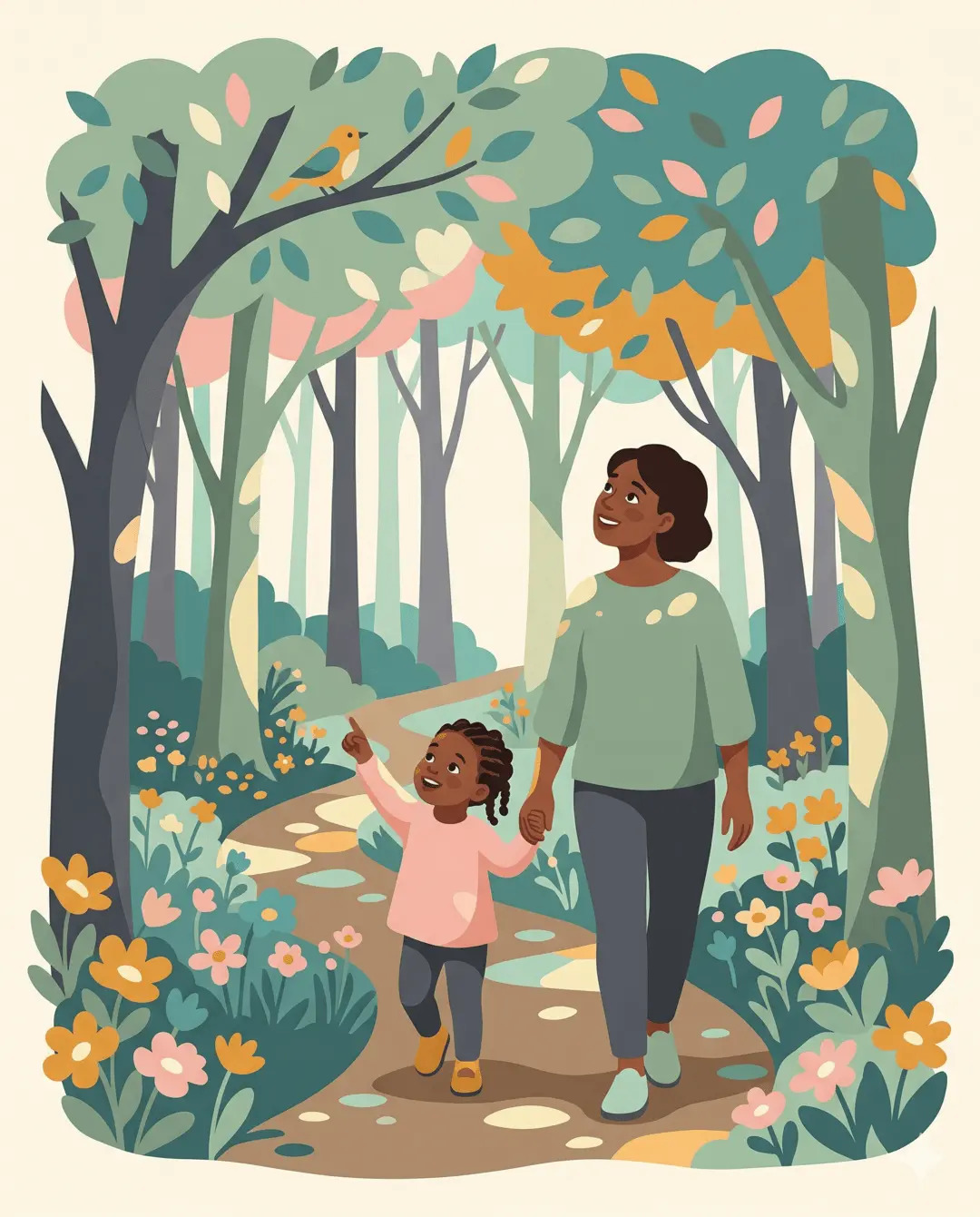
Use it on a walk: whisper when you see a cat, shout when you reach the park, talk when you pass neighbours.
Make voice-level cards (1, 2, 3) and hold them up at home as a gentle reminder.
Safety tips
Stay within a fenced garden so excitement about shouting does not lead to running off.
Avoid the shouting level if your child has a sore throat or is recovering from illness.
Respect neighbours — save the shouting practice for daytime hours.
Try one of these next
A few connected ideas chosen by theme, energy, set-up, and age fit.