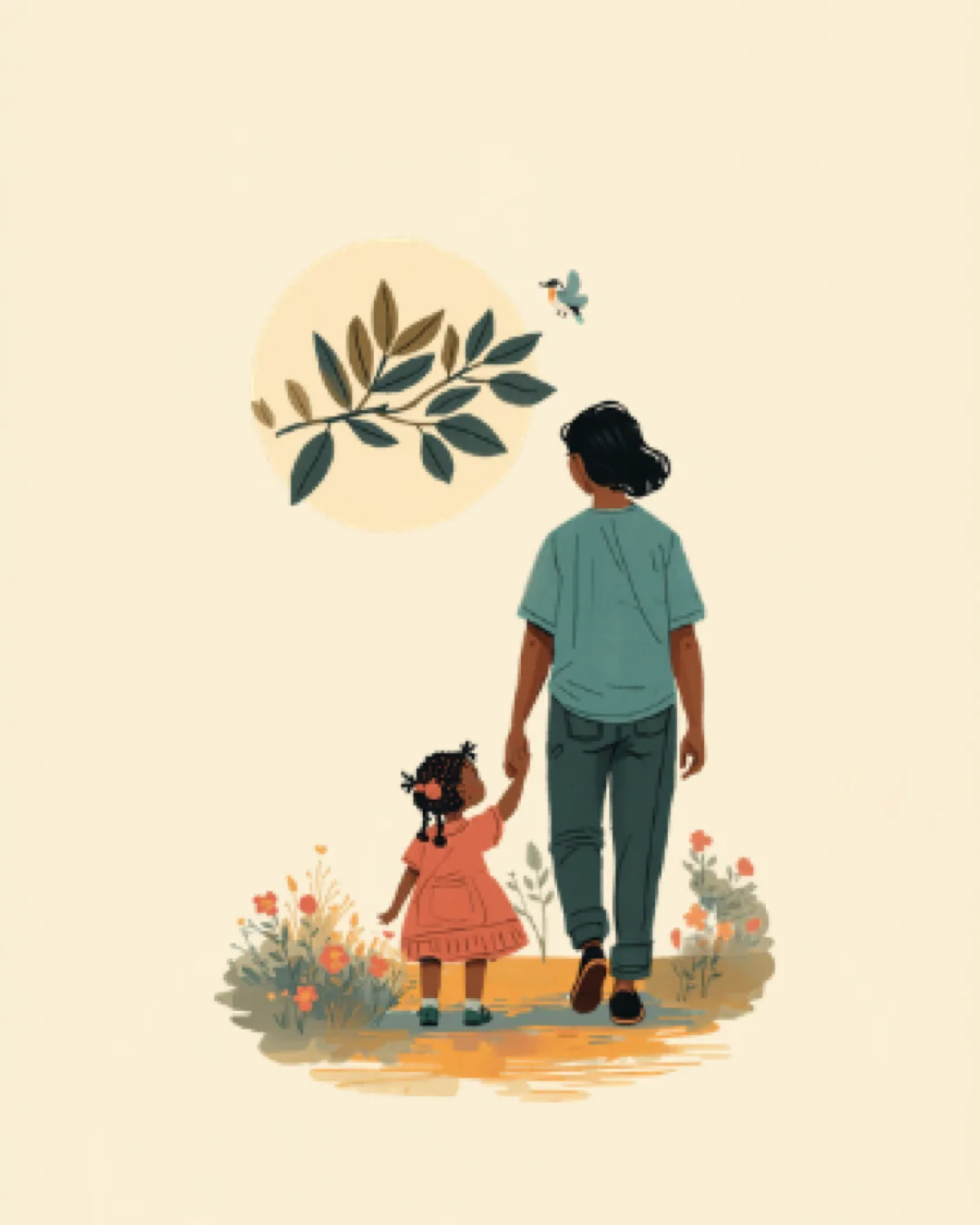
Sing songs inspired by what you spot on a walk — a bird triggers a bird song, a puddle sparks a rain song, turning every outing into a musical adventure.
Activity details
18m–4y20 minsmediumoutdoorNo prep
Instructions
Tiny Steps
Get ready
Head out on a familiar walk — a park, garden, or neighbourhood street all work.
Explain the game: 'When we see something, we sing a song about it!'
1/5
Head out on a familiar walk — a park, garden, or neighbourhood street all work.
Explain the game: 'When we see something, we sing a song about it!'
Point out the first thing you spot — a bird, a flower, a bus — and start singing a relevant song.
Walk slowly, giving your toddler time to look around and point at things themselves.
When they point at something, help them connect it to a song — even a made-up one counts.
For things with no obvious song, make one up to a familiar tune: 'I can see a big red bus, big red bus, big red bus...'
Pause at interesting spots to sing a full song through — crouching by flowers, standing under a tree.
Let your toddler lead — follow where they walk and sing about what catches their eye.
On the walk home, see if they remember which songs matched which things you saw.
Parent tip
Start before you overthink it. No-prep activities work best when you begin while the moment is still recoverable.
What success looks like
Back-and-forth between you — words, gestures, shared pretend. Connection is the real outcome here.
This walk has a simple rule: when you see something interesting, you sing about it. Spot a dog? Sing How Much Is That Doggy in the Window. See some trees? Try The Green Grass Grew All Around. The reactive singing keeps your toddler engaged with their surroundings and builds the connection between real objects and the words that describe them — a foundational language skill that research shows accelerates vocabulary growth.
Why it helps
Speech and Language UK recommends pairing real-world experiences with language to build vocabulary — singing about objects your child can see and touch reinforces word-meaning connections more powerfully than abstract repetition. The National Literacy Trust's ORIM framework identifies this kind of responsive interaction as the 'Recognition' element: acknowledging what the child notices and extending it with language.
Variations
Bring a small basket and collect natural items — then sing a song about each item when you get home.
For older toddlers, challenge them to think of the song before you do when they spot something.
In the garden, do a stationary version — sit on a blanket and sing about everything you can see from one spot.
Safety tips
Stay focused on road safety — pause singing at kerbs and crossings.
Keep walks short enough that your toddler enjoys the whole trip without getting overtired.
If your toddler wants to stop and explore, let them — the singing can wait for the walking to resume.
Try one of these next
A few connected ideas chosen by theme, energy, set-up, and age fit.