Hunt the garden or park for something red, blue, yellow, and green — a simple walk with a colour-matching mission.
Activity details
19m–4y20 minsmediumoutdoorNo prep
Instructions
Tiny Steps
Get ready
Before heading outside, name four or five colours together: 'Today we're looking for red, blue, yellow, green, and brown.'
Start walking and model the search: 'I can see something red — look, that post box! Can you find something red too?'
1/4
Before heading outside, name four or five colours together: 'Today we're looking for red, blue, yellow, green, and brown.'
Start walking and model the search: 'I can see something red — look, that post box! Can you find something red too?'
When your child spots a colour match, celebrate: 'You found yellow — those are daffodils! Brilliant eyes!'
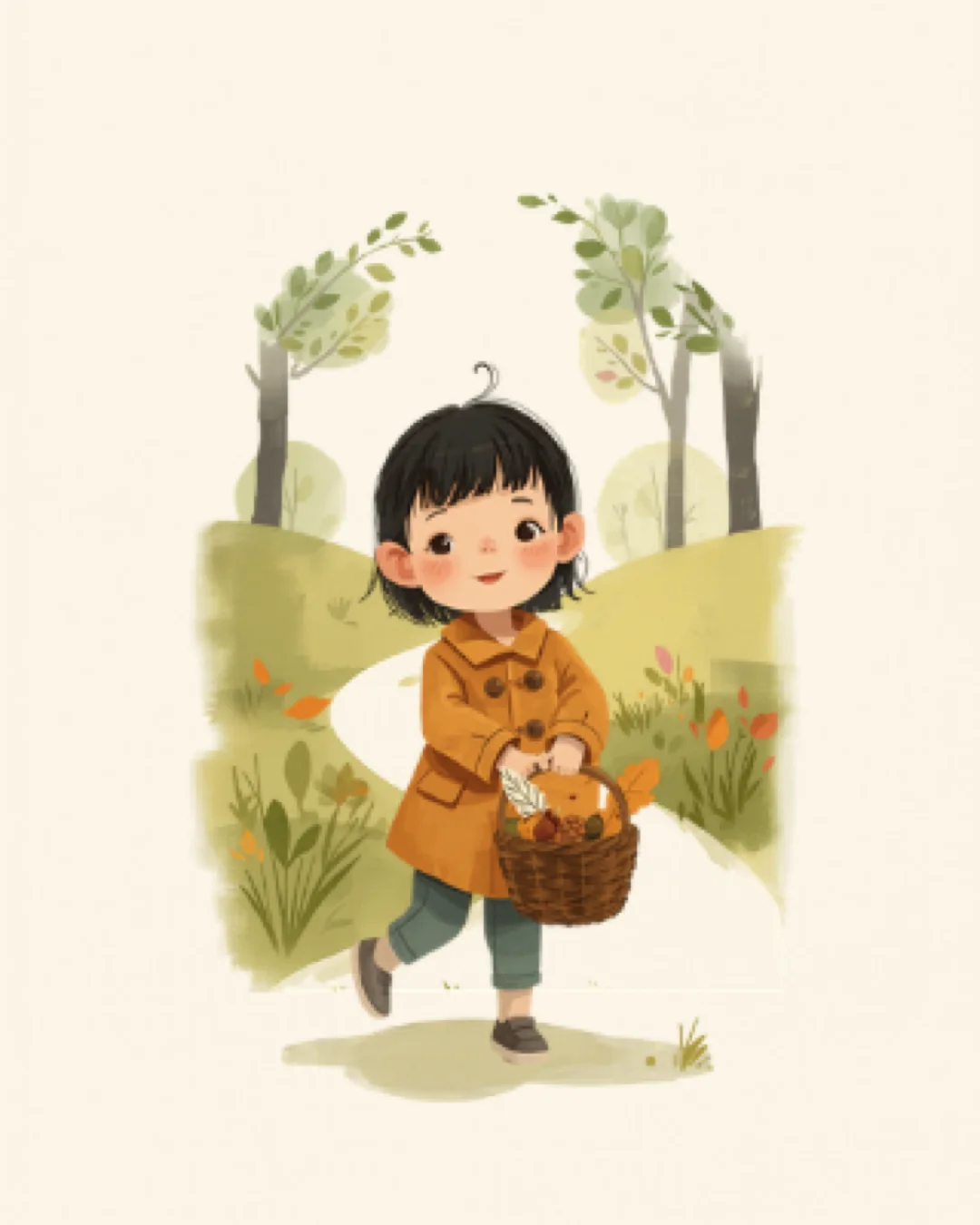
If your child can carry a bag, collect small safe items in matching colours — a leaf, a pebble, a fallen petal.
Name each find together and talk about it: 'This stone is grey with white speckles — it's not just one colour!'
If they get stuck on a colour, give clues: 'Look up — what colour is the sky?' This teaches them to search in all directions.
When you've found all the colours, lay out the collection on the ground and sort them into colour groups.
Count how many items in each group and see which colour was easiest to find outdoors today.
Parent tip
Start before you overthink it. No-prep activities work best when you begin while the moment is still recoverable.
What success looks like
Curiosity in action — pointing, collecting, asking ‘what’s that?’ A child engaged with nature is learning without knowing it.
A colour scavenger hunt gives an ordinary outdoor trip a sense of purpose and adventure. Armed with a simple list of colours (spoken or drawn on paper), your child searches the environment for matching objects — a red berry, a yellow flower, a green leaf, a blue sky. The activity naturally extends vocabulary as you name what you find, builds observational skills as children scan their surroundings carefully, and keeps little legs moving at a pace that suits their curiosity rather than your schedule.
Why it helps
The EYFS framework places sorting, matching and categorising at the heart of early mathematical thinking, building the foundations for number sense and logical reasoning. Colour recognition is one of the earliest cognitive classification tasks toddlers master, and hunting for colours in a complex natural environment makes the task much more challenging — and therefore more developmentally stimulating — than pointing to colours on a page. The activity also builds what developmental psychologists call 'visual search skills,' which require the child to hold a target colour in working memory while scanning a busy scene, strengthening attention and executive function.
Variations
Draw colour dots on a piece of paper before leaving and let your child cross off each colour as they find it in nature.
Focus on just one colour per walk and see how many different shades and objects you can find — 'How many greens are there?'
Turn it into a seasonal comparison: in autumn, hunt for oranges and browns; in spring, hunt for pinks and whites.
Safety tips
Check that collected items are safe — avoid berries, mushrooms, or anything that could be toxic if mouthed.
Stay on paths in parks and watch for uneven ground, roots, or holes when your child is focused on looking rather than walking.
Wash hands after handling natural items, particularly soil, bark, or anything found near animal areas.
Try one of these next
A few connected ideas chosen by theme, energy, set-up, and age fit.