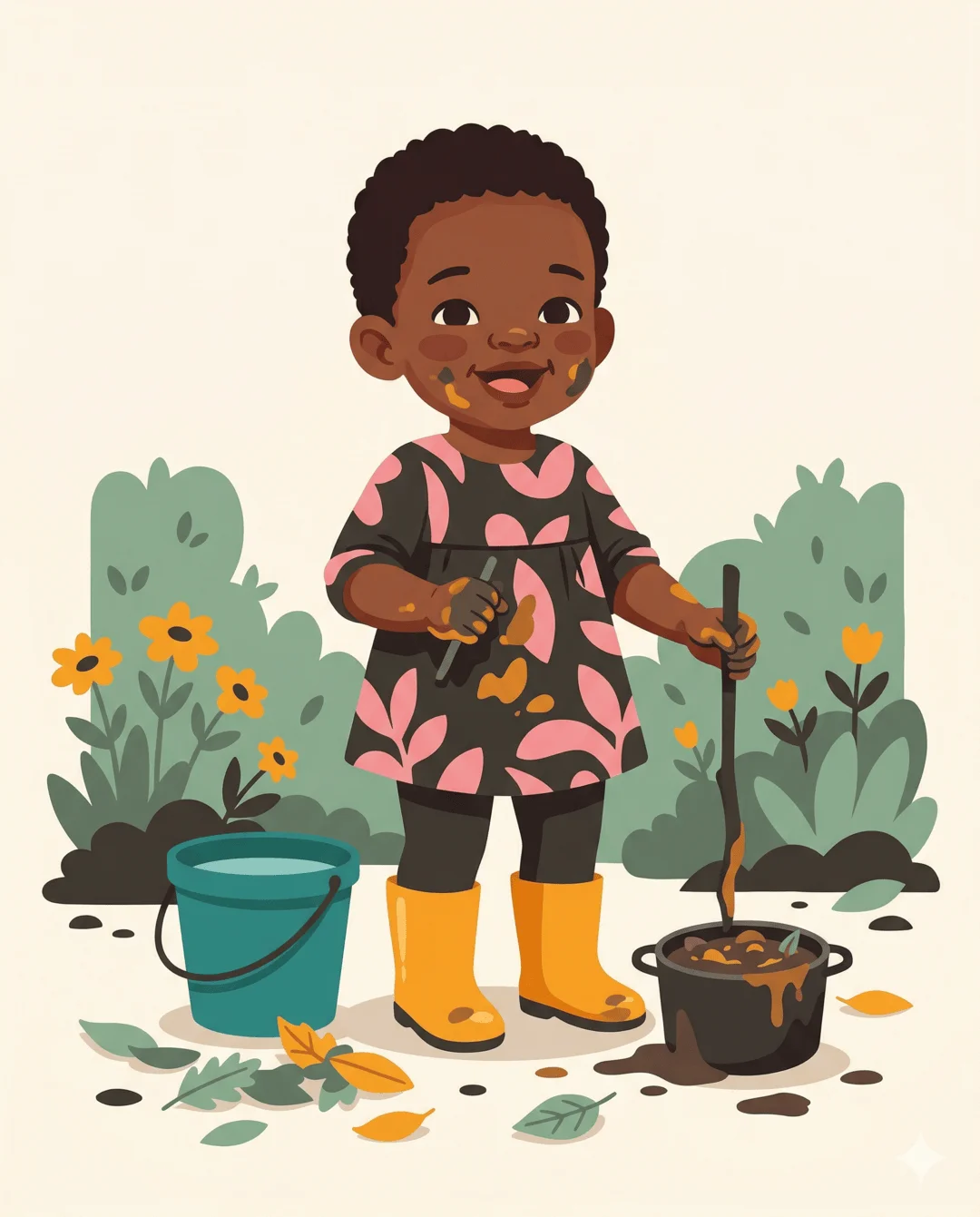
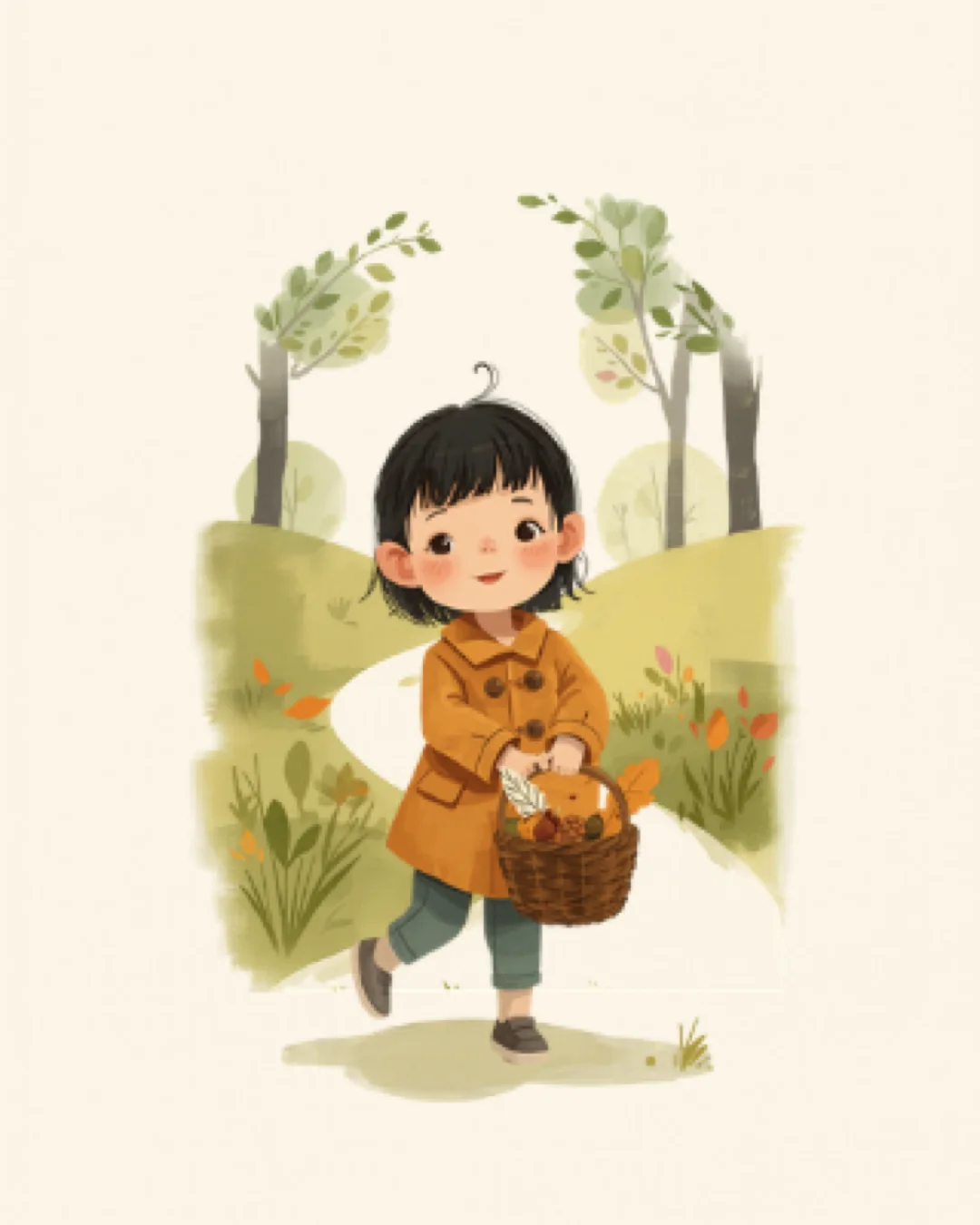
Narrate everything you see on a short walk — naming colours, objects, actions, and sounds to flood your child with new vocabulary.
Activity details
19m–3y15 minsmediumoutdoorNo prep
Instructions
Tiny Steps
Get ready
Head out for a short walk — the garden, the street, or the park. No destination needed.
Narrate what you see at your child's eye level: 'I can see a black cat sitting on the wall!'
1/4
Head out for a short walk — the garden, the street, or the park. No destination needed.
Narrate what you see at your child's eye level: 'I can see a black cat sitting on the wall!'
Use descriptive adjectives: 'The tree is tall. The leaves are green and shiny.'
Name actions: 'The bird is flying. The dog is running. The man is carrying a bag.'
Pause at things your child points at or stops to look at. Follow their lead and narrate what interests them.
Ask simple questions: 'What colour is that door? Can you hear the aeroplane?'
Use comparisons: 'This stone is heavy. This leaf is light. Which one is bigger?'
Wind down by recapping: 'We saw a cat, and a red bus, and a big puddle! What was your favourite thing?'
Parent tip
Start before you overthink it. No-prep activities work best when you begin while the moment is still recoverable.
What success looks like
Curiosity in action — pointing, collecting, asking ‘what’s that?’ A child engaged with nature is learning without knowing it.
This is not a walk with a destination — it is a walk with a running commentary. 'Look, a red car! It is driving fast. Oh, there is a big puddle! The puddle is muddy and brown.' By narrating the world in real time, you expose your child to rich, contextual language that they can see, hear, and sometimes touch simultaneously. Research shows that children who hear more varied vocabulary in naturalistic settings develop larger expressive vocabularies by age three.
Why it helps
The National Literacy Trust's research shows that 'language-rich environments' are the single strongest predictor of vocabulary size in the early years. Outdoor walks provide a naturally varied vocabulary context that cannot be replicated indoors — weather words, spatial language (up, down, behind, under), animal names, vehicle names, and sensory adjectives all emerge organically. The EYFS Communication and Language area identifies 'commenting on what they see' as a key adult behaviour that supports language development.
Variations
Choose a theme for the walk: 'Today we are looking for everything that is round' or 'Let us find all the animals.'
Give your child a small bag to collect things they want to name later at home — stones, leaves, petals.
On rainy days, do a window commentary instead — narrate what you can see from the window together.
Safety tips
Hold hands near roads and always use pedestrian crossings — narrate the safety routine too: 'We stop, look, and listen.'
Dress appropriately for the weather — if your child is cold or wet, they will not engage with the commentary.
Let your child set the pace — toddler walks are slow. If you rush, the language opportunity is lost.
Try one of these next
A few connected ideas chosen by theme, energy, set-up, and age fit.